Contents
1. Shot blast Cleaning – General Information
2. Factors affecting blast cleaning efficiency
4. Types of shot blasting equipment
4.1.Batch-type Tumble Blasters
4.2. Hook Type Shot Blasting Cleaning Machines
4.3. Rotary Table Shot Blasting Cleaning Machines
4.4. Roller conveyor Shot Blasting Cleaning Machines
4.5. Pipe Cleaning Shot Blasting Machines
4.6. Welded Steel Structure Shot Blasting Machines
7. Main components of shot blasting machines
Shot blast Cleaning – General Information
The philosophy of shot blasting is that the surface to be cleaned is affected by a plume of shot. The shot is blown on the surface of the product accelerated up to 100 m/s in the shot blasting apparatus. The purpose of shot blasting is to clean the metal from scale, rust, old paint and to make the surface of the desired roughness. Shot blasting can also be used for surface hardening – peening.
Another way to clean metal is with compressed air. Shot blast cleaning with compressed air under high pressure may be less productive than shot blasting delivered under the action of centrifugal force, but it finds its application if it is necessary to clean large-sized products or hard-to-reach areas.
Cast or grit shot, fused corundum, etc. can be used as abrasive media.
Purpose of shot blast cleaning:
- Removal of rust, scale, other foreign layers;
- Removal of paint and varnish coatings;
- Making the surface of the required roughness, preparing the surface for painting or insulating coating;
- Peening – to harden the product surface;
- Decorative surface treatment.
Factors affecting blast cleaning efficiency
The effective operation of shot blasting machines depends on the following factors:
- The intensity of the shot blast feed;
- Type of a blast abrasive;
- Size of the abrasive;
- The direction of abrasive flow, width and size of the blast plume;
- The condition of the shot blasting machine parts (wear and tear).
Choice of equipment
The choice of shot blast cleaning equipment depends on the following factors:
- Cleaning capacity;
- Product configuration and weight;
- The ability to rotate the product;
Types of shot blasting equipment
Hook Type Shot Blasting Cleaning Machines
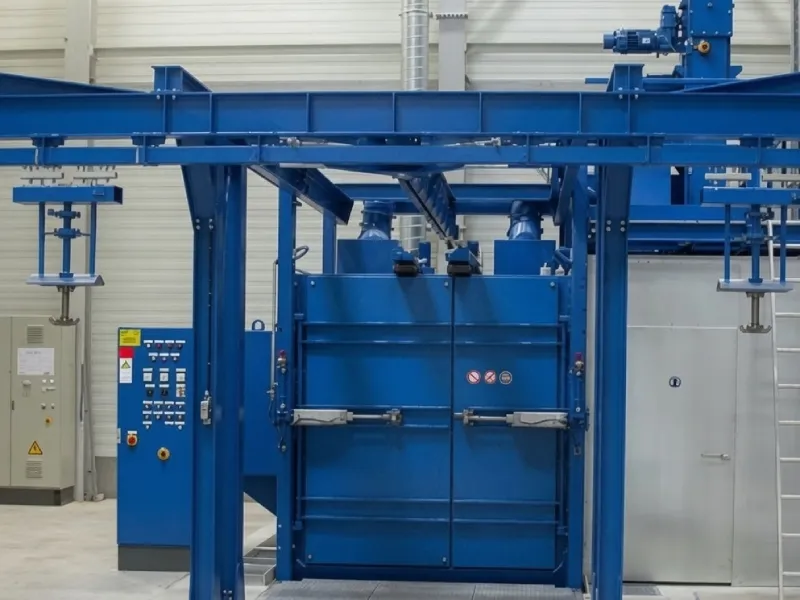
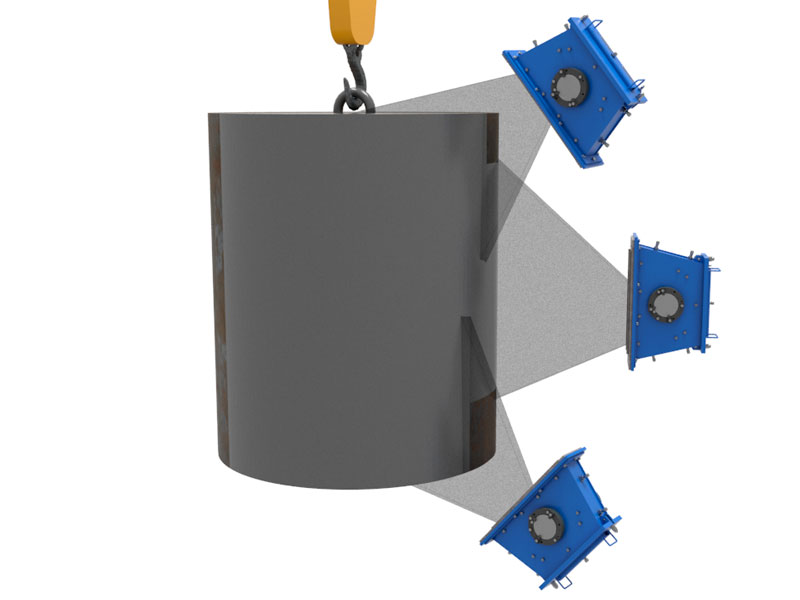
Hook type shot blasting cleaning machines can be used for cleaning medium-sized parts (cleaning on the herringbone fixture) as well as large-sized parts.
The required configuration of the shot blasting machine is determined depending on the characteristics of the products to be blasted, the required productivity, and the production environment of the Customer.
Design options
- dead-end;
- pass-through;
- with Y-rails;
- with closed conveying system.
Rotary Table Shot Blasting Cleaning Machines
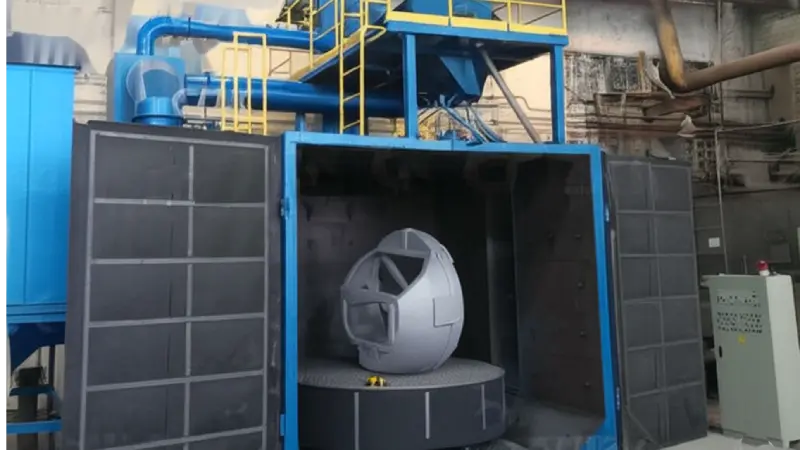
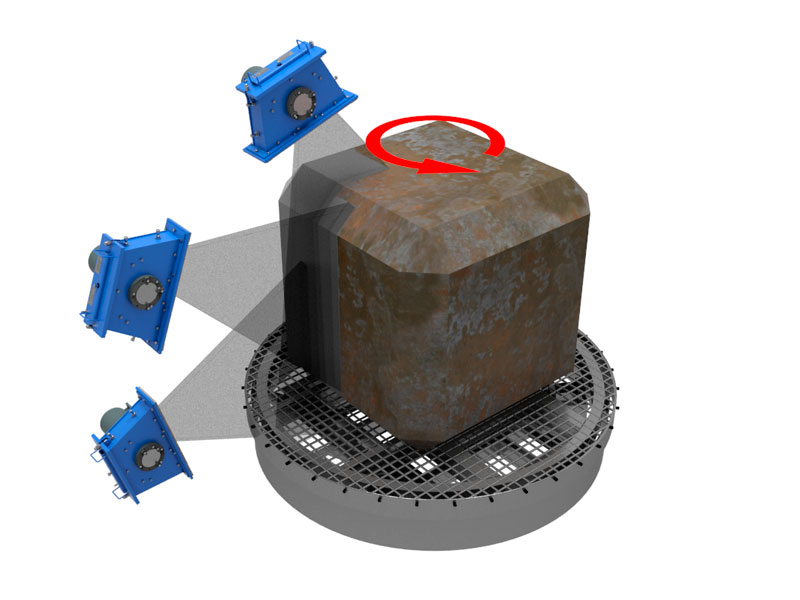
Rotary table shot blasting cleaning machines come in a variety of sizes from 1000 mm to 3500 mm. The rotary table shot blast chamber is a versatile solution for production facilities where high productivity is not required. Processing on the rotary table allows for cleaning both large and small products with complex configurations. In case of need for additional cleaning of shadow areas, a worker can blast manually (inside the chamber).
Roller conveyor Shot Blasting Cleaning Machines
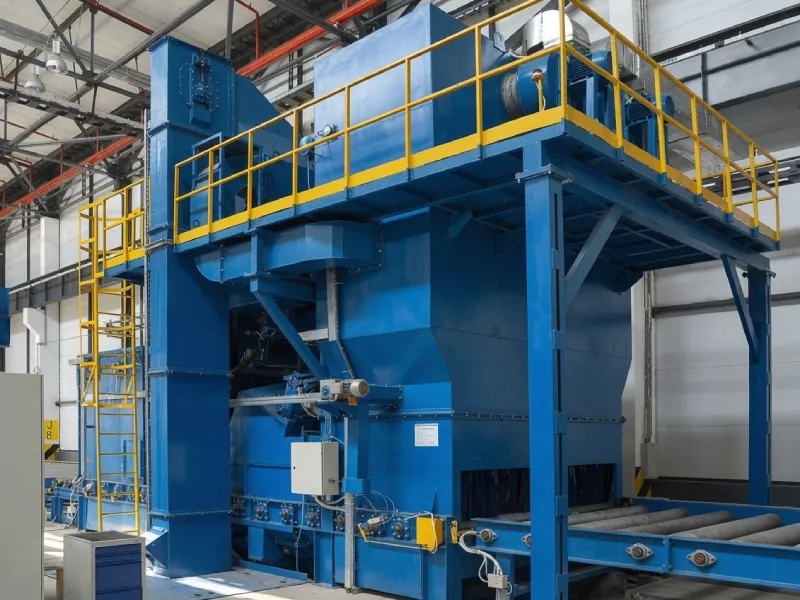
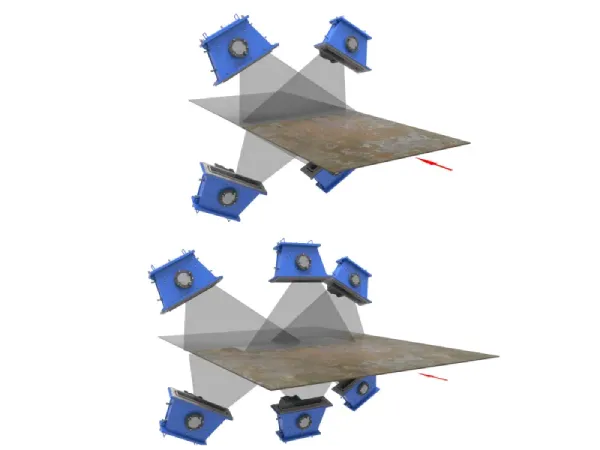
Roller conveyor shot blasting cleaning machines are mainly used for cleaning sheet and profile metal products. The roller conveyor system in combination with transverse conveyors (transfers) make it possible to combine such production operations as shot blast cleaning, preservation, measured cutting and drilling into a single unit.
Pipe Cleaning Shot Blasting Machines
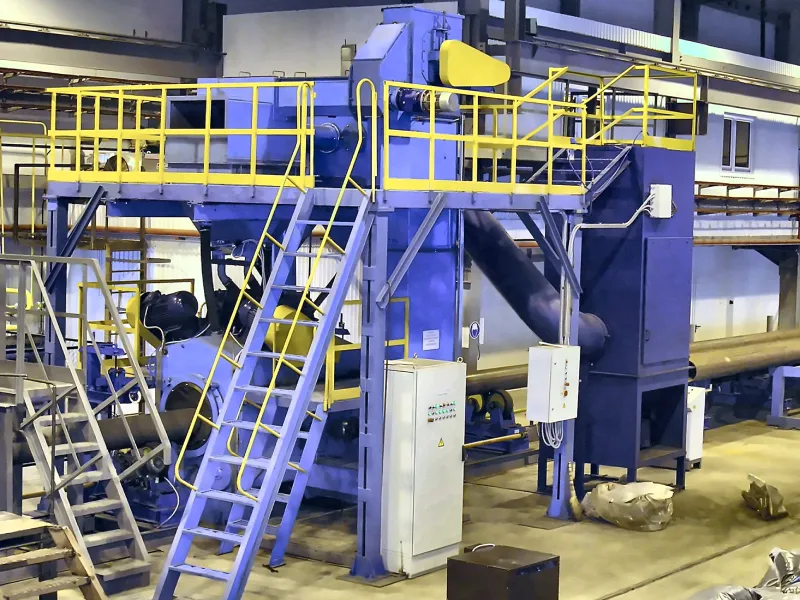
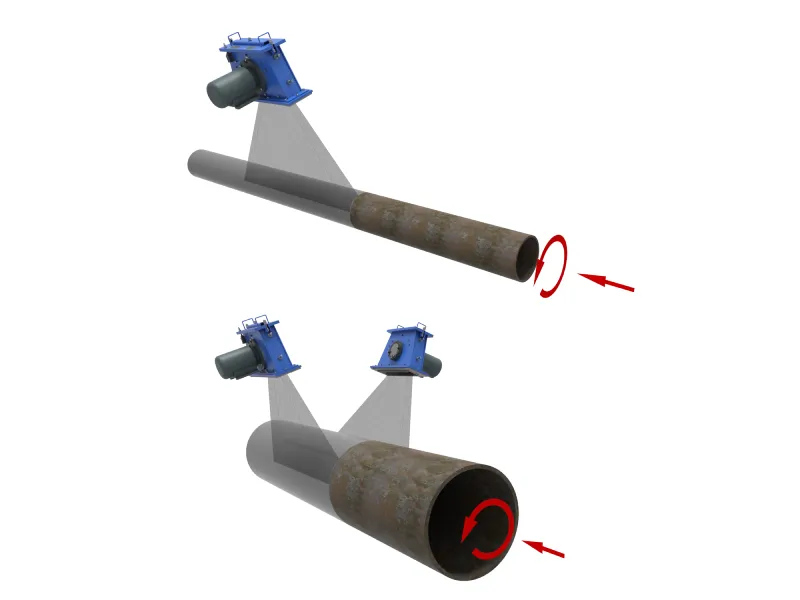
Pipe cleaning shot blasting machines are used in lines for applying various types of insulation coatings to pipes.
The shot blasting machine cleans the outer surface from dirt, rust and scale to cleaning degree 2 (PSA 2 1/2 ISO 8501-2).
The pipes are conveyed by a transport system in a rotating and reciprocating manner into the joint, one after another through the chamber where they are cleaned.
Welded Steel Structure Shot Blasting Machines
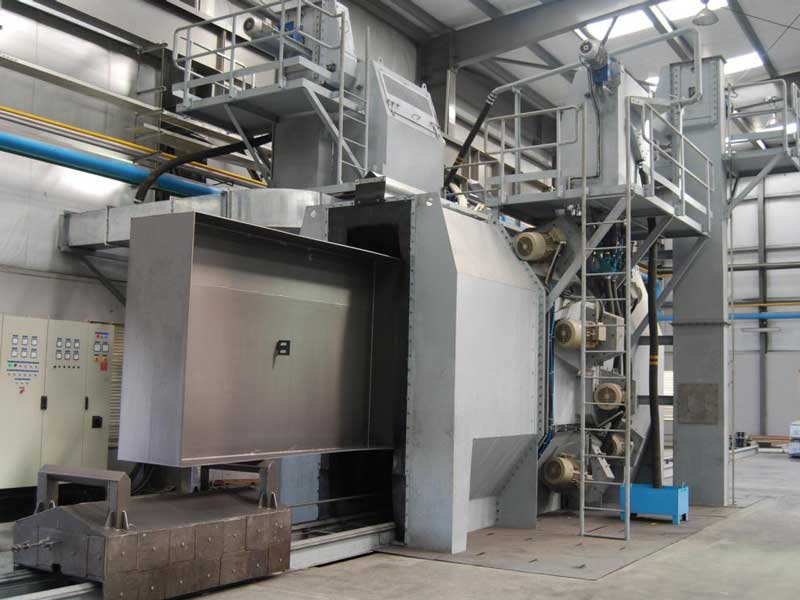
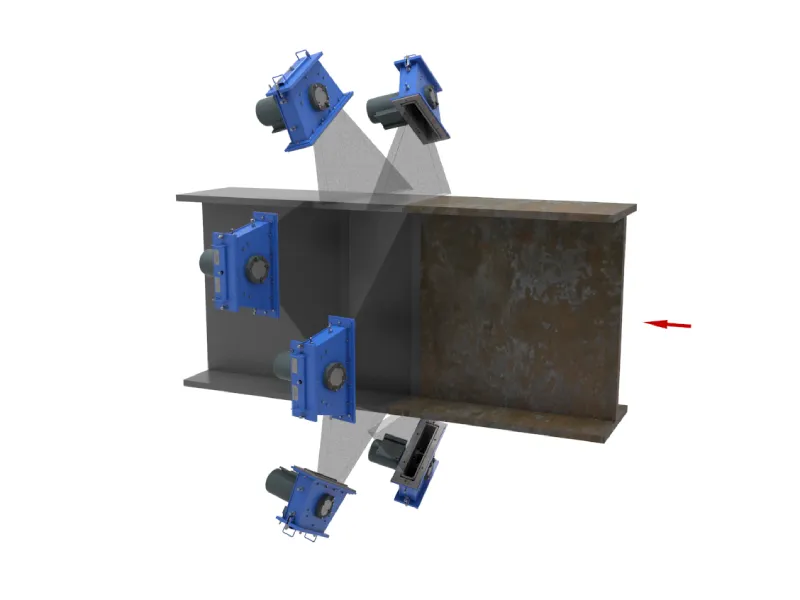
The metal structures can be fed through shot blasting chamber either by roller conveyor or on a trolley (the trolley consists of two sections connected to each other). The arrangement of shot blasting machines allows for cleaning of complex metal structures from all sides. End surfaces, stiffening ribs and weld seams can be cleaned.
Blast room
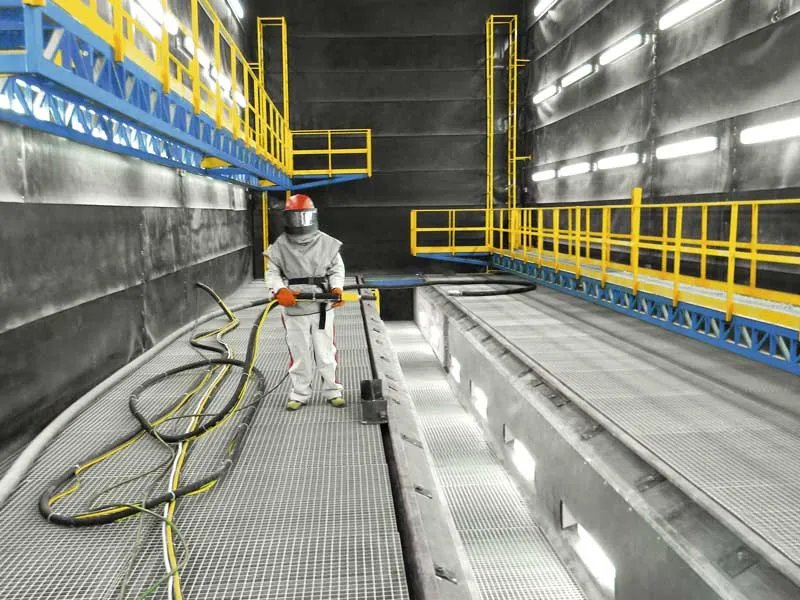
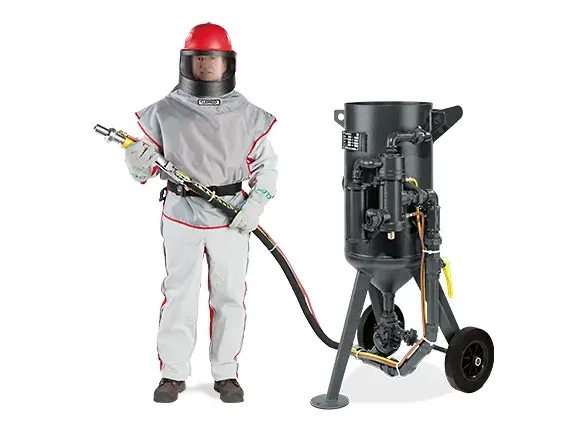
The operating principle of blast rooms is based on the use of high velocity shot flow forced by compressed air.
Shot blast cleaning with compressed air under high pressure may be less productive than shot blasting delivered under the action of centrifugal force, but it is used when large-sized products need to be cleaned (e.g. when cleaning railway wagons, large-sized welded metal structures, when hard-to-reach areas need to be cleaned).
Air cleanup system
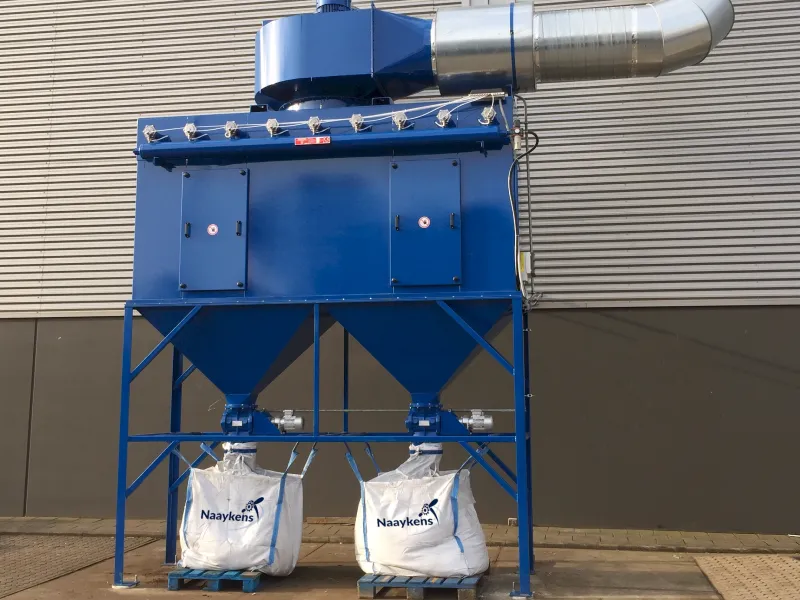
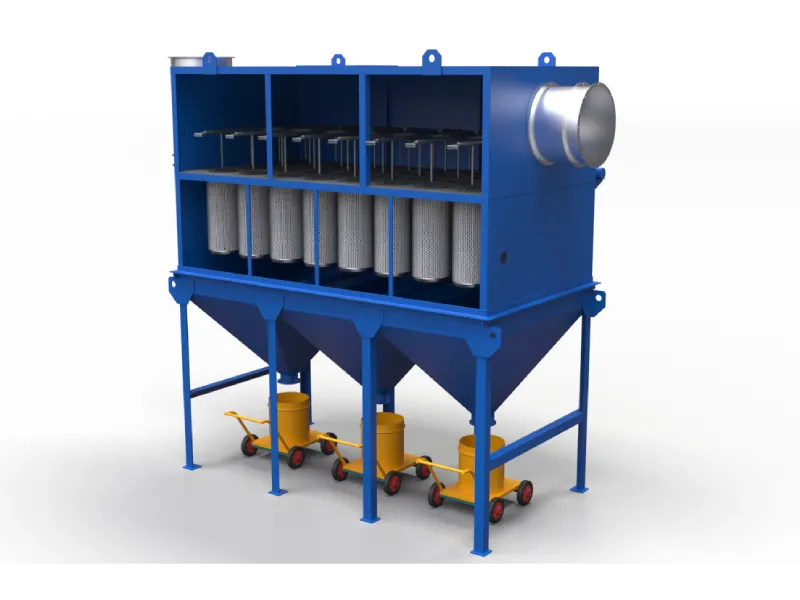
The air cleanup system consists of a filter unit, radial fan, air ducts, service platform and ensures removal of dusty air from the working chamber, its cleaning and emission into the atmosphere. Shaking of cartridges from dust is performed by supplying a short-term pulse of compressed air into the cartridge. This way the dust accumulated on the cartridge falls into the dust collection container, and the air filtration process does not stop.
Main components of shot blasting machines
The elevator is designed for vertical conveying of the shot and dust mixture to the separator. The spent shot enters the elevator from the silo part of the chamber. The elevator belt is driven by an electric motor, which is mounted on top of the elevator. A platform is provided for maintenance of the elevator belt drive motor.
The separator is designed for separation of shot from dust and foreign objects. The type of separator is air-mechanical. The separator consists of a detachable housing with covers, technological nozzles, a screw conveyor and a gear motor. The shot-dust mixture enters the separator through the feeding chute and is moved by a screw along the housing. At the same time, the shot falls through the adjustable slot into the blowing zone, where the air flow captures dust and small inclusions, and clean shot falls into the storage hopper. The separator separates the shot from dust and foreign matter (scale, dirt, etc.). The coarse inclusions are directed through a hose to the waste container.
The storage hopper is designed to ensure uninterrupted operation of shot blasting machines. Sector gates are designed to cut off the shot flow. Pneumatic cylinders are used as a power drive in the gates. Air is supplied to the pneumatic cylinders dried and cleaned. In the lower part of the hopper there is a tray with spigots for connecting shot pipelines. To prevent the ingress of large inclusions into the shot circulation system, a mesh is installed in the silo.
The screw conveyor is designed to move the shot-dust mixture from under the chamber to the elevator and consists of a welded screw mounted on bearing supports, a gear motor and a housing.
For maintenance of shot blasting apparatuses, elevator, separator, the installation has service platforms with ladders and guardrails providing free and safe access to all mechanisms and units of the machine.
Need advice on choosing shot blasting or shot peening equipment?
For further advice on the manufacture of shot blasting equipment, please call:
+38 (067) 818-18-20 (WhatsApp)
Related articles
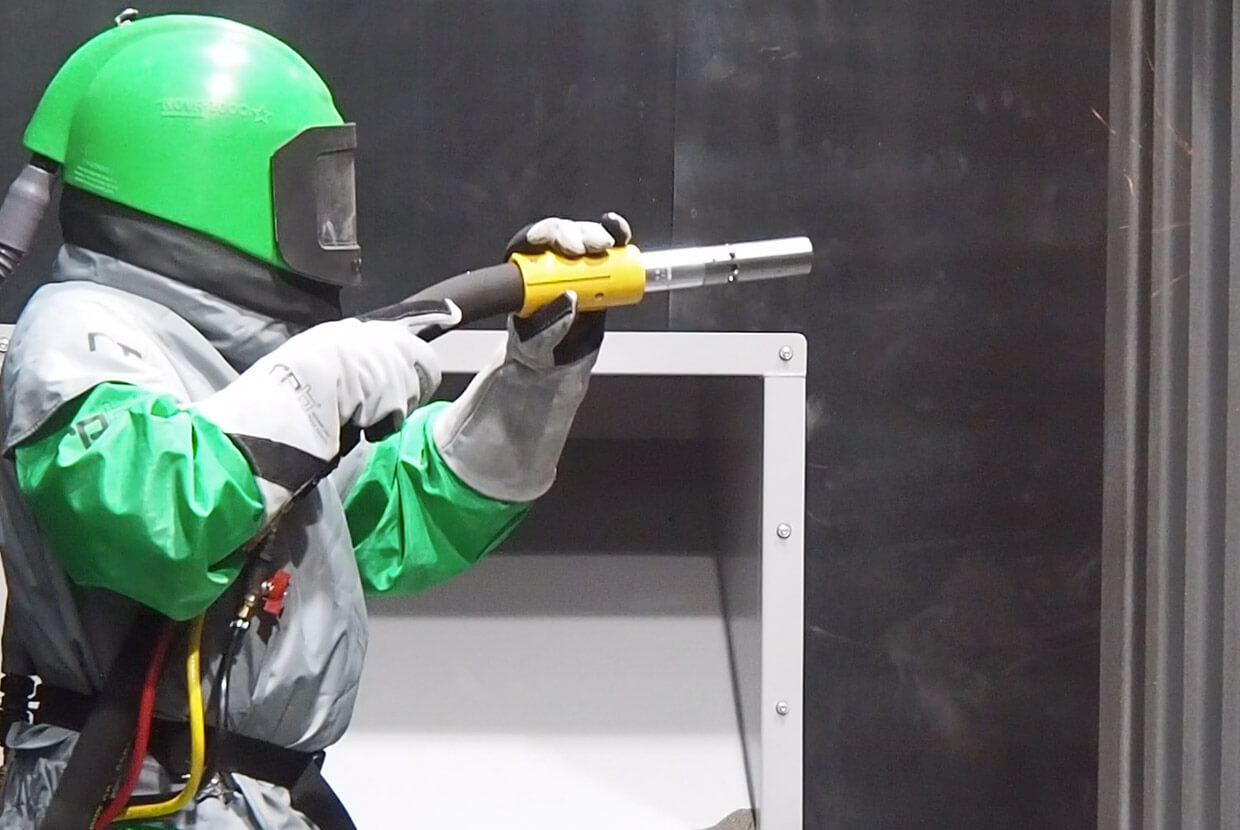
Shot blasting problems are not always caused by poor abrasive quality. In practice, the final cost of the process is shaped by a whole set of factors: working pressure, machine type, separator settings, nozzle wear, and how the abrasive is actually cycled through the system.
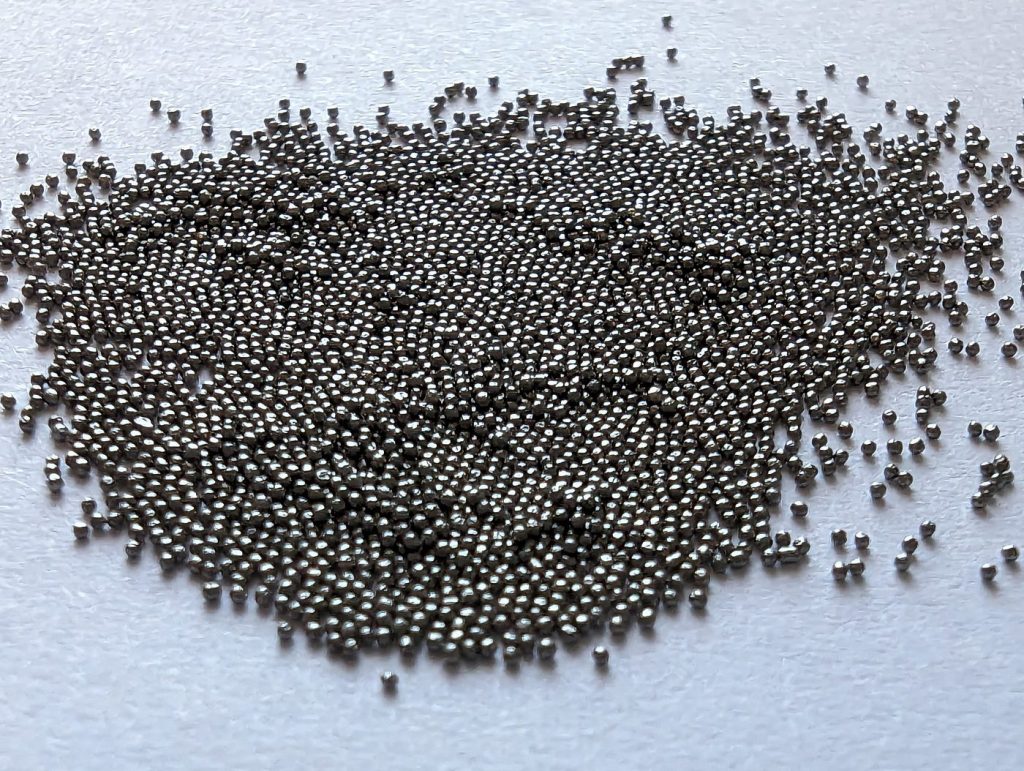
Shot blasting remains the standard for surface preparation in mechanical engineering due to its speed, repeatability, and the cost-effectiveness of abrasives over large volumes. In this new article, we explore the operating principle, types of shot and equipment, and key differences from sandblasting.
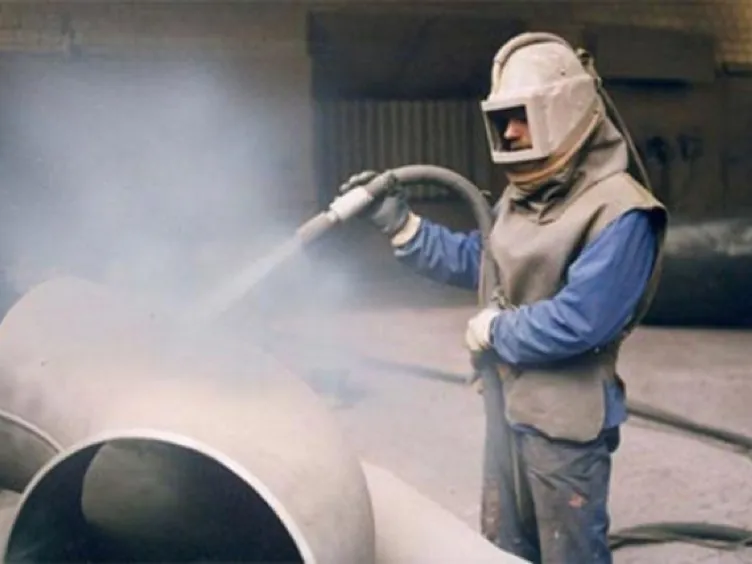
One of the main methods of surface preparation (cleaning and imparting the required roughness) is sandblasting, shot blasting, and wheel blasting treatment. The topic of differences between sandblasting, shot blasting, and wheel blasting technologies is quite relevant. Substitution of these concepts and terms occurs even in professional circles. At the same time, the differences are very significant, and it is simply impossible to ignore them.
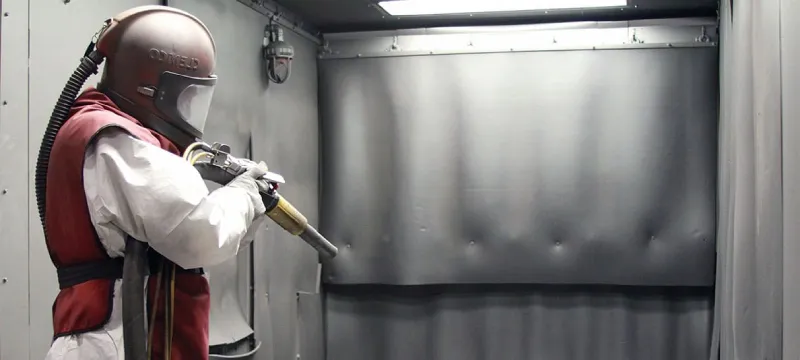
10 practical rules that should be built into the design of shot blasting equipment and into the workshop's operating procedures.
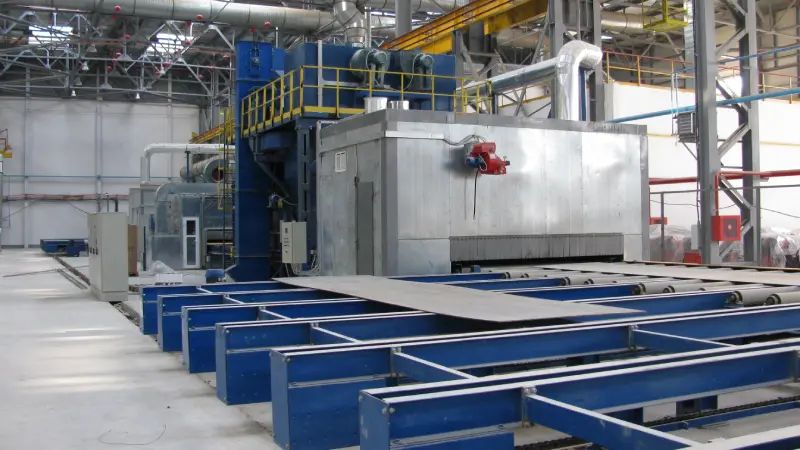
In this article, we will look at the types of transport systems used for shot blasting and painting of rolled metal and welded metal structures.
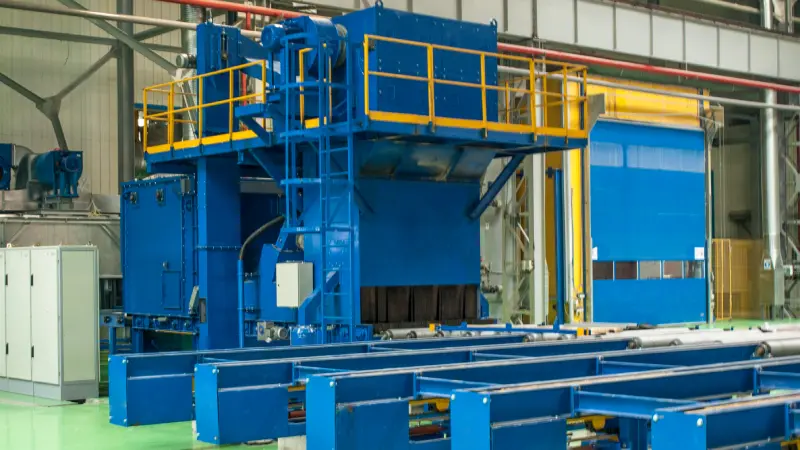
This article discusses the most popular shot blasting machines: a description of their operation and key characteristics.
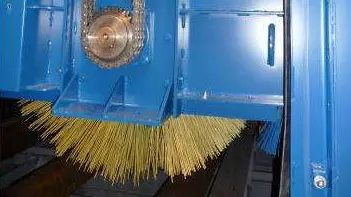
Learn how to properly clean abrasive residue and dust from metal to ensure reliable surface preparation for painting and extend the service life of steel structures.
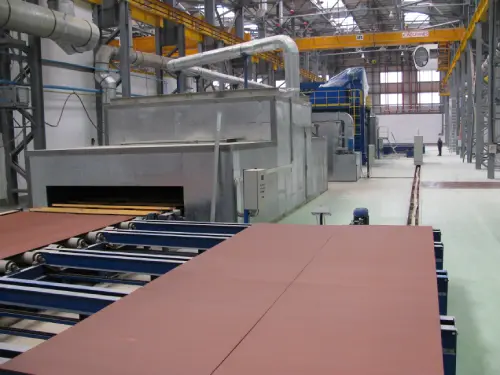
High-quality surface preparation and interoperation protection of rolled metal products are crucial factors in ensuring maximum service life and the highest quality of protective coatings. This preparation can be achieved through shot blasting, followed by the application of a conductive protective primer on the surface of the rolled metal at the stage of its delivery to production.
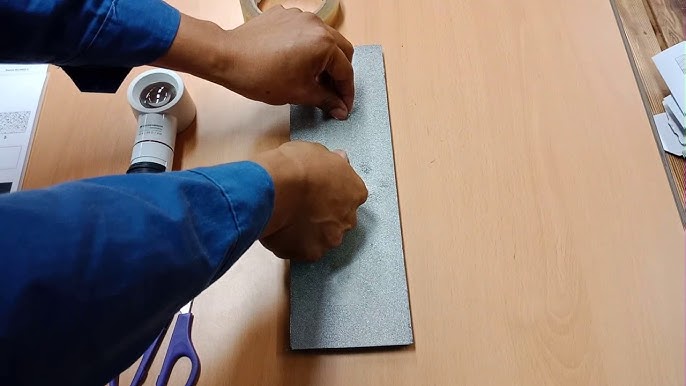
Correct surface preparation is one of the key factors affecting the durability of paint and protective coatings. Measuring the level of dust on steel surfaces before painting helps determine whether additional cleaning and preparation are required.