Category
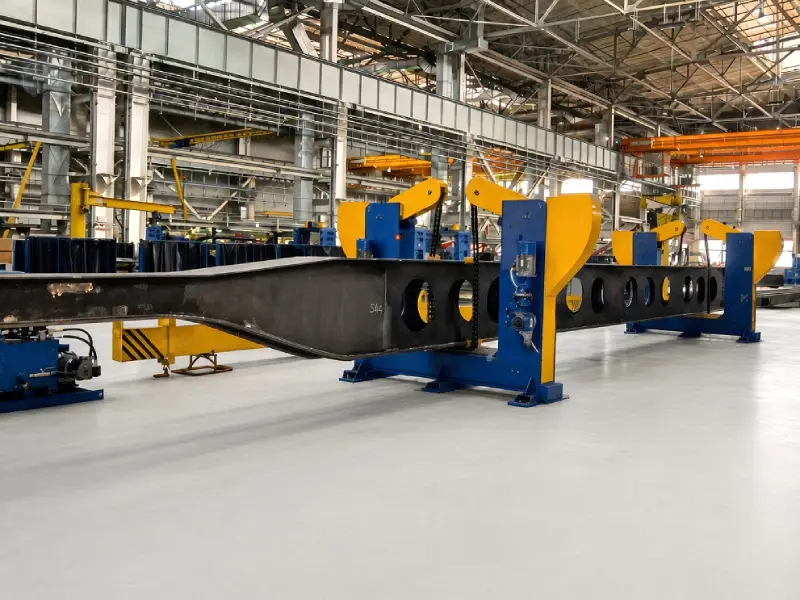
In structural steel and railway wagon manufacturing, a large share of the time goes not into welding itself but into turning the workpiece so the welder can reach the joint. A beam has to be slung, lifted by a crane, flipped and re-aligned, often several times per cycle. A chain beam rotator solves this differently: the workpiece stays at one station and is turned at the push of a button. Below we look at the benefits this brings to production and what to check when choosing equipment.
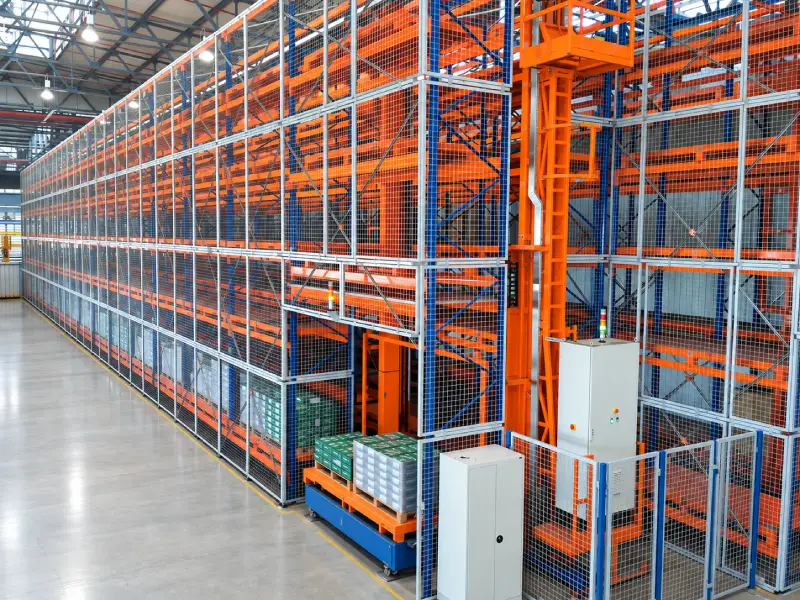
Warehouse floor space is one of the most expensive fixed costs in manufacturing: rent or building upkeep, heating, lighting, property taxes. When space runs out, the usual answer is to expand. There is another way: store the same amount of goods on a much smaller footprint by using building height and automation. This article skips the generalities and gives a clear calculation: how savings of up to 90% are achieved, what they depend on, and when they are out of reach.
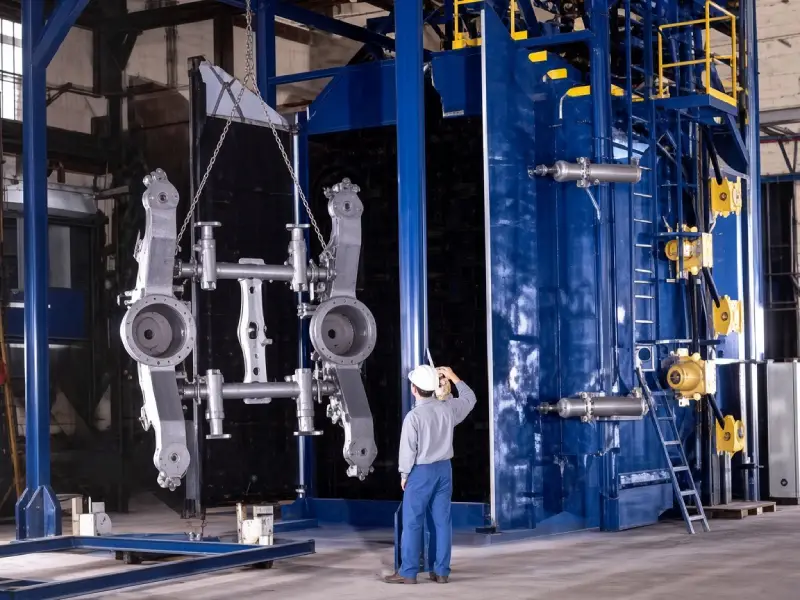
When you need to remove scale and rust, prepare a surface for painting or strengthen a part, the same question always comes up: wheel (turbine) blasting or air (pneumatic) blasting? Both are called “shot blasting” in everyday speech, yet they use two different ways of throwing abrasive, different equipment and different economics. A wrong choice is expensive: you either overpay for throughput you do not need, or end up with a bottleneck in production and an inconsistent surface finish.
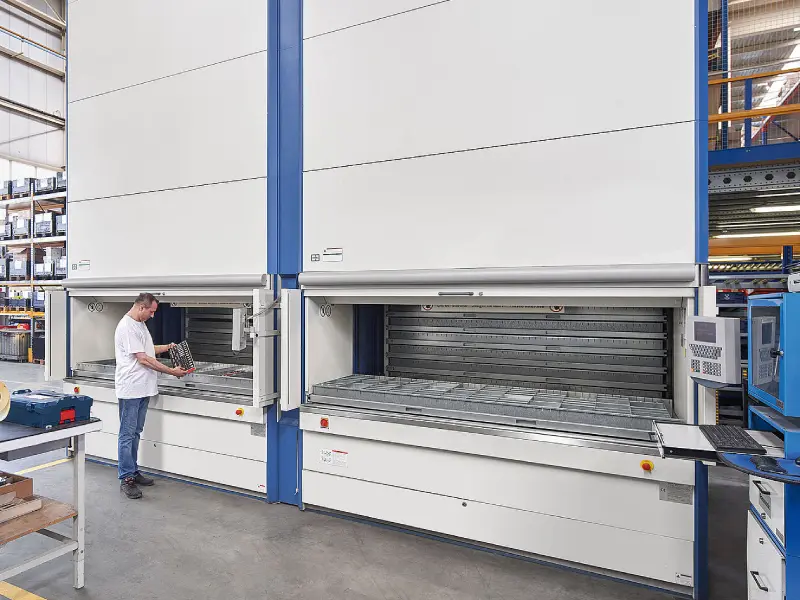
Order picking speed is not determined only by how many people and how much equipment you have. It is shaped far more by the basic logic of the warehouse: does the person go to the goods, or do the goods come to the person? That single choice drives throughput, error rates, the floor space storage occupies and, ultimately, the cost of every order line picked. In this article we look at both principles, break down where picking time goes, compare the approaches on key metrics and explain how to choose the right scheme for your warehouse, from spare parts and tooling stores to sheet metal storage on a production site.
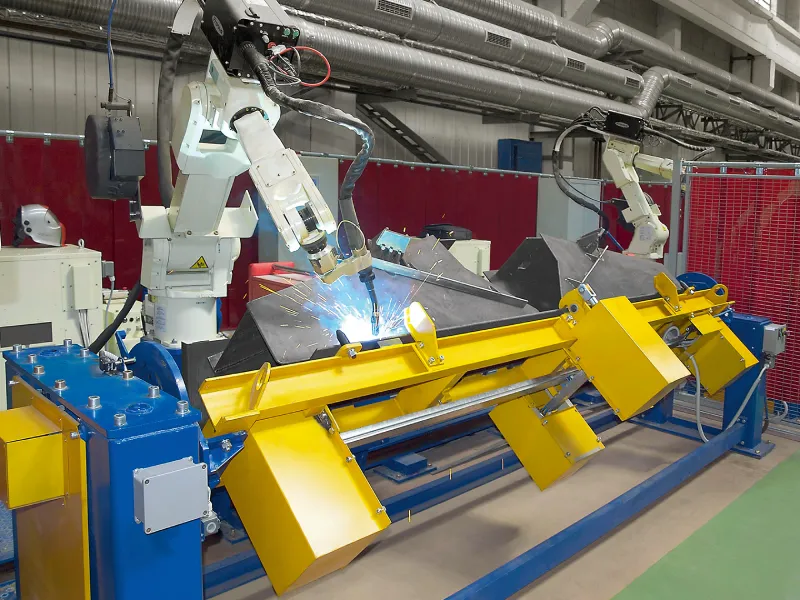
Modern railcar manufacturing places ever higher demands on throughput, weld quality, assembly accuracy and process stability. At the same time, building rolling stock involves a large number of operations that require high repeatability and significant labor input. A robotic welding cell on a railcar manufacturing shop floor.