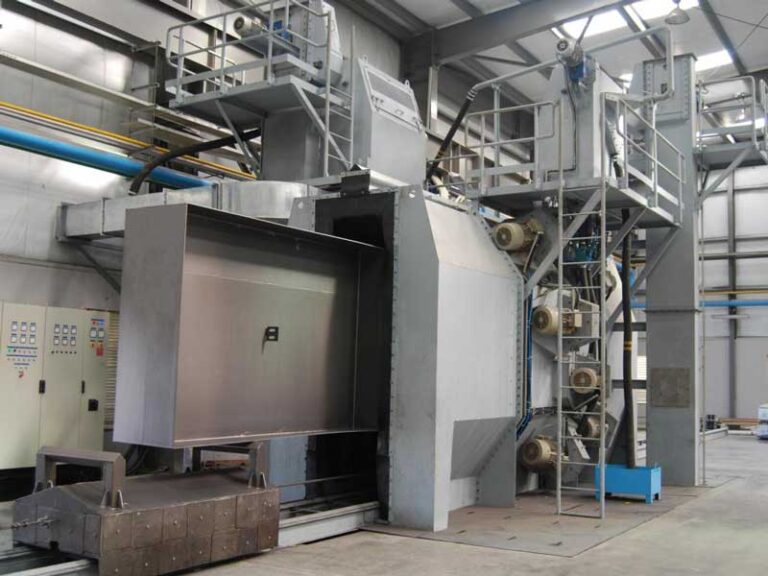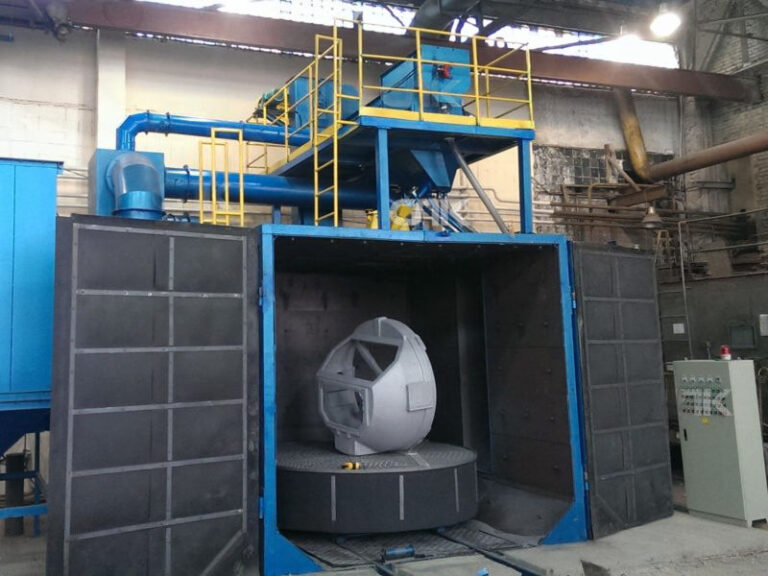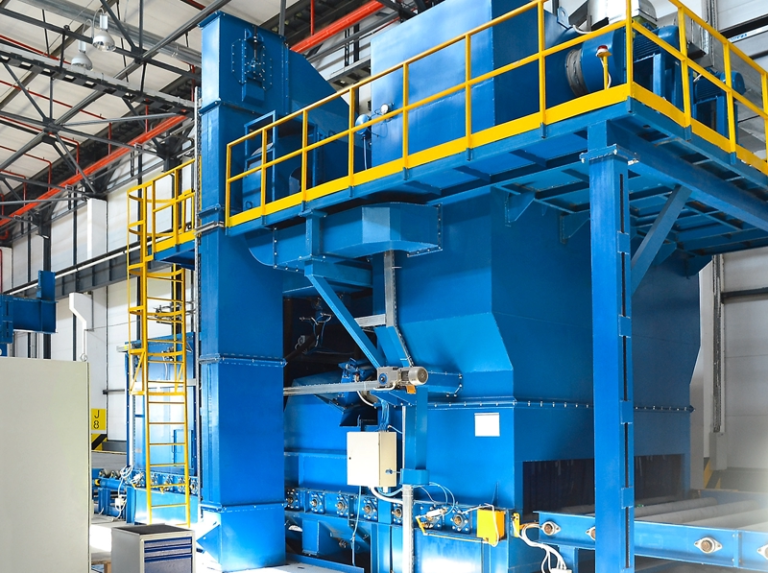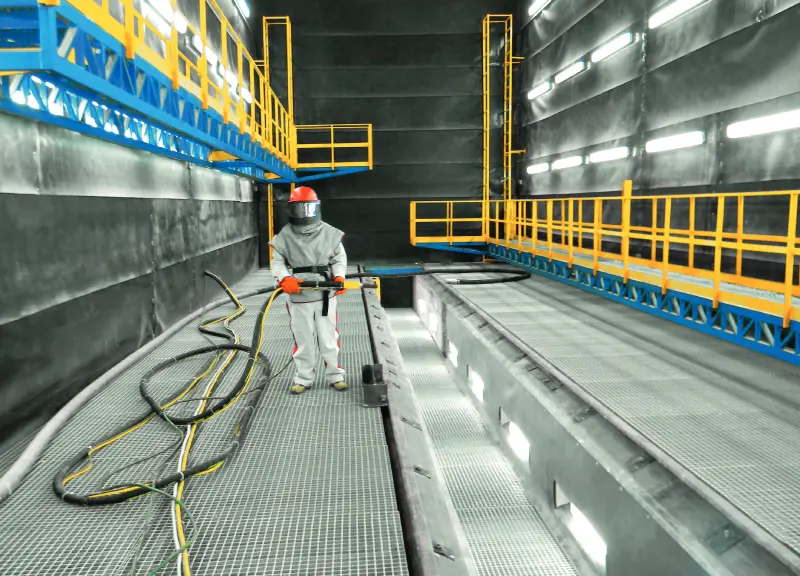
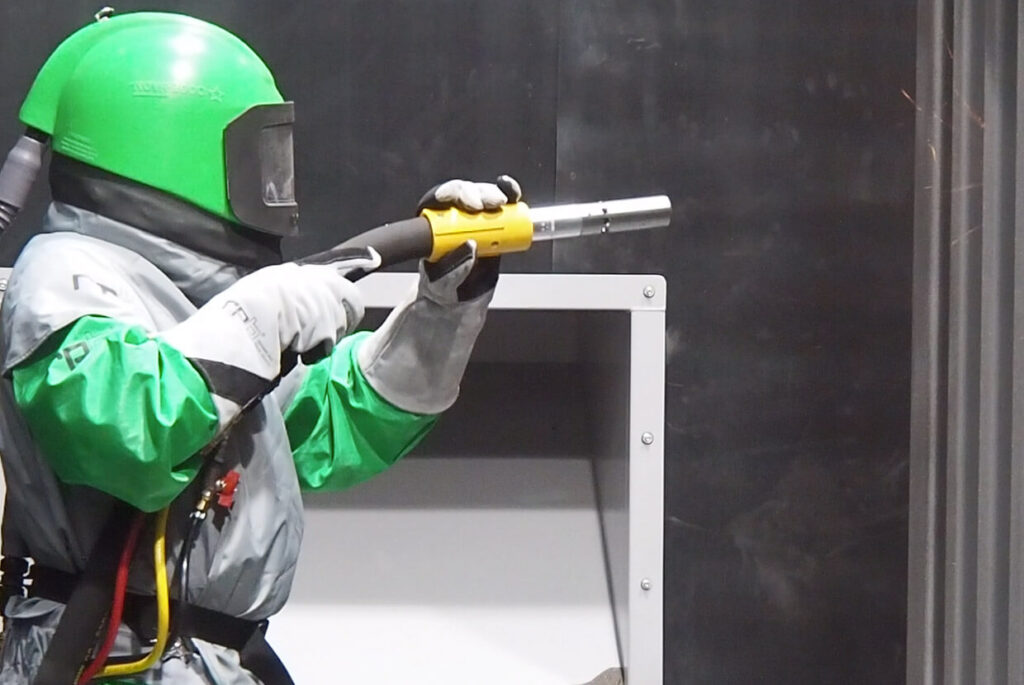
Custom-built airblast rooms for surface preparation of welded fabrications, assemblies and complex metalwork. Achieves Sa 2.5–Sa 3 cleanliness (ISO 8501-1) and a surface profile of Rz 40–100 µm ready for high-performance protective coatings.
What is an airblast room and when is it used?
Custom design
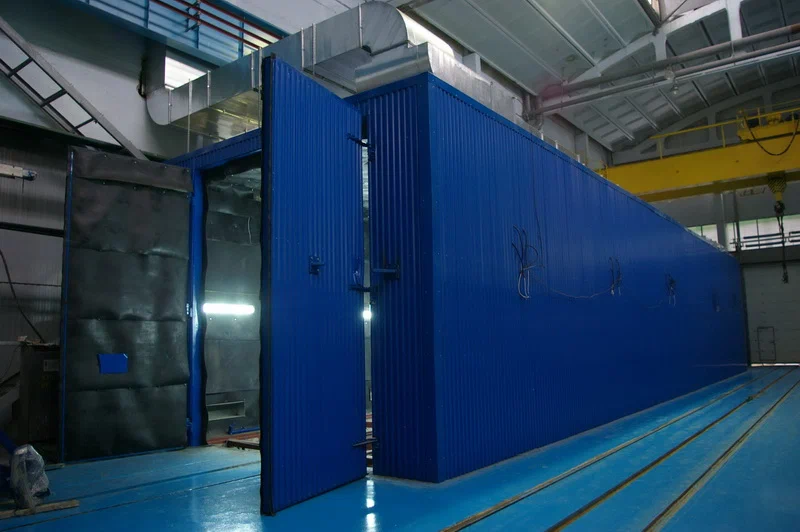
Every chamber is sized to the customer’s largest workpiece, transport route and overhead crane capacity.
Sa 2.5 / Sa 3 quality
Meets ISO 8501-1 near-white and white-metal cleanliness for rail, bridge and heavy-industry coatings.
Closed abrasive loop
Scraper conveyors + bucket elevator + air-wash separator — reusable abrasive costs kept low.
Cartridge dust filtration
Reverse-pulse self-cleaning cartridge filter with continuous operation — no production downtime for filter maintenance.
Climate PPE for operators
Heated (winter) and cooled (summer) breathing air supply built into the operator’s helmet system.
Rubber-lined walls & ceiling
1.0×3.0 m and 1.0×2.0 m rubber blanket lining protects structure and greatly extends service life.
An airblast (abrasive blast) room is a fully enclosed, ventilated chamber in which one or more operators direct compressed-air-propelled abrasive at a workpiece using hand-held blast nozzles. Unlike automated shot blasting machines — which use centrifugal blast wheels and are optimised for regularly shaped products moving on a conveyor — a blast room gives the operator complete directional control of the blast jet.
This makes airblast rooms the preferred solution for:
- Large welded steel fabrications with complex geometry and internal cavities
- One-off and small-batch production where tooling a conveyor machine is uneconomical
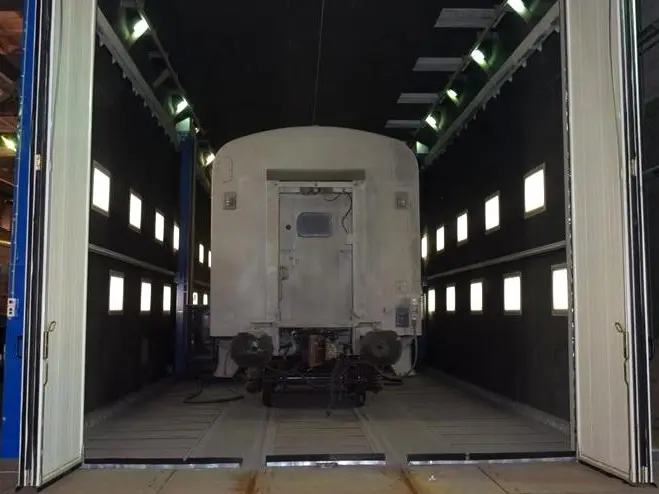
- Structures that cannot be rotated (bridge sections, tank shells, rail car bodies)
- Re-blasting and touch-up operations before final painting
- Projects requiring selective cleaning of specific zones
Techvagonmash designs and manufactures blast rooms as a complete turnkey system — chamber structure, abrasive circulation, dust extraction, lighting, operator PPE and transport carriage are all supplied and commissioned as a single integrated solution.
Shot blasting chamber diagram
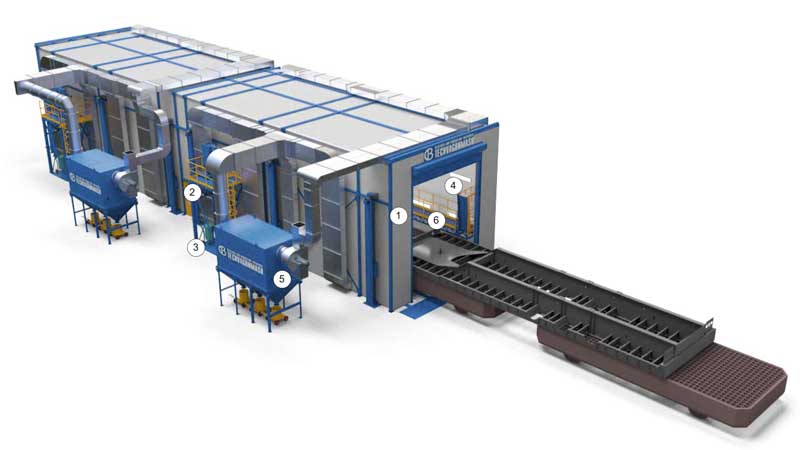
1. Chamber frame
2. Shot circulation system
3. Shot blasting machine
4. Lighting system
5. Air cleaning system
6. Lifting platforms
Components description
Blast Room Structure
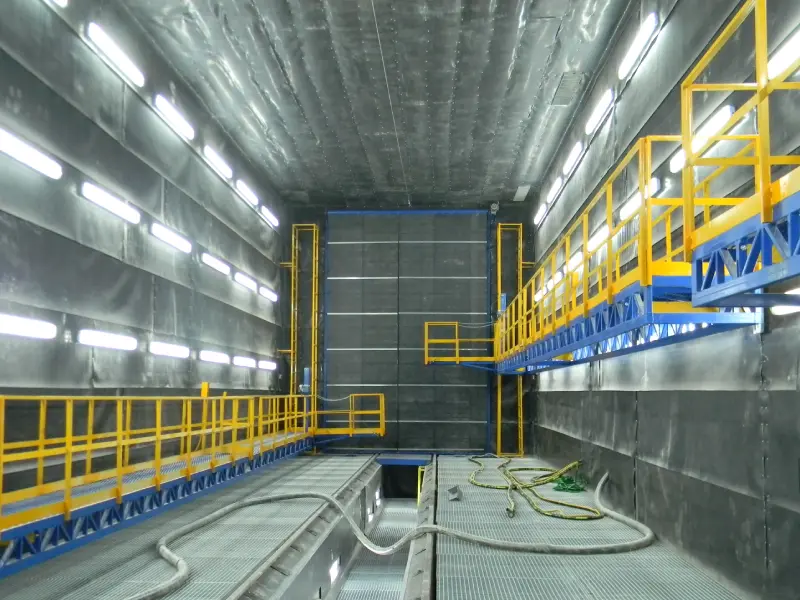
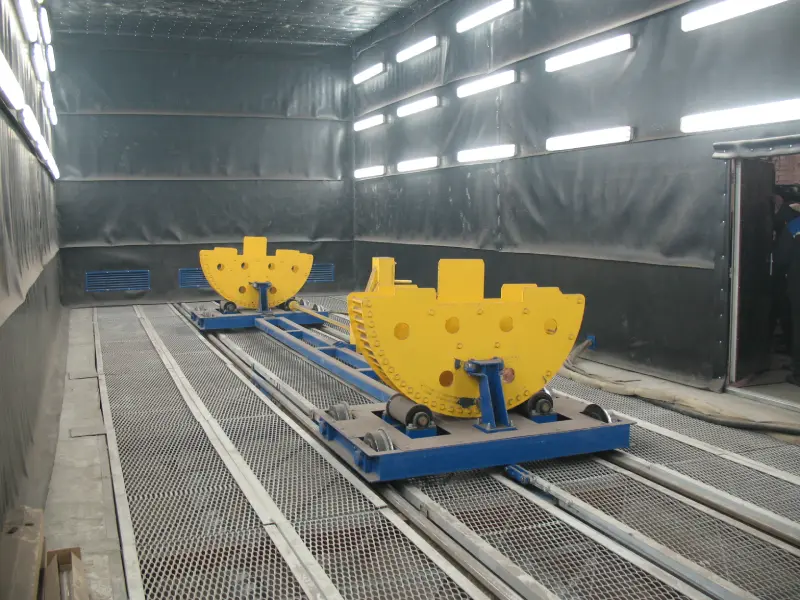
The camera body is constructed of durable metal structures with internal protection against abrasive impacts.
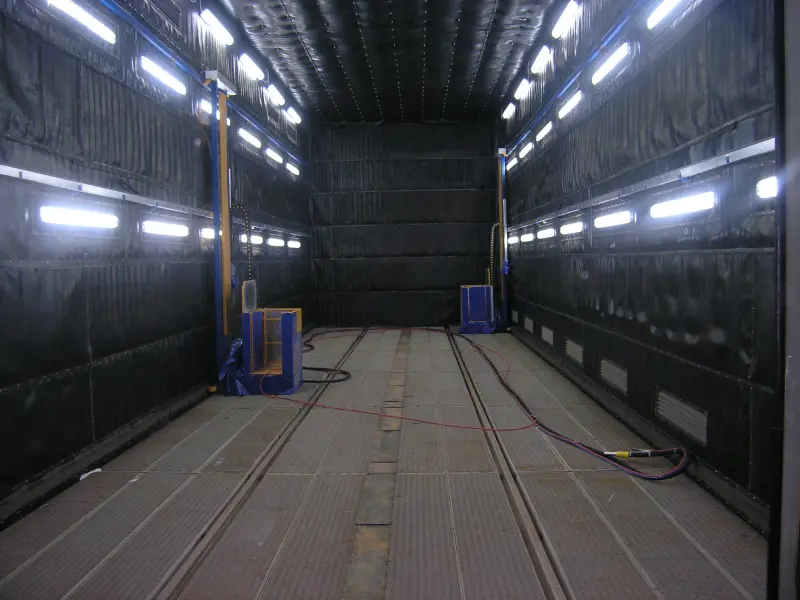
Special wear-resistant rubber screens and cladding materials are used to protect the walls and ceiling, preventing premature wear.
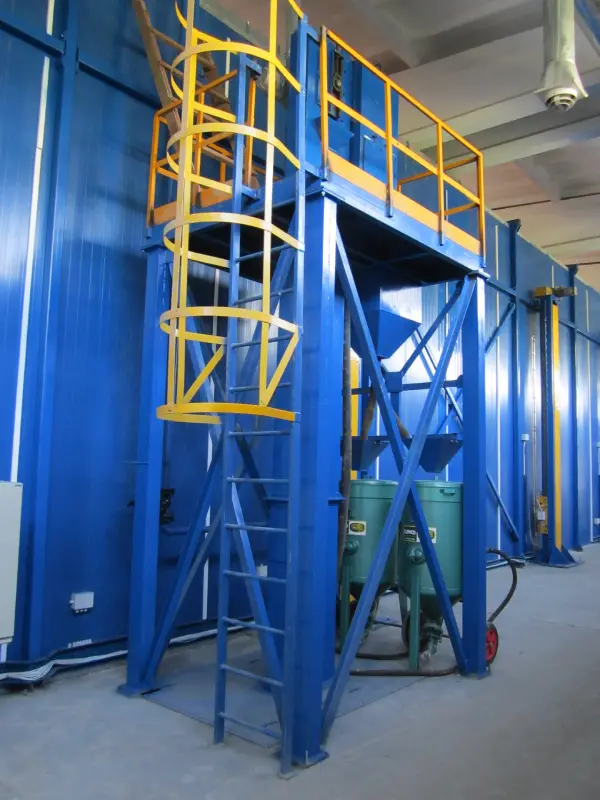
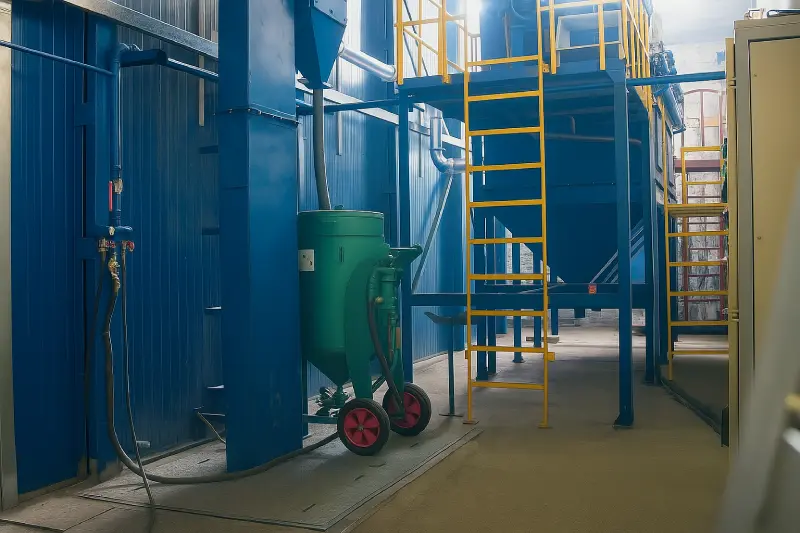
Abrasive Recovery System
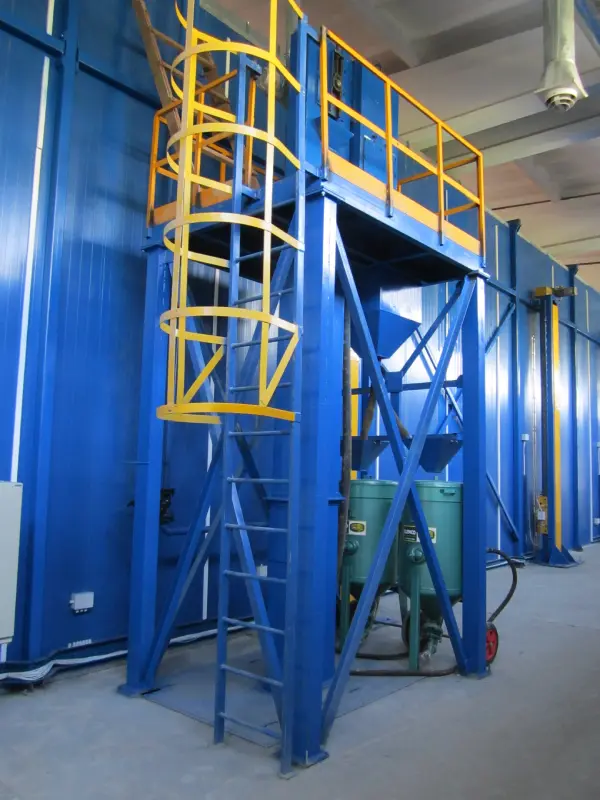
The abrasive recovery system is designed to provide continuous collection, transportation, cleaning, and recycling of abrasive material throughout the blasting process. It operates as an integrated system consisting of scraper conveyors, transverse conveyors, a bucket elevator, an air-wash separator, and an abrasive storage hopper, ensuring uninterrupted abrasive circulation and efficient material handling.
During the recovery process, used abrasive is automatically collected from the blast room floor and transferred to the separation unit, where dust, scale, and other contaminants are removed. The cleaned abrasive is then directed to the storage hopper and returned to the blasting equipment for further use.
This automated recycling process significantly reduces abrasive consumption, lowers operating costs, minimizes waste generation, and improves the overall efficiency of surface preparation operations. The ability to reuse steel abrasive multiple times contributes to higher productivity and provides substantial economic benefits for industrial blasting applications.
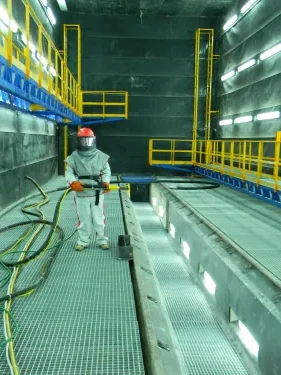
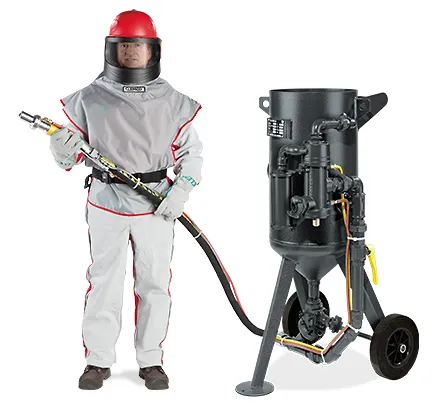
Shot Blast Operator Workwear
Shot blast operators are provided with a complete set of personal protective equipment designed for safe and comfortable work in intensive abrasive blasting conditions. A purified air preparation and supply system provides respiratory protection, maintaining optimal working conditions throughout the shift. Depending on the season, the air conditioning system can be set to heat or cool the supplied air, providing additional operator comfort.
The protective gear includes a durable safety helmet, a reliable coverall to protect the body from abrasive exposure, special protective gloves, and an air filter to ensure clean breathing air. This comprehensive set of protective equipment significantly improves occupational safety, reduces personnel fatigue, and ensures compliance with industrial safety requirements.
Dust Collection and Ventilation System
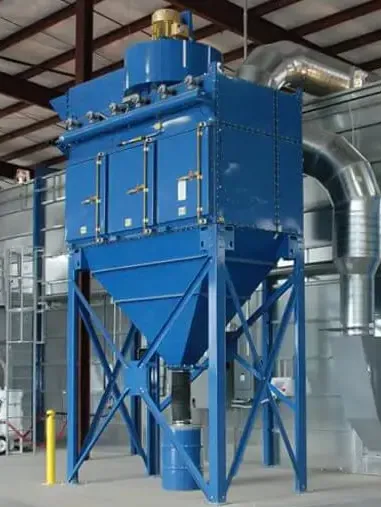
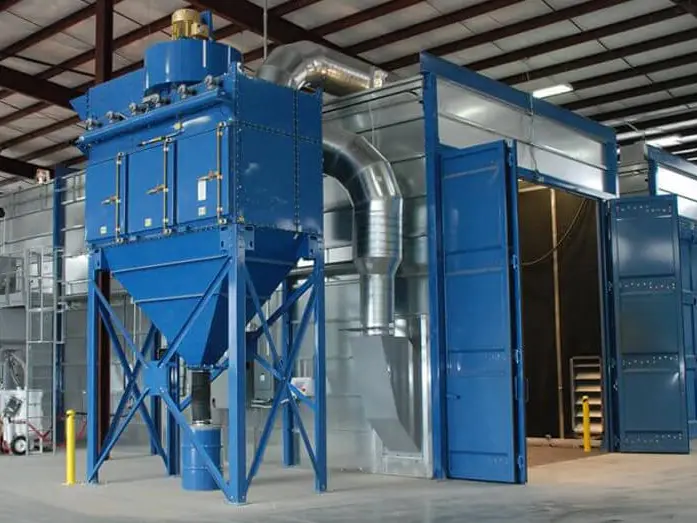
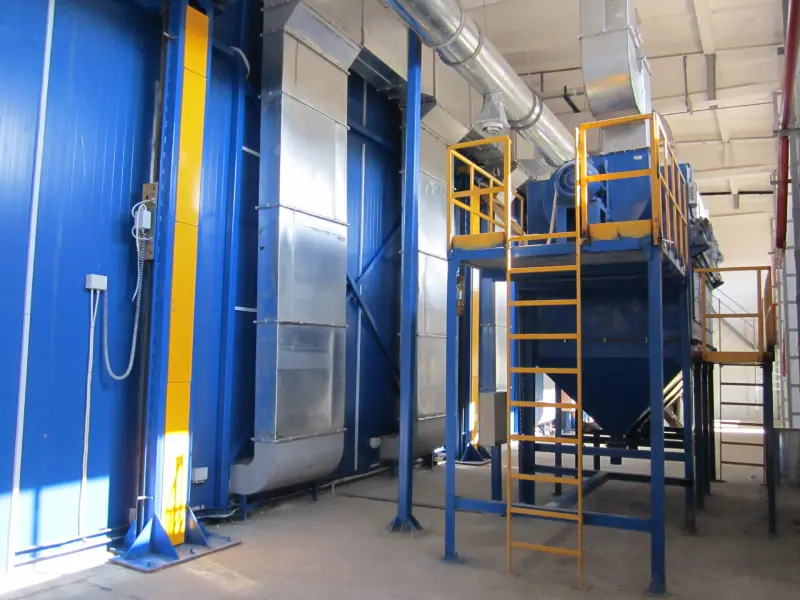
Efficient ventilation is essential for maintaining clear visibility inside the blast room, ensuring operator safety, and meeting environmental protection requirements. The dust collection and ventilation system is designed as an integrated solution that combines a cartridge filter unit, a radial fan, an air duct network, an automatic filter cleaning mechanism, and a dust collection hopper.
During blasting operations, dust and airborne contaminants are continuously extracted from the working area and transported to the filtration unit, where particulate matter is separated from the airflow. The cleaned air is then safely discharged into the atmosphere, providing a healthier and more comfortable working environment while maintaining optimal visibility inside the chamber.
The pulse-jet filter cleaning system automatically removes accumulated dust from the filter elements, ensuring stable airflow, high filtration efficiency, and uninterrupted operation of the equipment. This advanced ventilation solution helps extend filter service life, reduce maintenance requirements, and improve the overall efficiency of the blasting process.
Lighting system
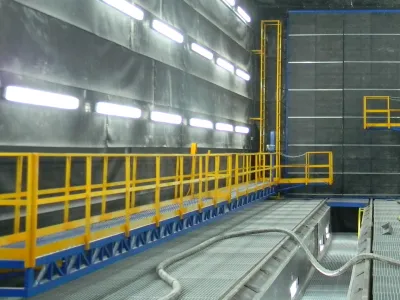
To ensure high-quality work, the chamber is equipped with industrial LED lighting.
Specially protected luminaires provide uniform illumination of the entire work area and maintain functionality even in conditions of intense dust and abrasive exposure.
Technical specifications (standard range)
All dimensions and parameters are indicative. Each room is engineered to individual specification — submit the questionnaire for a custom technical proposal.
| Parameter | Value / Range | Notes |
|---|---|---|
| Internal chamber width | 4 000 – 12 000 mm | To suit workpiece + operator clearance |
| Internal chamber height | 4 000 – 10 000 mm | Including crane hook clearance |
| Internal chamber length | 6 000 – 30 000+ mm | Multi-section modular construction |
| Max. workpiece weight | Up to 40 000 kg (standard); higher on request | Limited by transport carriage capacity |
| Number of blast operators | 1 – 4 simultaneously | Depends on chamber volume and dust extraction capacity |
| Abrasive type | Steel shot S70–S780, steel grit G16–G80 | Other abrasives available on request |
| Achievable cleanliness | Sa 2.5 / Sa 3 per ISO 8501-1 | Dependent on abrasive grade and pressure |
| Surface profile (roughness) | Rz 40 – 100 µm | Per ISO 8503-2 |
| Blast nozzle working pressure | 5 – 7 bar | Supplied by customer’s compressor |
| Dust collection type | Cartridge filter, reverse-pulse self-cleaning | Continuous operation, no manual shaking |
| Air volume extracted | 5 000 – 40 000 m³/h | Scaled to chamber volume and operator count |
| Wall / ceiling lining | Abrasion-resistant rubber, 10 – 12 mm thick | Panels 1.0×3.0 m and 1.0×2.0 m |
| Entry gate drive | Pneumatic, controlled by limit switches | Personnel door in side wall |
| Lighting | Explosion-protected luminaires, ≥ 200 lux at work level | LED on request |
| Operator PPE | Full blast suit, helmet, gloves, climate breathing air unit | 1 set per operator position |
Typical applications by industry






Equipment Orders
To place an order for a blast room, please download and complete the questionnaire, and forward it to the following email address: market@tvagonm.com.ua.
For further consultation regarding the manufacturing of blast rooms, you may contact us by phone at:
+38 (067) 818-18-20 (WhatsApp)
Photo
Additional equipment:
Frequently asked questions
Articles
- Shot blasting equipment: purpose, types, characteristics
- Overview of popular shot blasting equipment models
- Removal of abrasive residue and dust after shot blasting | Surface preparation for painting
- Evaluation of dust content of steel surfaces before painting – ISO 8502-3
- Preservation lines: shot blasting and painting in one solution