Table of Contents
Description of the Sandblasting Process
Description of the Shot Blasting Process
Description of the Wheel Blasting Process
Classification of Wheel Blast Chambers
Advantages and Disadvantages of Sandblasting, Shot Blasting, and Wheel Blasting Technologies
One of the main methods of surface preparation (cleaning and imparting the required roughness) is sandblasting, shot blasting, and wheel blasting treatment.
The topic of differences between sandblasting, shot blasting, and wheel blasting technologies is quite relevant. Substitution of these concepts and terms occurs even in professional circles. At the same time, the differences are very significant, and it is simply impossible to ignore them.
These are completely different types of production equipment, each with its own advantages and objective disadvantages.
In this article, we will examine the differences between sandblasting, shot blasting, and wheel blasting technologies, and evaluate the advantages and disadvantages of each.
Description of the Sandblasting Process
Sandblasting involves cleaning metal using compressed air. The abrasive material in this case is quartz sand. The advantages of sandblasting include the low cost of equipment. Sandblasting is most often used in repair production where high productivity is not required.
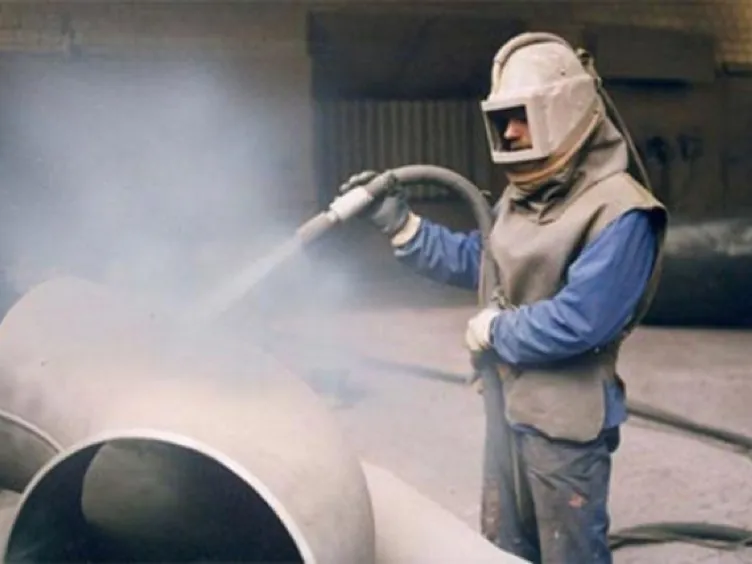
The disadvantages of sandblasting include a very high health risk to workers. The dust generated during the work poses a huge danger to the health of both the operator and personnel in the work area and can lead to serious occupational diseases (silicosis). Unlike shot blasting, sandblasting cannot provide continuous circulation of the abrasive. This makes it impossible to use sandblasting on an industrial scale.
Description of the Shot Blasting Process
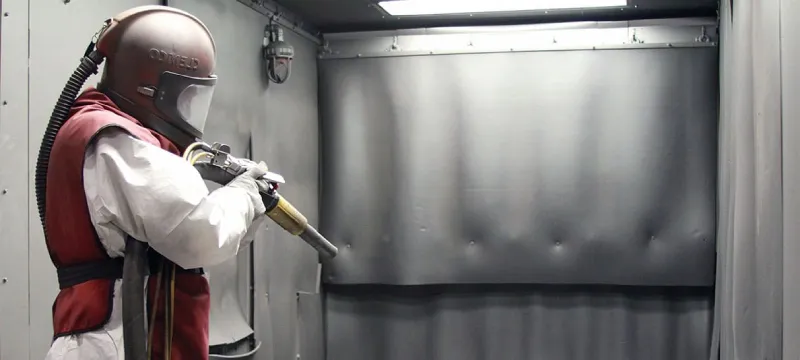
Shot blasting also involves cleaning metal using compressed air. However, the abrasive material used is shot. This allows for a closed-cycle shot circulation. Shot blasting is less productive than wheel blasting, but it is used when it is necessary to clean large-sized items (for example, when cleaning railway cars, large welded metal structures, or when cleaning hard-to-reach areas). Shot blasting is performed in special chambers. The chambers are equipped with ventilation and lighting systems.
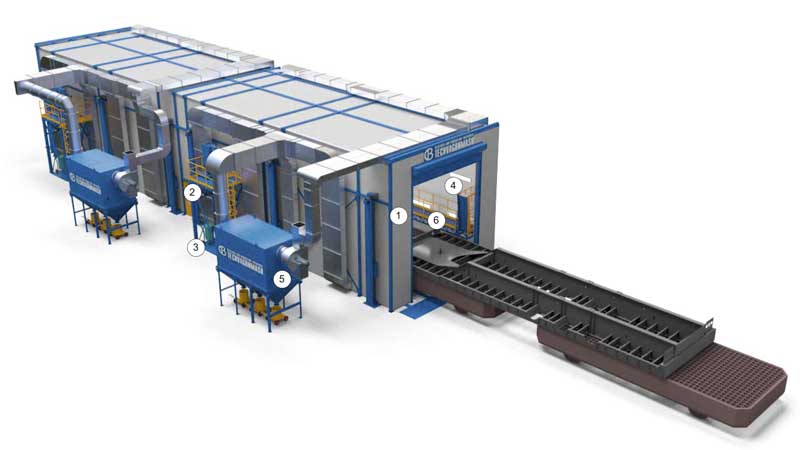
1. Working Chamber
2. Shot Recovery System
3. Shot Blasting Machine
4. Lighting System
5. Air Cleaning System
6. Lifting Platforms
For processing parts at height, shot blasting chambers can be equipped with stationary or lifting platforms. Robotization of shot blasting operations is possible. Towing trolleys or overhead conveyors are most often used as transport means for feeding items into the chamber.
Description of the Wheel Blasting Process
The process of treating the surface with a stream of abrasive material (shot) generated by a turbine.
The essence of wheel blasting is the impact on the surface to be cleaned with a stream of shot. The shot is delivered to the surface accelerated in the wheel blast machine up to 100 m/s. The purpose of wheel blasting is to clean metal from scale, rust, old paint, and to impart the desired roughness to the surface.
The advantages of wheel blasting include:
- No need for large amounts of compressed air, unlike shot blasting chambers, which ensures a low level of electricity consumption.
- High degree of automation is possible; a person’s job consists only of loading/unloading the treated items and operating the wheel blast unit.
- High quality of item processing
- High productivity compared to shot blasting
Classification of Wheel Blast Chambers
- Wheel blast pass-through systems with roller conveyor;
- Wheel blast systems with overhead conveyor (pass-through, pass-through with horizontally closed conveyor, dead-end type);
- Wheel blast systems for pipe cleaning;
- Wheel blast chambers with rotary table;
- Special-purpose wheel blast chambers.
The image below shows the layout of a wheel blast chamber using the example of a machine for cleaning sheet and profile metal products.
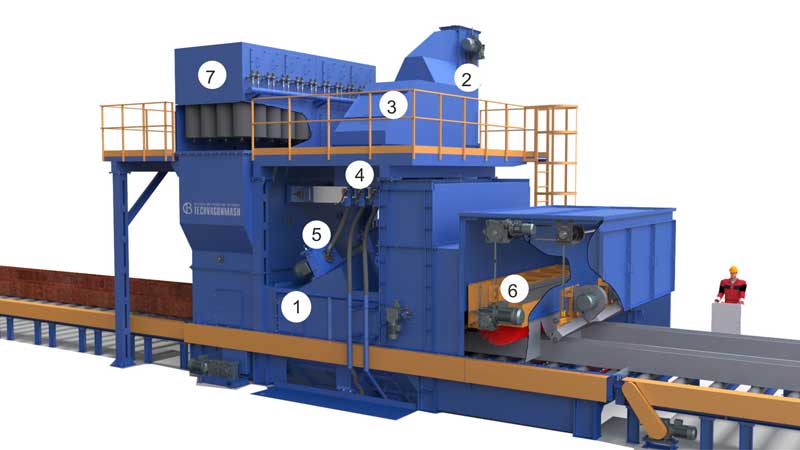
1. Working Chamber
2. Elevator
3. Separator
4. Storage Hopper
5. Wheel Blast Machines
6. Shot Removal Unit from Metal Surface
7. Dust Collection System
Surface Preparation Grades
High-quality surface preparation of metal products is the main factor in ensuring the longest service life of a protective coating. For any type of protective coating, its protective properties are compromised if the surface preparation technology is not followed up to grade 1 according to GOST 9.402-80 (SA 2 ½ SIS 055900).
The characteristics of protective paint coatings and similar coatings applied to steel largely depend on the condition of the steel surface before painting. The main factors affecting these characteristics are:
a) presence of corrosion and mill scale;
b) presence of contaminants on the surface, including salts, dust, oils, and greases;
c) surface profile.
| Sa 1 | Light abrasive blast cleaning | When inspected without magnification, the surface shall be free of oil, grease, and dirt, as well as loose mill scale, rust, paint coatings, and foreign particles. |
| Sa 2 | Thorough abrasive blast cleaning | When inspected without magnification, the surface shall be free of oil, grease, and dirt, as well as most of the mill scale, rust, paint coatings, and foreign particles. Tightly adhering residual mill scale is allowed. |
| Sa 2 1/2 | Very thorough abrasive blast cleaning | When inspected without magnification, the surface shall be free of oil, grease, and dirt, as well as mill scale, rust, paint coatings, and foreign particles. Remaining traces of cleaning are allowed as faint stains, spots, or stripes. |
| Sa 3 | Abrasive blast cleaning to visually clean steel | When inspected without magnification, the surface shall be free of oil, grease, and dirt, as well as mill scale, rust, paint coatings, and foreign particles. It shall have a uniform metallic color. |
Advantages and Disadvantages of Sandblasting, Shot Blasting, and Wheel Blasting Technologies
| Sandblasting | Shot Blasting | Wheel Blasting | |
|---|---|---|---|
| Technology Features | Pneumatic feeding of sand by compressed air under pressure | Pneumatic feeding of shot by compressed air under pressure | Mechanical feeding of shot by blast wheels |
| Features of Items to be Cleaned | Used in repair production (does not require high productivity) | Large-sized items, non-standard products, items of complex configuration (railway cars, agricultural machinery) | Parts, blanks, castings, forgings, pipes, castings, rolled metal |
| Cleaning of hidden / hard-to-reach cavities inside items | Yes | Yes | No |
| Restrictions on weight and dimensions of items | No | No | Yes |
| Use of manual labor | Mandatory | Mandatory (except for robotic shot blasting) | Not required |
| Productivity | Low | Low | High |
| Safety | Low | Moderate | High |
| Need for compressed air | High | High | Low |
| Degree of process automation | Low | Medium | High |
Related articles
Shot blasting problems are not always caused by poor abrasive quality. In practice, the final cost of the process is shaped by a whole set of factors: working pressure, machine type, separator settings, nozzle wear, and how the abrasive is actually cycled through the system.

Shot blasting remains the standard for surface preparation in mechanical engineering due to its speed, repeatability, and the cost-effectiveness of abrasives over large volumes. In this new article, we explore the operating principle, types of shot and equipment, and key differences from sandblasting.
10 practical rules that should be built into the design of shot blasting equipment and into the workshop's operating procedures.
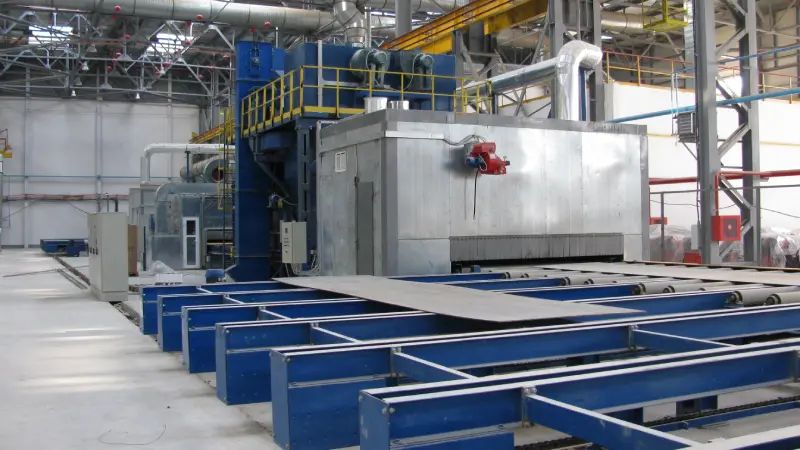
In this article, we will look at the types of transport systems used for shot blasting and painting of rolled metal and welded metal structures.
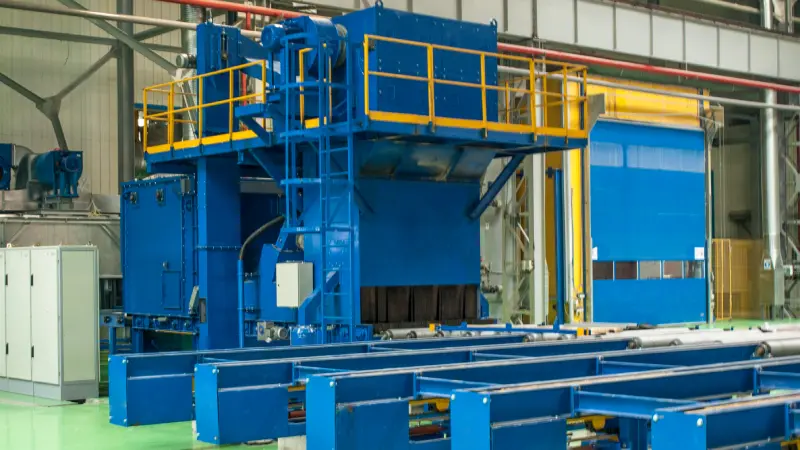
This article discusses the most popular shot blasting machines: a description of their operation and key characteristics.

Learn how to properly clean abrasive residue and dust from metal to ensure reliable surface preparation for painting and extend the service life of steel structures.
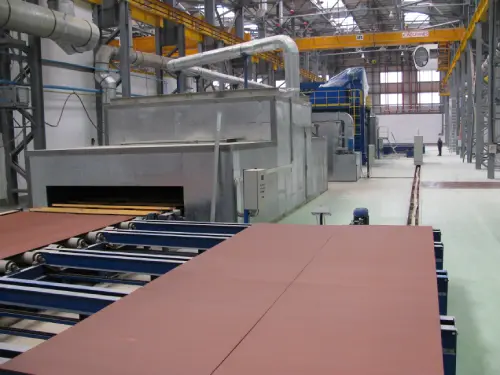
High-quality surface preparation and interoperation protection of rolled metal products are crucial factors in ensuring maximum service life and the highest quality of protective coatings. This preparation can be achieved through shot blasting, followed by the application of a conductive protective primer on the surface of the rolled metal at the stage of its delivery to production.
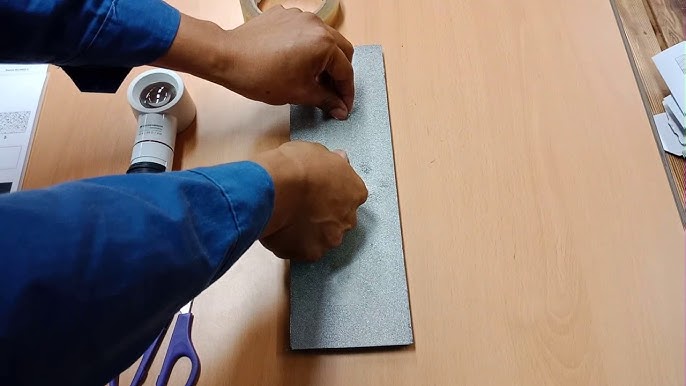
Correct surface preparation is one of the key factors affecting the durability of paint and protective coatings. Measuring the level of dust on steel surfaces before painting helps determine whether additional cleaning and preparation are required.
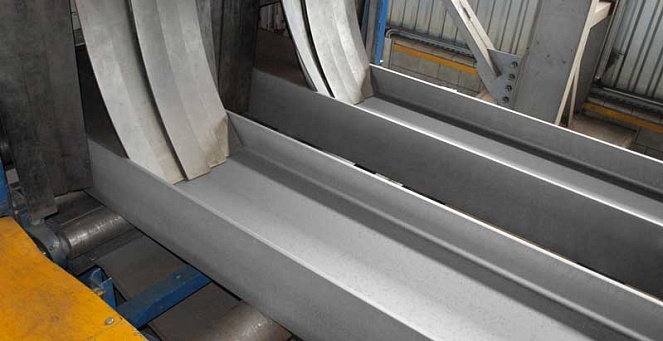
This article provides a brief description of the types and characteristics of shot blasting equipment.