Wagon building is a serial production business, where every minute of line downtime multiplies across the number of units in the output schedule. Unlike a repair cycle, this isn’t about a single item — it’s about repeatability: thousands of identical welds, hundreds of identical car body assemblies, stable geometry shift after shift. Outdated equipment in this kind of system doesn’t just wear out — it caps the line’s cycle time and introduces quality variation between batches. The question isn’t whether to modernize, but where to start and how to do it without disrupting the production program.
Contents:
- Why modernization becomes unavoidable in serial production
- Step 1. Technical audit of the serial line
- Step 2. Prioritizing modernization areas
- Step 3. Phased rollout without disrupting the production schedule
- Step 4. Economic justification and payback
- Step 5. Choosing an equipment supplier
- Frequently asked questions
- Bottom line
Why modernization becomes unavoidable in serial production
Three factors typically push wagon-building plant management toward a technical re-equipment decision:
- Line cycle time capped by outdated equipment. Even if every individual machine still runs, a slow cycle at one stage — manual car body assembly without a jig, for example — limits the daily output of the entire line.
- Customer requirements for batch-to-batch consistency. Supply contracts for rolling stock batches specify body geometry tolerances and weld quality that must stay consistent from unit to unit — something outdated, manual equipment can’t reliably deliver.
- Shortage of skilled welders and assemblers. Serial car body assembly and weld-heavy processes require either a large team of experienced specialists or automation that reduces dependence on scarce labor while maintaining output pace.
Step 1. Technical audit of the serial line
Modernizing without an audit means modernizing blind. Before ordering equipment, you need to know exactly which stage is limiting output. An audit of a serial wagon-building operation typically covers:
- Timing the cycle at each process stage — from car body sub-assembly through welding, painting, and final acceptance;
- Identifying the bottleneck stage — the one with the lowest throughput, which sets the pace for the whole line;
- Assessing the condition of assembly and welding tooling and how well it matches the current model range;
- Comparing actual output against the planned production program for the next 3–5 years, including export contracts.
This is where it becomes clear which stage to modernize first — and it’s often not the one that “looks” the oldest, but the one actually setting the pace for the whole line.
Step 2. Prioritizing modernization areas
A wagon-building plant’s process chain typically covers blank cutting and preparation, car body sub-assembly, welding, surface preparation, painting, and in-shop logistics. Modernizing each stage solves a specific problem:
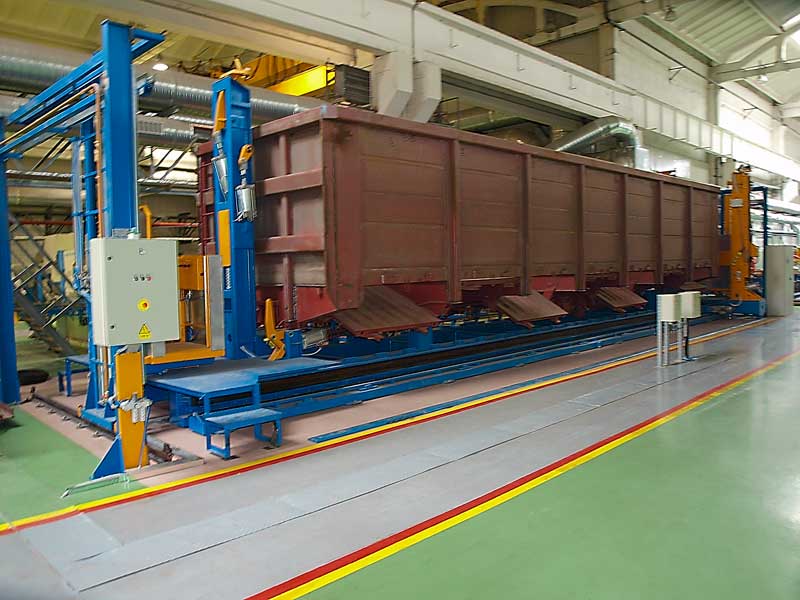
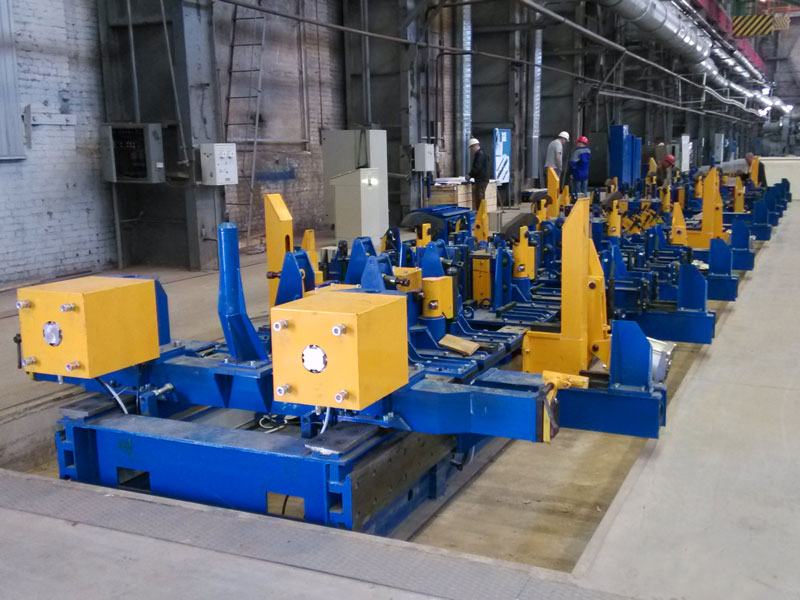
Wagon body assembly
Assembly jigs set the wagon body’s geometric accuracy at the parts-fixturing stage, before welding. Precise, rigid tooling prevents deviations from accumulating unit to unit and has a direct effect on the reject rate at final acceptance.
Machining of underframes and center sills
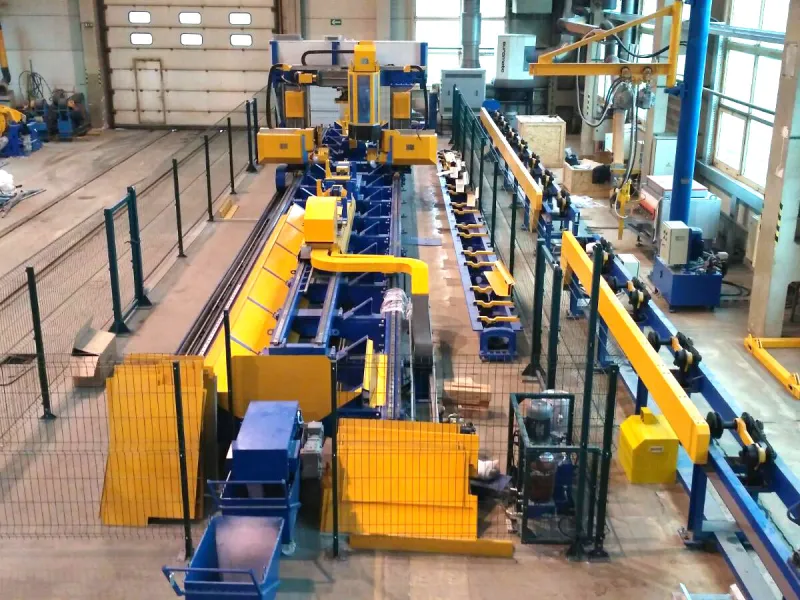
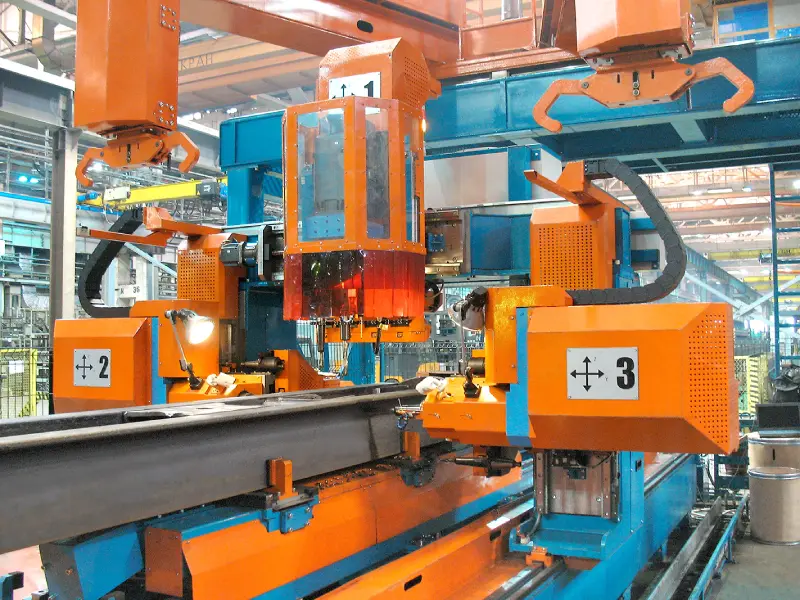
Automated drilling systems for center sills and wagon underframes provide precise hole positioning along the full length of the beam — for brake equipment mounts, suspension components, and attached fittings. Manual drilling or drilling on general-purpose machines produces coordinate variation from one frame to the next, which turns into fastener fitting and rework during assembly. CNC drilling complexes run a single program across the whole batch, keeping hole placement identical on every beam and cutting the cycle time of this operation — an effect that becomes especially visible when moving to large-batch output.
Welding stage
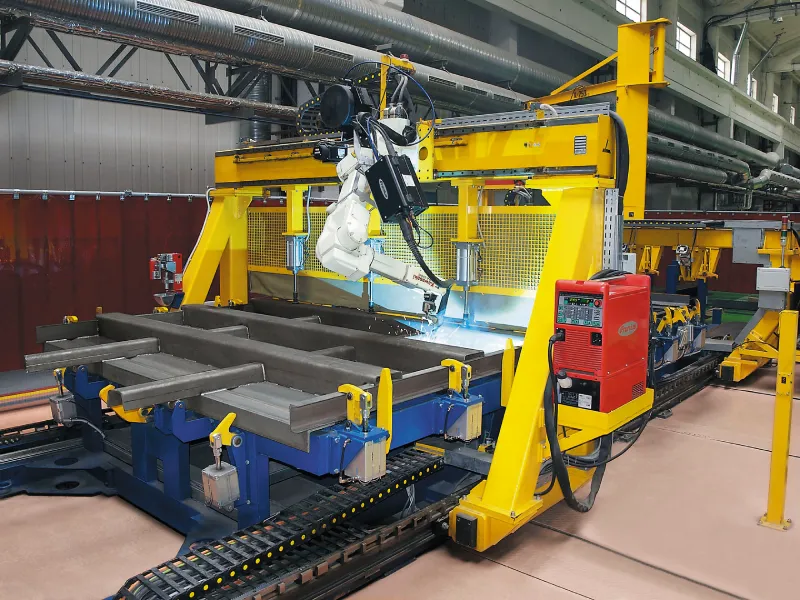
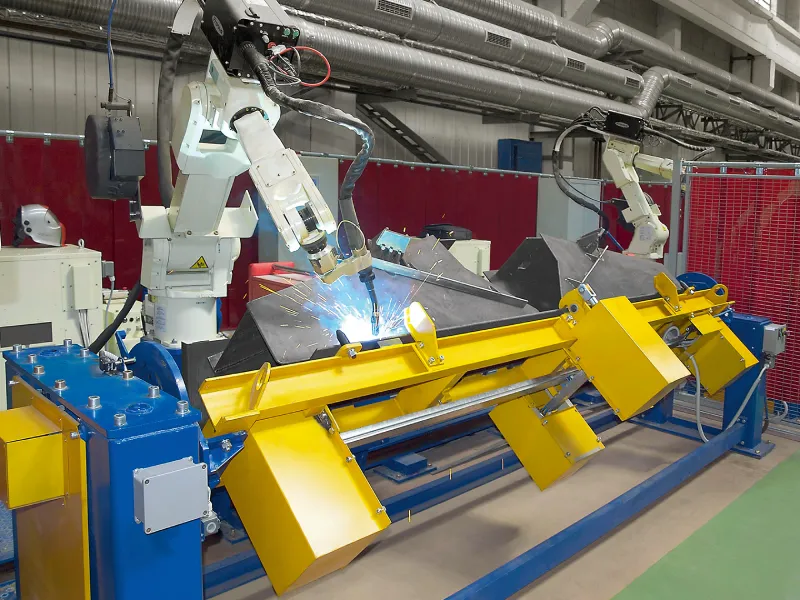
In serial production, welding positioners and manipulators keep weld position repeatable, while robotic welding complexes deliver identical quality on every unit in the batch, regardless of shift, operator fatigue, or human factors. This is usually the first stage prioritized when moving from small-batch to large-batch output.
Surface preparation
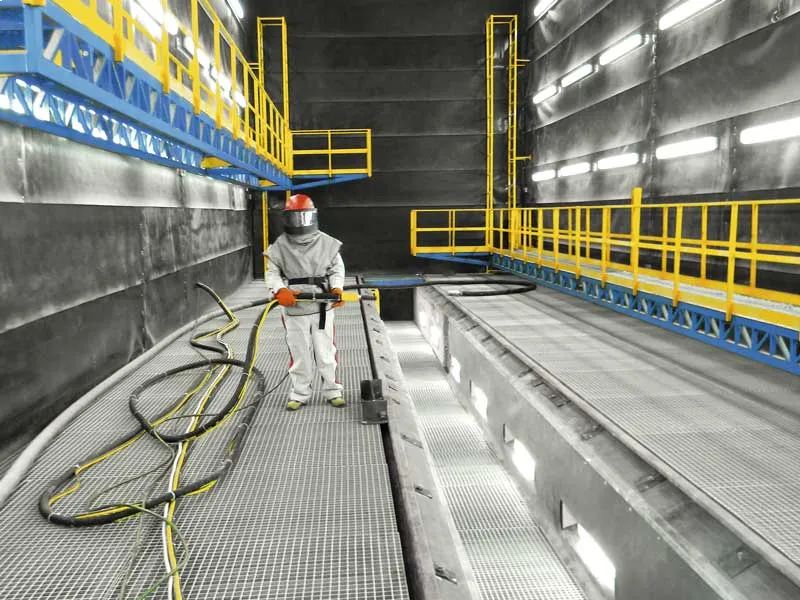
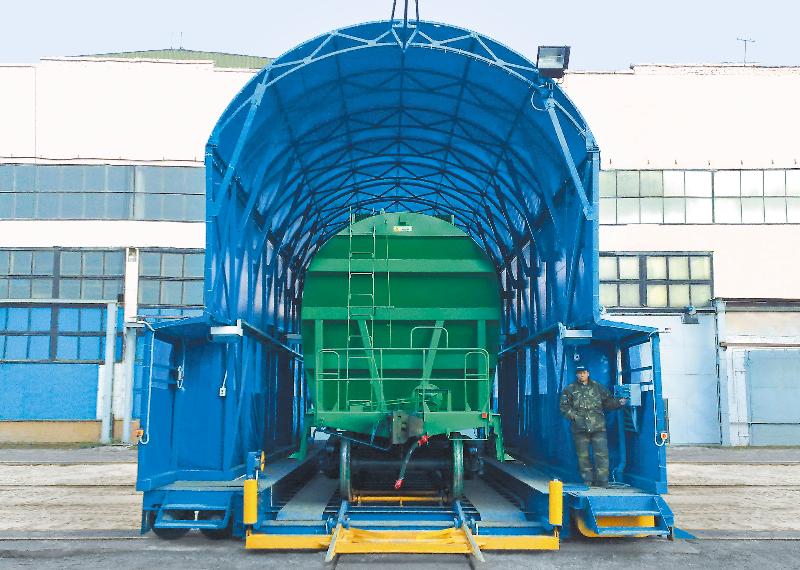
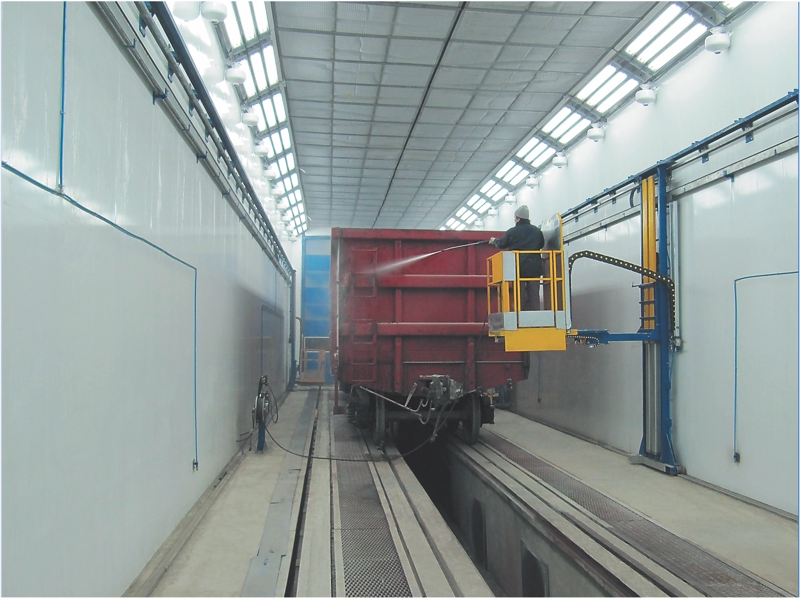
Shot blasting equipment determines coating adhesion quality across the entire body series. Outdated chambers produce uneven treatment and burn through more abrasive — modern shot blasting units cut cycle time and reduce variation in surface preparation quality between units.
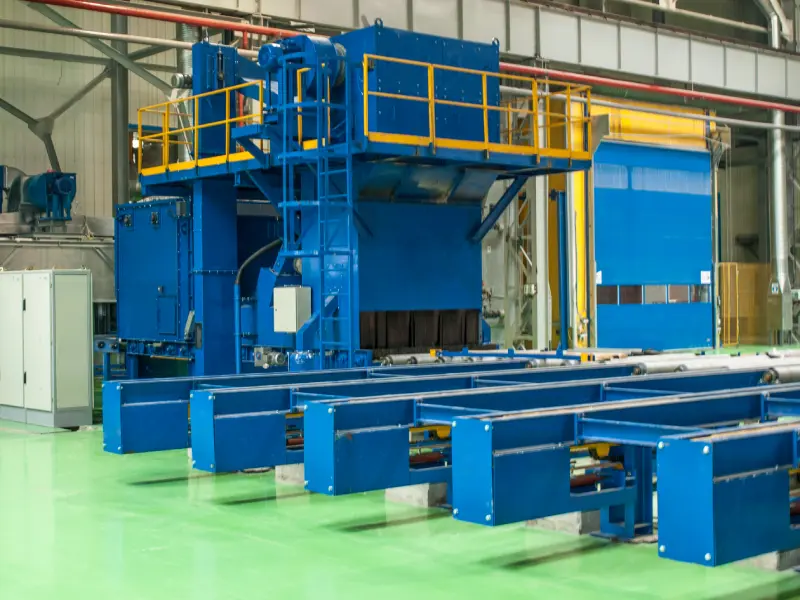
Roller conveyor shot blast machines
Shot blasting rooms for cleaning railway freight and passenger wagons
In-shop logistics
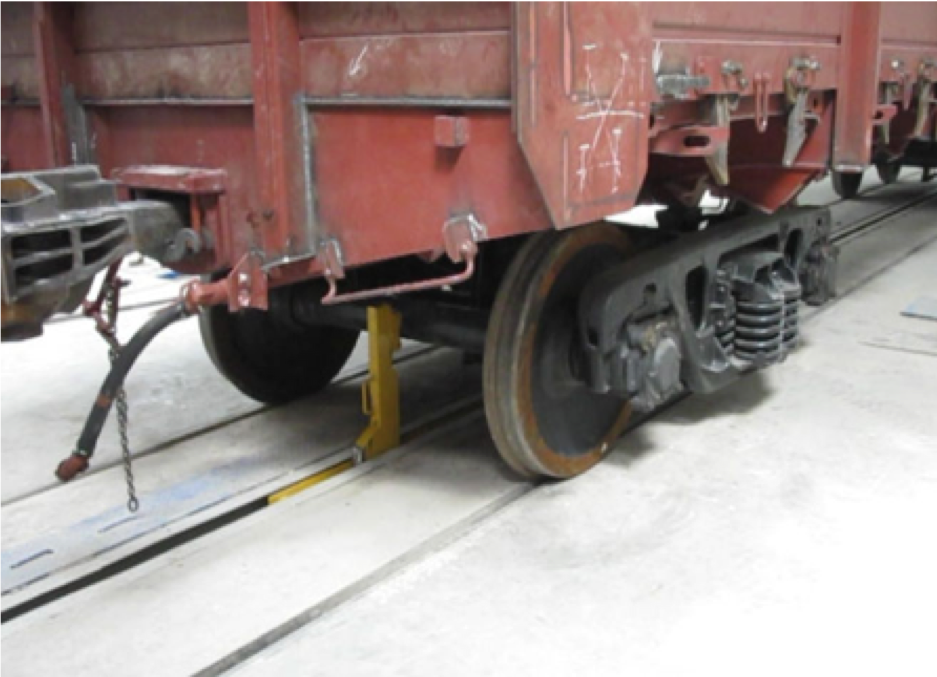
Transfer cars and transborders for moving car bodies between assembly-and-welding line stations are a critical element of cycle time. In flow production, modernizing them directly cuts inter-operation idle time and synchronizes station speed.
Painting and drying
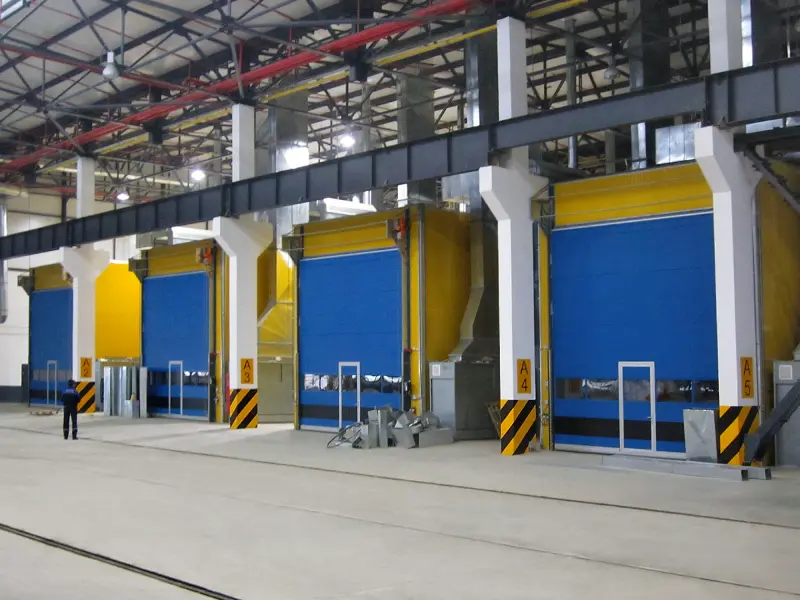
Paint and drying chambers with controlled temperature keep the drying cycle consistent across a serial flow of car bodies and reduce energy consumption compared to older-generation chambers.
Warehousing
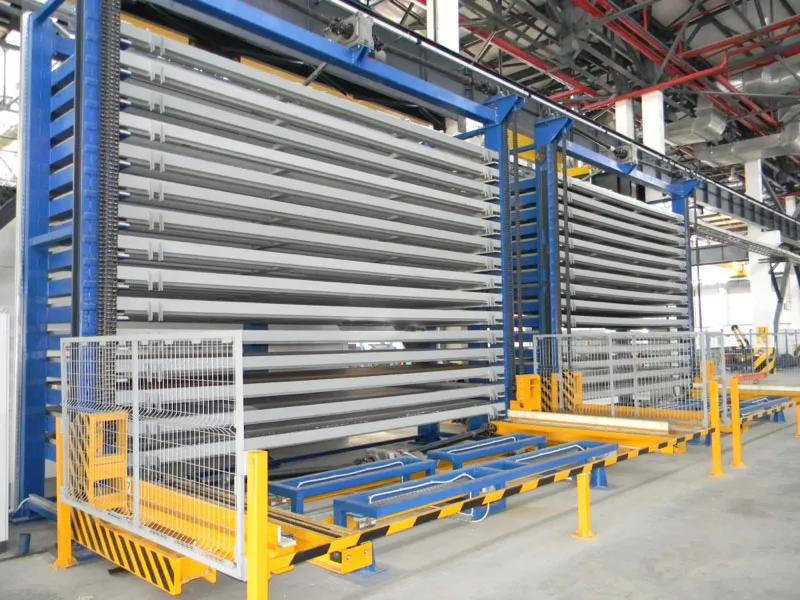
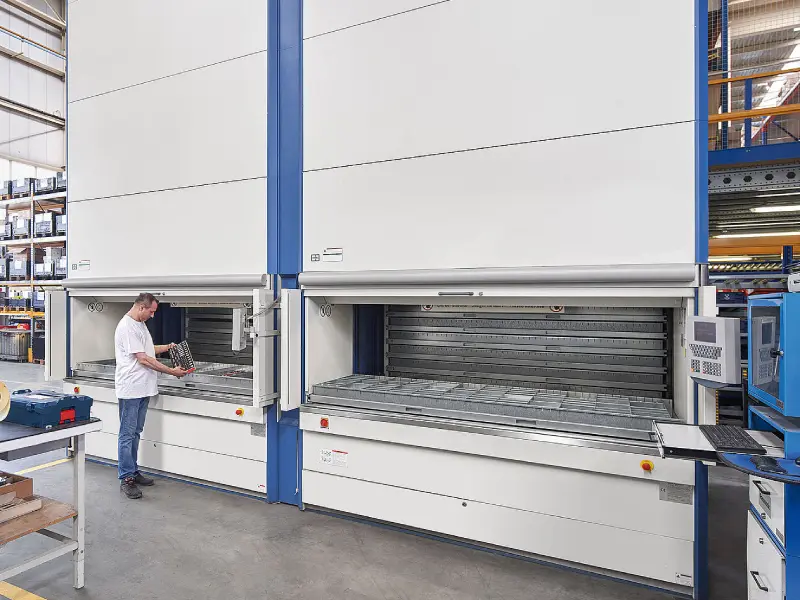
Automated storage systems for components and blanks ensure parts reach assembly stations on the line’s pace, which matters most when the model and configuration range is wide.
Step 3. Phased rollout without disrupting the production schedule
Management’s biggest fear about modernizing serial production is stopping the line and missing delivery schedules. In practice, this is avoidable if a few principles are followed:
- Modernize station by station, not the whole line at once. While new equipment is being installed at one assembly or welding station, the rest continue operating on the existing setup with temporarily redistributed load.
- Buffer stock between stages. During commissioning, a buffer of sub-assemblies and blanks is built up so neighboring stations don’t sit idle waiting on the stage being upgraded.
- Installation during changeover windows and scheduled shutdowns. Removing old tooling and installing new tooling is scheduled, where possible, for weekends, holidays, or planned line shutdowns.
- Operator training before startup. Operators and welders are trained at the supplier’s facility or on comparable equipment before installation begins, cutting the time needed to reach design cycle time.
Step 4. Economic justification and payback
Modernization investment in serial production should be evaluated not just by equipment cost but by its combined effect:
- Faster line cycle time and higher daily/monthly output of finished wagons;
- Less quality variation between units in a batch, and fewer rejects at final acceptance as a result;
- Lower consumption of abrasive media, welding consumables, electricity, and compressed air per unit;
- Lower scheduled and emergency maintenance costs for new equipment versus old;
- Reduced dependence on scarce welding and assembly trades as output volume grows.
For most wagon-building plants, payback on modernizing a single stage (an assembly jig or welding station, for example) comes from higher daily output and fewer rejects — the exact timeframe depends on batch size and the plant’s current cost of downtime and rework.
Step 5. Choosing an equipment supplier
When selecting a supplier for a comprehensive modernization of serial production, it’s worth looking beyond equipment price to:
- Track record specifically in wagon building — serial car body assembly has different requirements from one-off repair work;
- The ability to build tooling (jigs, positioners) matched to a specific model range and the customer’s body geometry;
- The ability to supply equipment either as individual stations or as complete lines with a unified cycle time and control system;
- Service support and operator training included in the supply scope;
- Reference projects at comparable wagon-building plants and willingness to show completed installations.
Frequently asked questions
Where should modernization of a wagon manufacturing plant begin?
With a technical audit of the serial production line: measuring cycle time at each process stage, identifying bottlenecks that cap daily or monthly output, and comparing actual capacity with the planned production program.
Can a wagon-building plant be modernized without stopping output?
Yes, with a phased approach: process stages are upgraded sequentially, and output is temporarily redistributed across parallel stations and shifts while new equipment is being installed.
Which stages of a wagon manufacturing plant are modernized first?
Plants typically start with car body assembly and welding — assembly jigs, positioners, and robotic welding — since these stages set the line’s cycle time and geometric accuracy.
How long does technical re-equipment of a wagon-building plant take?
Timelines depend on scale: a single process stage takes roughly 2 to 6 months including design and installation, while comprehensive modernization of the assembly-and-welding line takes 12 months or more.
Bottom line
Technical re-equipment of a wagon-building plant isn’t a one-off machinery purchase — it’s a managed process: auditing the serial line’s cycle time, prioritizing process stages, phased installation without disrupting output, and a well-reasoned supplier choice. Techvagonmash designs and supplies equipment for the full modernization cycle of freight wagon manufacturing plants — from assembly jigs, automated drilling systems for underframes and center sills, and welding positioners to robotic welding complexes, shot blasting units, and paint-and-drying chambers — and is ready to start with a technical audit of your line’s cycle time.
Related articles
This article covers three automated drilling systems, the engineering approach behind them, and the turnkey solutions Techvagonmash offers to railcar builders and repair shops. The advantages of this equipment class stand out most clearly when compared with the conventional methods still used across much of the transport machinery industry.
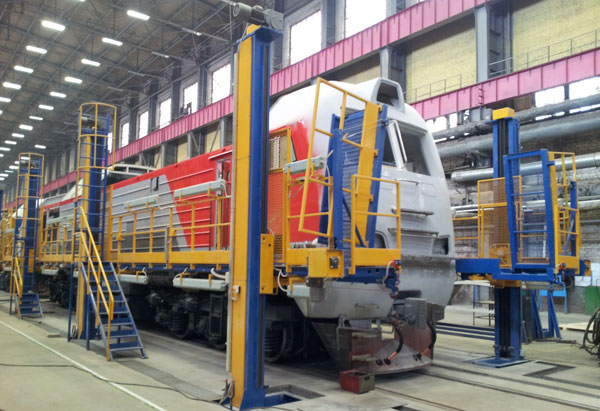
Traditionally, fixed platforms have been used at railcar manufacturing plants for exterior finishing and final body processing. However, conventional solutions have significant drawbacks: limited lifting range, difficulty in positioning workers at the required height, non-compliance with modern industrial safety standards, and inconvenient operation.
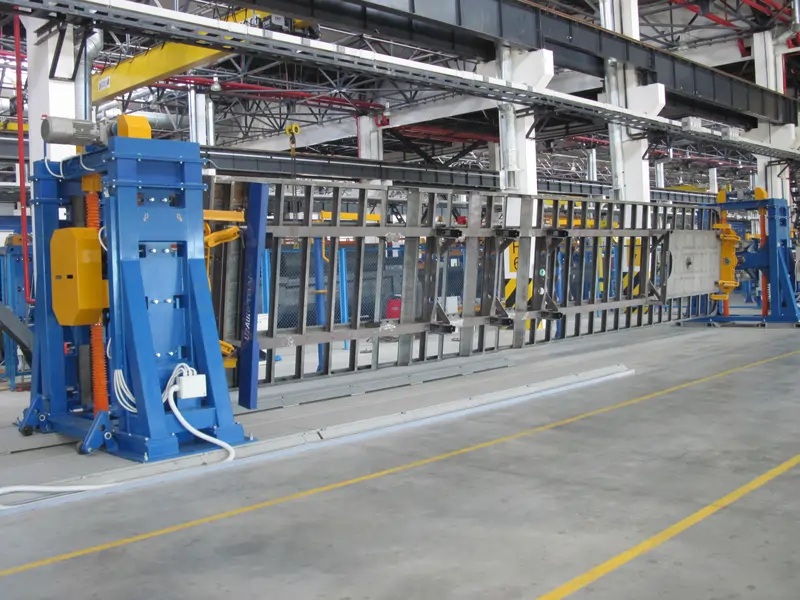
This article discusses the main advantages of using positioners when welding.