Content
- Automated line for the sidewall bottom chord and centre sill I-beam
- Automated centre sill drilling stand
- Universal automated frame drilling stand
- FAQ
- Conclusion
This article covers three automated drilling systems, the engineering approach behind them, and the turnkey solutions Techvagonmash offers to railcar builders and repair shops. The advantages of this equipment class stand out most clearly when compared with the conventional methods still used across much of the transport machinery industry.
Automated line for the sidewall bottom chord and centre sill I-beam
At many plants still running on legacy technology, the process starts with workers loading a part onto a work stand with an overhead crane. Hole positions are then marked out manually or with a template, followed by centre-punching or, where needed, pilot drilling. After drilling on radial drill presses, the part goes to riveting, and once that’s done, the angle bar or I-beam is carried back to storage by crane.
As this sequence shows, the overhead crane is used at least three times during drilling and riveting alone — and given how much demand there is on that crane elsewhere in the shop, waiting for it eats up significant time. This workflow also requires several operators from the outset, yet even so the full set of operations takes anywhere from ninety minutes to two hours. On top of the poor throughput, it demands constant, exhausting physical effort from the crew, is frequently accompanied by spills of cutting fluid that leave slippery patches on the shop floor, and generates metal waste that clutters the work area. Together these factors slow down production, push up part cost, and create unsafe working conditions.
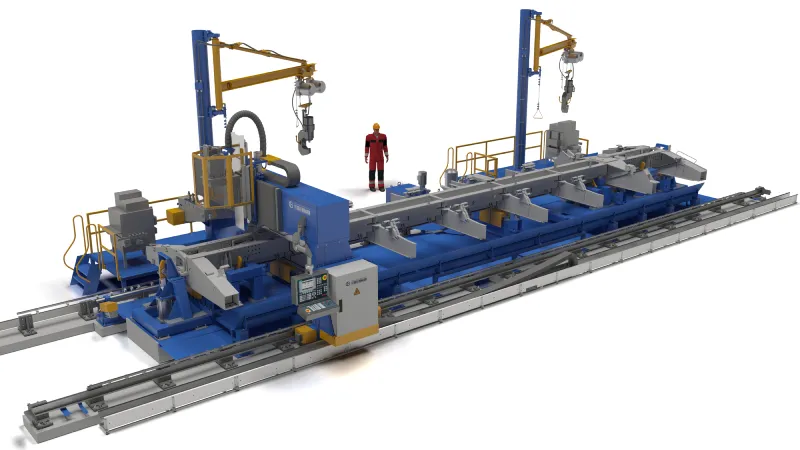
Techvagonmash’s automated line for the sidewall bottom chord and centre sill I-beam eliminates all of these drawbacks. Every operation runs in a single automated flow with minimal human involvement. The line operator’s job is limited to loading the blank parts onto the line, selecting and starting the required processing program from the control panel, and visually monitoring the cycle. During operation, the angle bar or I-beam is automatically clamped and positioned by the line’s pneumatic components, after which drilling proceeds automatically. To account for varying hole diameters, the line comes equipped with a tool magazine that the drilling portal’s automation draws from according to the pre-loaded program. Overall, drilling the part’s holes takes just 10-15 minutes, and processing the entire part — including riveting — takes no more than 45 minutes.
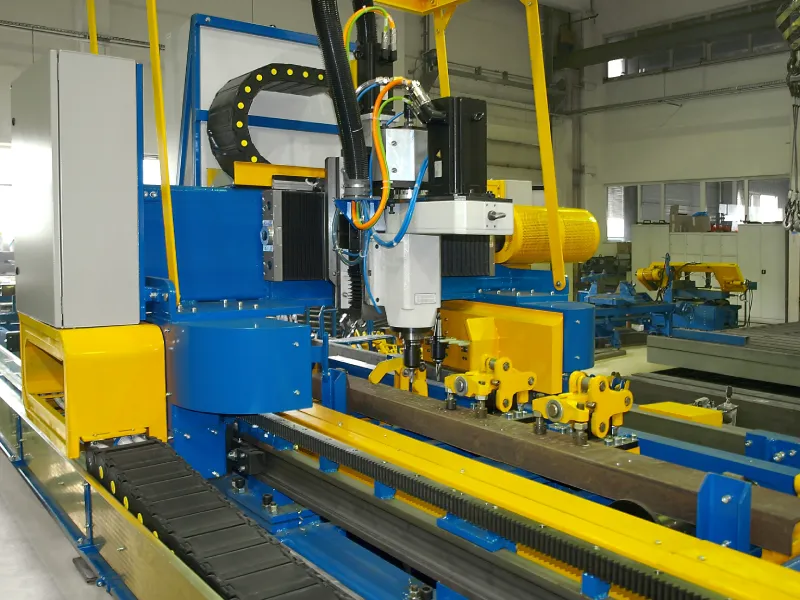
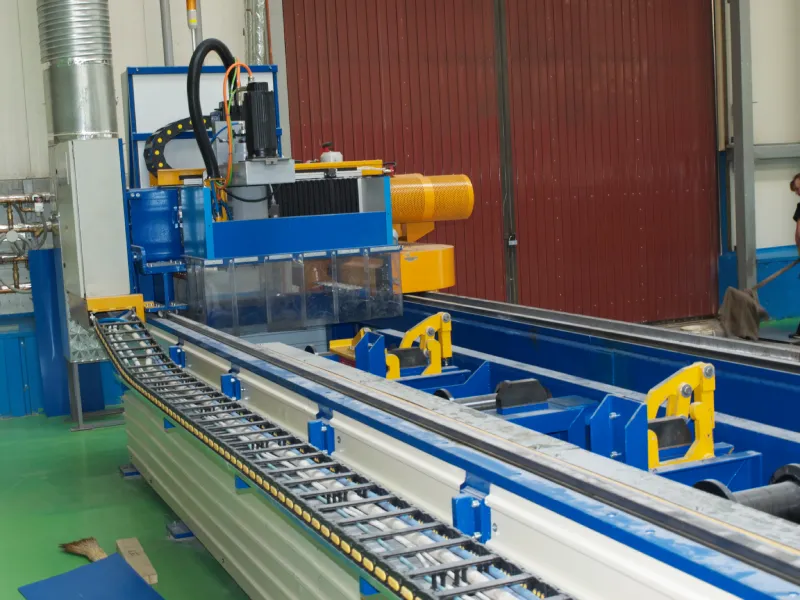
Automated line for the sidewall bottom chord and centre sill I-beam
Techvagonmash’s sidewall bottom chord and centre sill I-beam lines are currently in successful operation at railcar-building plants in Astana (Kazakhstan); Bryansk and Neryungri (Russia); Mogilev (Belarus); and Popasna (Ukraine).
Automated centre sill drilling stand
Before this type of equipment existed, centre sills were drilled on radial drill presses, with most of the burden falling on the drill operator — who had to load the sill onto the stand, mark hole locations by hand, and run the radial drill press itself. Once one set of holes was finished, the operator typically had to manually flip the sill and repeat the process on the other side.
At plants still relying on these older methods, one radial drill press and one operator can drill a centre sill in 2.5-3 hours at best. Adding more presses and operators shortens the cycle time, but overall labor input stays roughly the same. Even the turning fixtures found at nearly every plant do little to speed up the job.
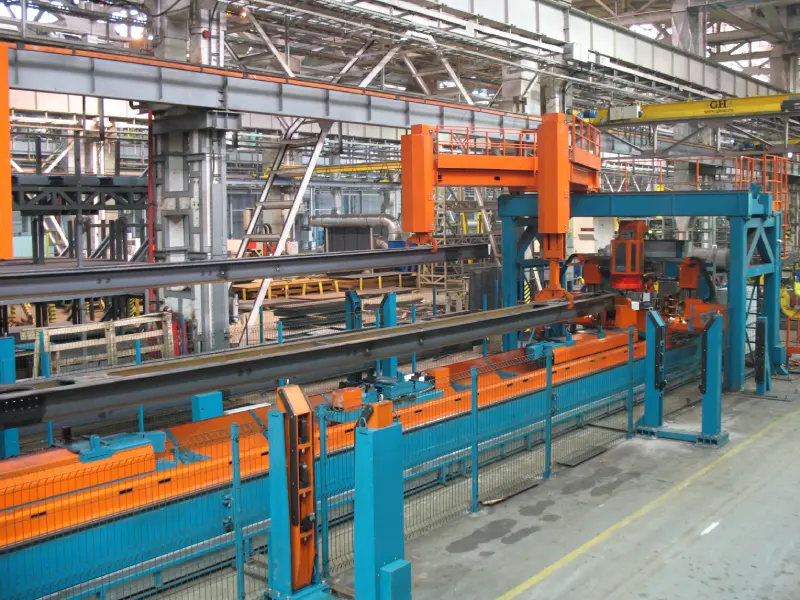
When designing the automated centre sill drilling stand, Techvagonmash’s engineers addressed every one of these shortcomings, giving the new system a set of genuinely unique characteristics. Drilling and every other process step are fully automated. The operator only needs to load the centre sill onto the stand’s frame using a crane — pneumatic clamps and pushers handle the rest of the positioning and fixturing. A high-tech drilling portal fitted with two drilling heads then drills the full set of holes on both sides of the sill simultaneously. Because hole diameters vary, the portal carries two tool magazines that switch automatically according to the operator’s program. The portal’s automation can also independently locate the centre sill’s stop positions, using a precision-positioning probe together with a pneumatic clamping system and a coolant supply, collection, and filtration system.
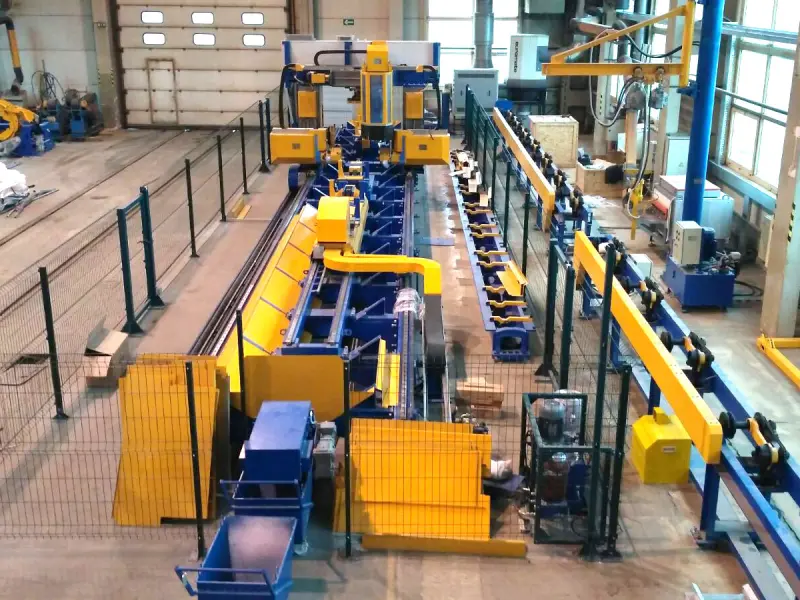
Automated centre sill drilling system for freight railcars (1 portal)
Automated centre sill drilling system for freight railcars (2 portals)
Automating the centre sill drilling stand delivers high precision and hole-to-hole consistency throughout the entire cycle. Drilling a single centre sill on Techvagonmash’s single-portal automated stand takes 45-50 minutes. Automation also extends tool life by keeping cutting conditions gentle and consistent. A single trained operator can run the stand, and because the portal moves along the part on its own rack-and-pinion drive, the floor space needed to process a centre sill is cut in half. This stand is already in operation at plants in Astana (Kazakhstan) and Popasna (Ukraine).
Universal automated frame drilling stand
Techvagonmash’s third system is a universal automated frame drilling stand, used in the production of gondola cars, hopper cars, boxcars, and other railcar types.
Universal automated frame drilling stand
Frame drilling is a labor-intensive process, so most plants try to cut processing time by adding extra equipment and splitting the work into separate stages — which from the outset means bringing in more staff, raising production cost. At one existing railcar plant, for example, three separate radial drill presses are used just for frame drilling, and centre plate drilling is handled as a separate operation requiring yet another dedicated drill press. Even with all that extra equipment, the plant only brought total frame processing time (including riveting) down to 20-25 minutes. But at what cost?
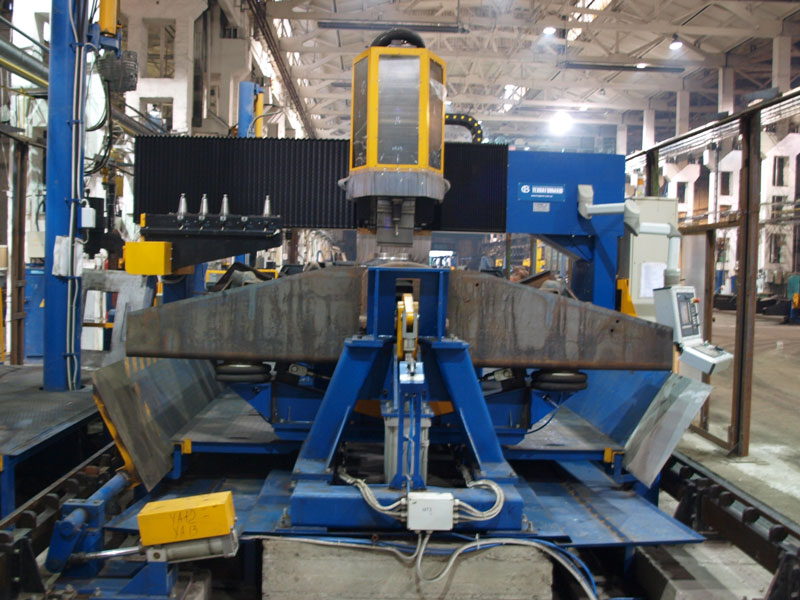
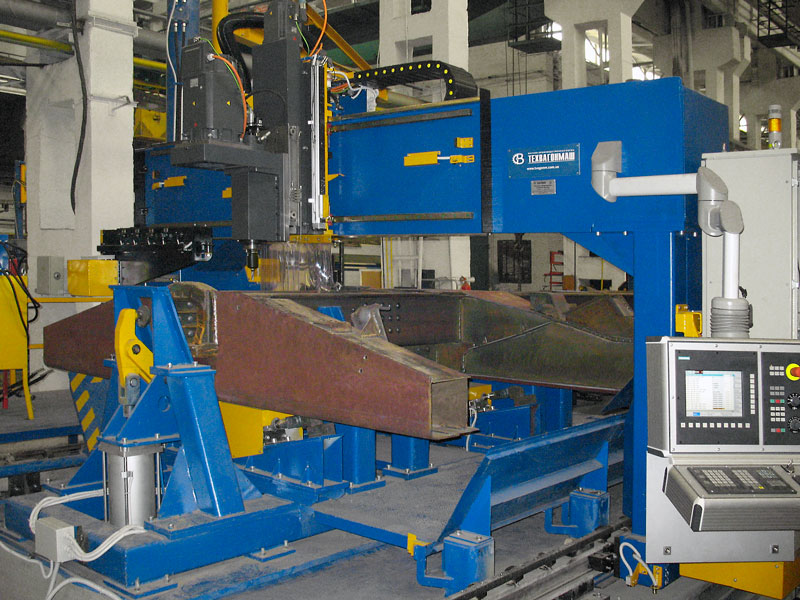
Automated railcar frame drilling and riveting system
Now compare that to what Techvagonmash’s automated drilling stand can do. Like most of the company’s equipment, it needs just one operator, who loads the railcar frame onto the stand with an overhead crane — fixturing happens automatically from there. Once positioned, the drilling portal locates the hole layout on its own and drills it using the correct tooling, with no manual intervention. Automation also removes the need to pre-drill holes in the centre plates and the plates that hold the draft gear, and the drilling portal’s program even includes the data needed to drill mounting holes for the brake system brackets.
The frame stand shares the same core feature set as the other two systems: a coolant supply, collection, and filtration system for reuse; and a full pneumatic system for clamping and holding the frame in place. Its rack-and-pinion drive means a single portal can handle every hole on the frame. As a result, total frame processing time (riveting and drilling) drops to 40 minutes, of which roughly 25 minutes is drilling.
FAQ
How long does drilling take on Techvagonmash’s automated systems?
Processing the bottom chord and centre sill I-beam takes no more than 45 minutes including riveting. Centre sill drilling takes 45-50 minutes. Frame processing takes up to 40 minutes, of which roughly 25 minutes is drilling.
How many operators are needed?
All three systems run with a single operator — loading the workpiece, selecting the program, and monitoring the cycle. Everything else is automated.
Where is this equipment already in operation?
At plants in Astana (Kazakhstan), Bryansk and Neryungri (Russia), Mogilev (Belarus), and Popasna (Ukraine).
Which railcar types can the frame stand handle?
Gondola cars, hopper cars, boxcars, and other railcar types.
Conclusion
Drawing on years of engineering experience, Techvagonmash has built equipment that is genuinely advanced in its specifications, based on reliable engineering solutions that hold their own in today’s market. The equipment described here, while built for railcar manufacturing, can readily be adapted by Techvagonmash’s engineers for shipbuilding, heavy machinery manufacturing, metal structure production, and other industries.
Looking to size a drilling system for your production line?
Get in touch — Techvagonmash’s engineers will match a configuration to your railcar type and prepare a commercial proposal. See also the full product catalog and turnkey solutions.
Related articles
This article covers three automated drilling systems, the engineering approach behind them, and the turnkey solutions Techvagonmash offers to railcar builders and repair shops. The advantages of this equipment class stand out most clearly when compared with the conventional methods still used across much of the transport machinery industry.
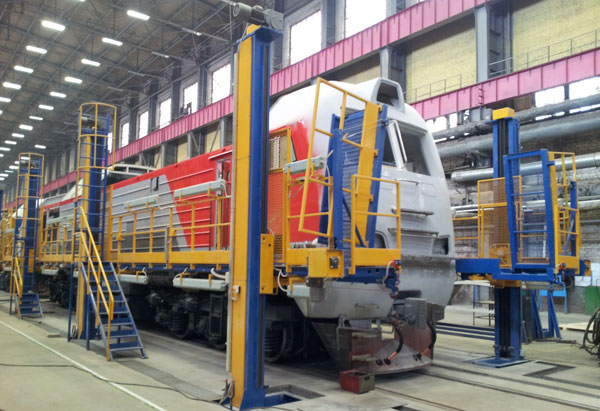
Traditionally, fixed platforms have been used at railcar manufacturing plants for exterior finishing and final body processing. However, conventional solutions have significant drawbacks: limited lifting range, difficulty in positioning workers at the required height, non-compliance with modern industrial safety standards, and inconvenient operation.
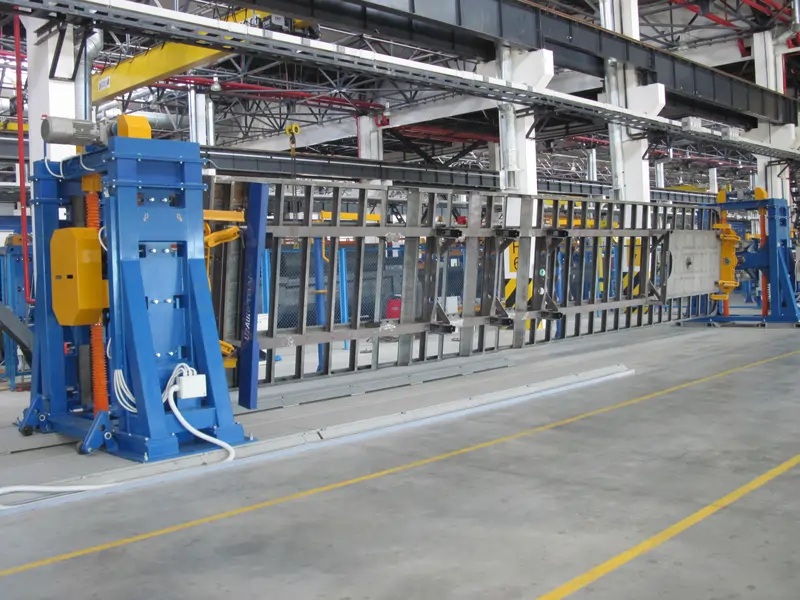
This article discusses the main advantages of using positioners when welding.