When you need to remove scale and rust, prepare a surface for painting or strengthen a part, the same question always comes up: wheel (turbine) blasting or air (pneumatic) blasting? Both are called “shot blasting” in everyday speech, yet they use two different ways of throwing abrasive, different equipment and different economics. A wrong choice is expensive: you either overpay for throughput you do not need, or end up with a bottleneck in production and an inconsistent surface finish.
In short. Turbine (wheel) blasting is the choice for serial cleaning of large parts of simple to medium complexity: frames, beams, plate, profiles, welded structures. Pneumatic (air) blasting is the choice for complex geometry, one-off and small-batch work, local treatment, repair and delicate materials. For most plants with a mixed product range, a combination works best: the bulk of the work in a turbine cabinet, shadow zones and small parts with air blasting.
Contents
- How wheel blasting differs from air blasting
- Turbine method: how it works and where it is used
- Pneumatic method: how it works and where it is used
- Comparison table of criteria
- How to choose a method for your part
- What to choose: examples by part type
- Economics: what the cost of treatment consists of
- The combined approach
- Common selection mistakes
- Techvagonmash equipment
- Frequently asked questions
How wheel blasting differs from air blasting
Both technologies follow the same principle: a stream of hard particles (shot, grit, grains) strikes the surface, removes contaminants and creates the required micro-profile. The difference lies in what accelerates the abrasive:
- Wheel (turbine) blasting — the abrasive is accelerated by the centrifugal force of the blades of a fast-rotating wheel (the turbine, or throwing wheel). It is also called centrifugal blasting.
- Air (pneumatic) blasting — the abrasive is accelerated by a jet of compressed air and leaves through a nozzle. It is also called abrasive blasting or nozzle blasting.
In English, “shot blasting” is often used loosely for both, and in Russian and Ukrainian the two methods have separate names. To avoid confusion, specify the method — turbine or pneumatic — and the purpose in your technical specification: cleaning, preparation for coating or strengthening (shot peening).
Turbine method (wheel blasting): how it works and where it is used
Operating principle
Shot is fed into the centre of a rotating wheel, and the blades accelerate it to a speed of several tens of metres per second and direct it at the part. One turbine throws from about a hundred to several hundred kilograms of abrasive per minute, so a wide zone is treated in a single pass. The abrasive — usually metallic (cast steel shot, steel grit, cut wire) — is collected, cleaned of dust and scale in a separator and returned to work. The cycle is closed, and the shot survives many cycles before it wears out.
Types of cabinets
The part moves relative to the turbines, so the cabinet type is chosen to suit the shape and mass of the product:
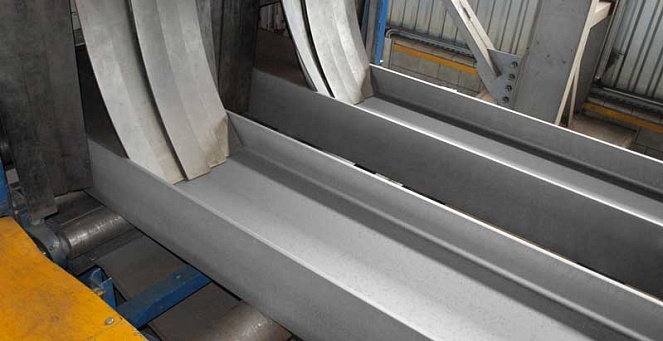
- through-feed machines with a roller conveyor — for plate, profiles, beams, pipes and welded sections;
- overhead rail (monorail) machines — for castings, forgings and medium-sized parts that can be hung;
- turntable machines — for heavy, bulky one-off products;
- tumble and tunnel units — for small parts in bulk.
Strengths
- high productivity, especially on large areas;
- a stable, repeatable result: the process is set by machine parameters, not operator skill;
- low cost per square metre at high volumes;
- a closed abrasive cycle and built-in dust extraction;
- the ability to integrate the machine into an automated “blasting — priming — drying — painting” line.
Limitations
- higher capital cost and more demanding requirements for the site and foundation;
- “shadow” zones: a turbine reaches internal cavities, deep pockets and narrow gaps less well;
- for one-off or very varied parts, setup and loading can be unjustifiably complex;
- the equipment is stationary: a structure cannot be treated on site.
Pneumatic method (air blasting): how it works and where it is used
Operating principle
The abrasive is mixed with compressed air (working pressure usually 0.5–0.8 MPa, or 5–8 bar) and ejected through a nozzle. Feed may be by injector (the abrasive is drawn in by the airflow) or by pressure pot (from a sealed vessel — a “sandblasting machine”). The jet is directed by an operator or a manipulator, so the effect can be aimed precisely at the required area.
Abrasives
The range is wider than for a turbine: steel shot and grit, aluminium oxide (corundum), garnet, glass beads, slag abrasives, crushed nut shell and others. This matters for parts where peening or iron contamination must be avoided — for example stainless steel, aluminium or titanium. Silica sand is banned or restricted in many countries because of the risk of silicosis, and its use is not recommended.
Configurations
- manual cabinets (glove-box or walk-in type) — for small and medium parts;
- blast booths and rooms — for large products and structures;
- automated units with manipulators and robots;
- mobile machines — for work on site: tanks, bridges, ship hulls, repair.
Strengths
- access to hard-to-reach places and treatment of complex geometry;
- flexibility: abrasive, pressure and nozzle can be changed quickly to suit the part;
- moderate capital cost and compact equipment;
- local treatment — only welds, defective areas or repair zones;
- mobility — treatment on site.
Limitations
- high compressed air consumption: a nozzle of 8–10 mm at about 0.7 MPa uses roughly 4–6 m³/min (about 140–210 cfm), and a 12 mm nozzle about 9–10 m³/min. Producing that much air takes tens of kilowatts of electricity per nozzle;
- lower productivity per unit area than turbines;
- quality depends on operator skill and fatigue in manual work;
- with single-use mineral abrasives — the cost of the abrasive itself, its disposal and a heavier environmental load;
- harsh working conditions: a protective helmet with a clean air supply and effective dust extraction are required.
Comparison table of criteria: turbine and pneumatic methods
| Criterion | Wheel blasting (turbine) | Air blasting (pneumatic) |
|---|---|---|
| How the abrasive is accelerated | Centrifugal force of a rotating wheel | Jet of compressed air through a nozzle |
| Productivity | High; effective on large areas and in flow production | Low to medium; grows with the number of nozzles and with robotisation |
| Part size and mass | Large, heavy, long products (beams, plates, frames) | From small parts to huge structures, including on site |
| Complex geometry, cavities | Limited; shadow zones possible, part must be turned or hung | Good; the jet can be aimed into a pocket, corner or weld |
| Production scale | Serial and large-batch production | One-off and small-batch work, repair |
| Abrasive | Mostly metallic (shot, grit, wire), reused many times | Metallic, mineral, glass or organic; often single-use |
| Repeatability | High, set by machine parameters | Depends on the operator; high when automated |
| Delicate materials (aluminium, stainless steel, thin sheet) | Possible with suitable shot and settings; risk of distorting thin sheet | More convenient: soft abrasives, pressure control, local treatment |
| Capital cost | High | Lower, especially for manual cabinets and mobile machines |
| Cost per unit area | Low at high volumes | Higher because of air, abrasive and labour |
| Energy consumption | Turbine motors, ventilation and conveyors | The compressor: the main cost item |
| Automation and line integration | Natural: conveyors, loading, subsequent painting | Possible with manipulators and robots, but more complex |
| Dust, environment, safety | Closed cabinet, closed abrasive cycle, centralised dust extraction | Depends on the configuration; open-air work puts more load on the operator and environment |
| Mobility | Stationary equipment | Mobile solutions exist for work on site |
| Typical tasks | Cleaning plate, welded sections, castings; in-line preparation for painting | Repair, welds, complex assemblies, stainless and non-ferrous metals, matting |
How to choose a method for your part: six questions
1. How large and heavy are your parts?
Large, heavy and long products — frames, beams, plate, profiles — are easier to treat in a through-feed turbine machine: they pass through the blasting zone evenly. Very small parts can be treated in a tumble unit or a pneumatic cabinet, while huge stationary structures (a tank, a bridge span) can only be treated by air blasting on site.
2. How complex is the geometry?
If a part has many internal cavities, deep pockets, intersecting ribs and narrow gaps, a turbine will leave untreated zones. Pneumatic blasting or a combination of methods helps here. Simple surfaces — flats, cylinders, profiles — are treated by a turbine quickly and evenly.
3. What is your volume and how is it spread over time?
Turbine equipment pays back under steady load: the larger the monthly area, the lower the cost per unit. If work is occasional or the product range changes from order to order, a pneumatic cabinet costs less at the start and is more flexible in use.
4. What surface quality is required?
For preparation before painting, aim for a cleanliness grade under ISO 8501-1 (most often Sa 2½) and a roughness profile under ISO 8503. Both technologies can produce such a surface — the question is stability and cost. Choose the abrasive accordingly: shot gives a rounder, more undulating profile, while grit gives a sharper, more aggressive one, which is better for the adhesion of thick coatings. If the goal is shot peening, intensity is controlled with Almen strips, and what matters is not cleaning speed but precise control of the parameters.
5. What is the part made of and how thick is it?
Carbon steel, cast iron and castings are treated with steel shot without restrictions. Stainless steel, aluminium and titanium need care: steel shot may leave iron particles on the surface and trigger corrosion, so stainless shot, glass beads or corundum are used — more often in pneumatic units. Thin sheet and low-rigidity parts may distort with either method if the setting is too aggressive, so the parameters must be selected and checked on samples.
6. What matters in terms of budget, floor space and environment?
A turbine machine is an investment in a production area: foundation, dust extraction, abrasive handling, maintenance. A pneumatic booth is more compact and cheaper, but needs a powerful compressor and an air dryer. A closed cycle and filtration in turbine machines make it easier to meet environmental and occupational safety requirements.
What to choose: examples by part type
| Part / task | Recommended method | Comment |
|---|---|---|
| Plate, profiles, pipes and beams before painting | Turbine, through-feed machine with a roller conveyor | Maximum productivity and stable preparation for priming |
| Welded frames, body sections, bogies, large assemblies | Turbine (conveyor, overhead rail or turntable); welds and corners by air blasting | A typical scenario for wagon building and heavy engineering |
| Medium-sized castings and forgings | Turbine, overhead rail or turntable | Removal of burnt-on sand and scale; internal cavities treated separately |
| Small parts in bulk (fasteners, fittings) | Tumble turbine unit or pneumatic cabinet | The choice depends on batch size |
| Parts with complex cavities and pockets | Pneumatic | The jet reaches places a turbine cannot |
| Stainless steel, aluminium, non-ferrous metals | Pneumatic with a soft abrasive | No iron contamination and pressure under control |
| Repair, local treatment, welds | Pneumatic | Only the required zone is treated |
| Tanks, bridges, structures on site | Mobile pneumatic | The part cannot be moved into a cabinet |
| Peening of springs, gears and critical parts | Either, with intensity controlled by Almen strips | Process parameters and repeatability are critical |
Economics: what the cost of treatment consists of
Compare not the price of the equipment but the full cost of treating one part or one square metre. It includes:
- equipment depreciation and the cost of the site;
- electricity — for pneumatic blasting most of it goes to the compressor, for a turbine machine to the turbine drives, ventilation and conveyors;
- abrasive: metallic shot in a closed cycle is consumed slowly, whereas single-use mineral abrasives have to be bought and disposed of continuously;
- labour: a turbine machine needs a setter-operator, manual pneumatic blasting needs an operator for the whole treatment time;
- dust extraction and filters, spare parts (blades, liners, nozzles);
- downtime and rejects, repeat treatment.
As a rule of thumb, the larger the steady volume of similar parts, the more the turbine method comes out ahead. The more varied the range and the smaller the batches, the sooner flexible pneumatic equipment pays off. For an accurate answer, calculate both options on your real volumes — area, mass and number of parts per month.
The combined approach: when both methods are needed
In many plants a combination works best. The main surface is treated in a turbine machine: fast, even, with a closed abrasive cycle. Then welds, internal corners, cavities and zones the shot did not reach are finished by air blasting in a separate booth. This scheme removes the turbine’s limitations without burdening productivity with heavy manual treatment of the entire surface.
Common selection mistakes
- Choosing by equipment price rather than by cost per unit of output. Cheap pneumatic equipment often proves more expensive at high volumes because of air and labour.
- Underestimating geometry. Buying a turbine machine and then discovering that half the parts have inaccessible “shadows”.
- Ignoring the material. Treating stainless steel or aluminium with steel shot without testing contaminates the surface.
- Not allowing for compressor capacity and air quality. Lack of pressure or moisture in the line sharply reduces the effectiveness of pneumatic blasting.
- Not specifying the required result: cleanliness grade, roughness profile, abrasive type, permissible distortion.
- Forgetting the rest of the process. After blasting, the surface oxidises quickly — painting must follow without a long pause, so it is easier to plan the machine in one line with the priming area.
Techvagonmash equipment for turbine shot blasting
Techvagonmash designs and manufactures turbine shot blast machines for different part types and production tasks:
- KD series — roller conveyor shot blast machines for plate, profiles, beams and welded sections; passage width of 3200 mm, which exceeds the capabilities of many competing machines on the market;
- DP series — overhead rail conveyor machines for castings, forgings and parts that are convenient to treat when hung;
- DPS series — turntable machines for heavy and bulky one-off products.
We help determine the suitable machine type, the number and placement of turbines, the loading scheme and the dust extraction system and, if needed, integrate the machine into a preparation and painting line. Send us drawings or a description of your parts and the annual volume, and we will prepare a recommendation on the method and equipment configuration.
Request a quotation and consultation
Frequently asked questions
How does wheel blasting differ from air blasting?
Wheel blasting accelerates the abrasive by the centrifugal force of a rotating turbine, while air blasting uses a jet of compressed air through a nozzle. The former gives high productivity on large areas and serial parts, the latter flexibility and access to complex places.
Which is better for surface preparation before painting?
Both technologies can deliver a Sa 2½ cleanliness grade under ISO 8501-1. For serial preparation of plate and welded structures a turbine machine is more cost-effective; for one-off work, repair and complex geometry, pneumatic blasting is.
Can complex parts be treated in a turbine machine?
Yes, if the shape allows the shot to reach the surface: hanging, turning the part and correct turbine placement all help. Deep cavities and narrow gaps remain a problem and are usually finished by air blasting.
Which abrasive should I choose?
For steel and cast iron — metallic shot or grit, which have low consumption and can be reused many times. For stainless steel, aluminium and delicate surfaces — stainless shot, glass beads or corundum. Silica sand is not recommended because of the risk of silicosis.
Which method is cheaper?
It depends on volume. Pneumatic equipment is cheaper to buy but more expensive to run per unit area because of compressed air and labour. A turbine machine needs a larger investment but gives a lower cost of treatment under steady load.
Will the part distort during shot blasting?
Thin and low-rigidity parts may distort with either method if the setting is too aggressive. Parameters are selected on samples: the type and size of the abrasive, speed, pressure and treatment time are varied.
Conclusion
The choice between wheel and air blasting is determined not by fashion or equipment price but by the combination of part size and geometry, volume, surface requirements and material. The turbine is for volume, speed and repeatability. Pneumatic blasting is for flexibility, complex shapes and repair. If your product range is varied, a combination of the two methods is often the best solution. Tell us about your task, and we will select equipment for your parts.
Related articles
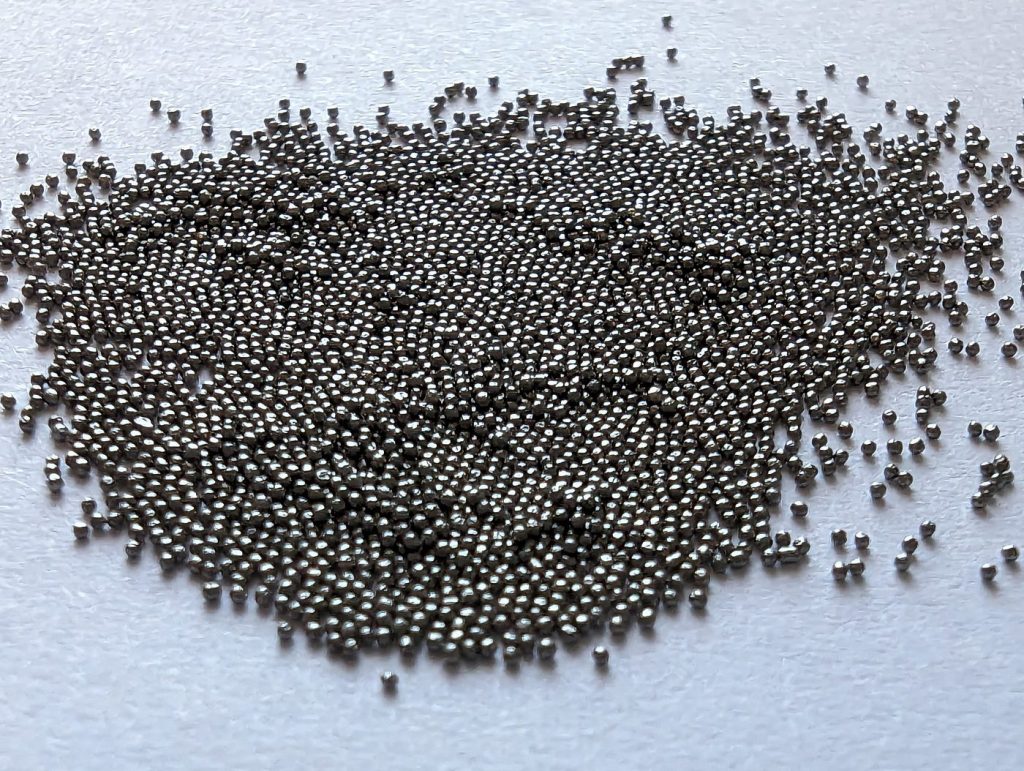
Shot blasting remains the standard for surface preparation in mechanical engineering due to its speed, repeatability, and the cost-effectiveness of abrasives over large volumes. In this new article, we explore the operating principle, types of shot and equipment, and key differences from sandblasting.
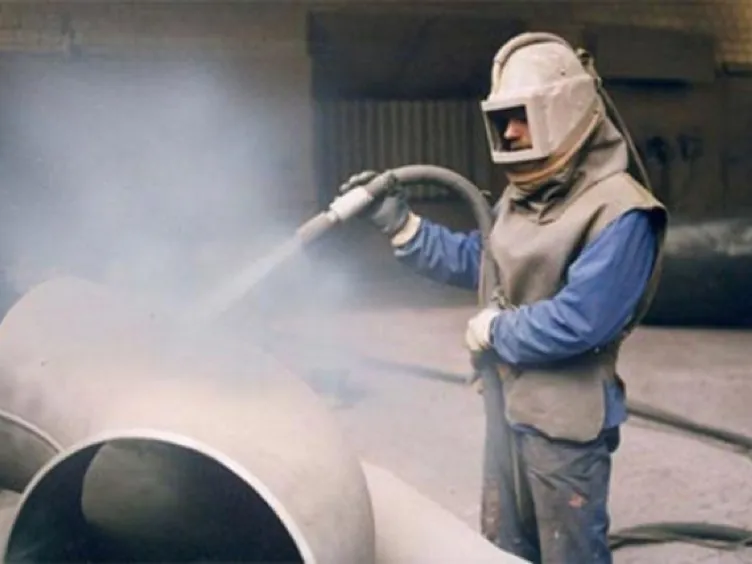
One of the main methods of surface preparation (cleaning and imparting the required roughness) is sandblasting, shot blasting, and wheel blasting treatment. The topic of differences between sandblasting, shot blasting, and wheel blasting technologies is quite relevant. Substitution of these concepts and terms occurs even in professional circles. At the same time, the differences are very significant, and it is simply impossible to ignore them.
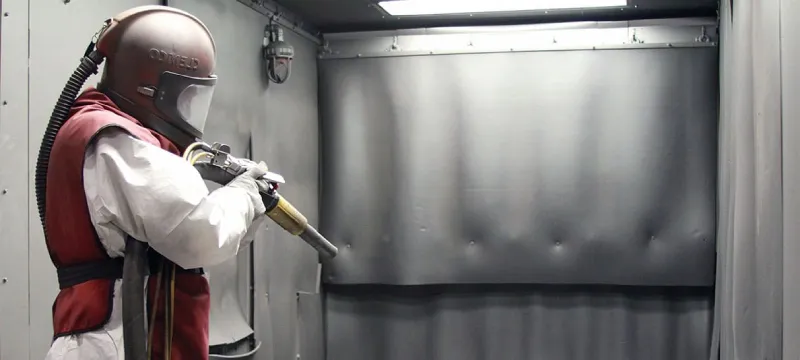
10 practical rules that should be built into the design of shot blasting equipment and into the workshop's operating procedures.
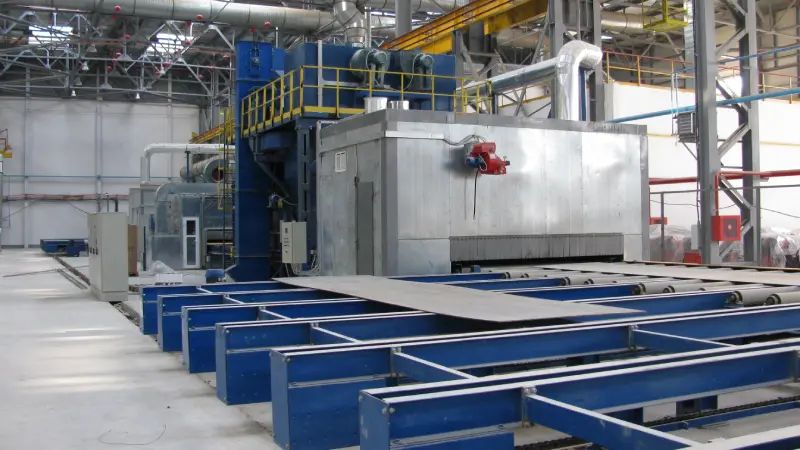
In this article, we will look at the types of transport systems used for shot blasting and painting of rolled metal and welded metal structures.
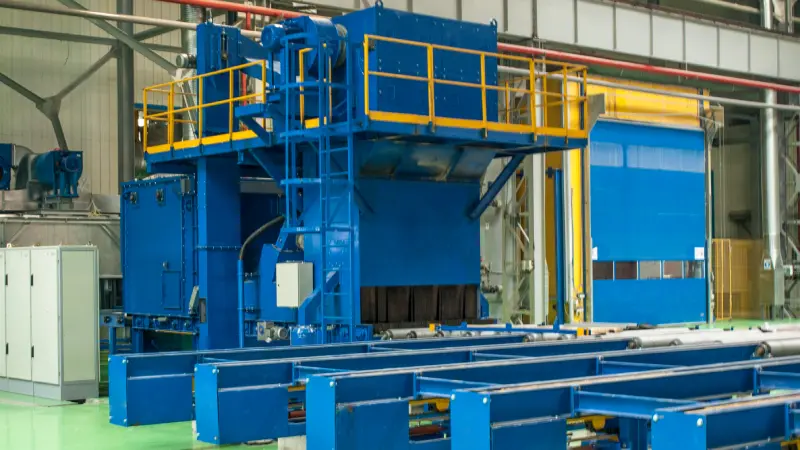
This article discusses the most popular shot blasting machines: a description of their operation and key characteristics.
Learn how to properly clean abrasive residue and dust from metal to ensure reliable surface preparation for painting and extend the service life of steel structures.
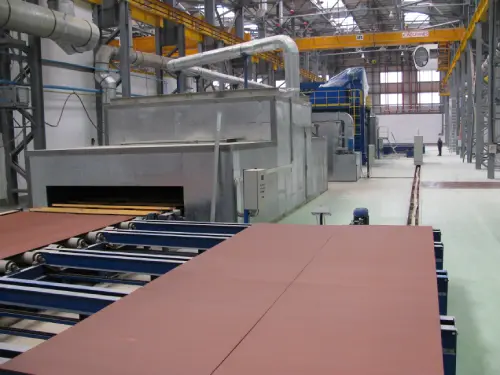
High-quality surface preparation and interoperation protection of rolled metal products are crucial factors in ensuring maximum service life and the highest quality of protective coatings. This preparation can be achieved through shot blasting, followed by the application of a conductive protective primer on the surface of the rolled metal at the stage of its delivery to production.
Correct surface preparation is one of the key factors affecting the durability of paint and protective coatings. Measuring the level of dust on steel surfaces before painting helps determine whether additional cleaning and preparation are required.
This article provides a brief description of the types and characteristics of shot blasting equipment.