Across Ukraine and the wider CIS, hundreds of shot blasting chambers, tumble machines and conveyor lines built in the Soviet era are still in daily use. They clean castings, forgings, steel structures and freight wagon components year after year. But sooner or later every chief engineer faces the same question: keep patching, invest in modernization, or buy a new machine?
The right answer depends less on the machine’s age than on the condition of its structure, your cleaning quality requirements and the real cost of downtime. This article offers a practical decision framework: how to assess the machine, what can be upgraded, and how to calculate which option pays off.
Contents
- Why old machines are still running
- Signs your machine needs attention
- Survey: what to inspect first
- Three options: overhaul, retrofit, replace
- What can be modernized
- When a new machine is the only sensible choice
- How to calculate the payoff
- Common modernization mistakes
- How a modernization project runs
- FAQ
Why old machines are still running
Shot blasting equipment from past decades was designed with a generous safety margin: massive frames, thick chamber armor, simple mechanics. That is why it has outlived several generations of electronics and can still do its job.
But aging fleets share common problems:
- worn consumable parts for which spares have long been unavailable;
- outdated relay control circuits with no diagnostics;
- inefficient dust extraction and non-compliance with modern environmental and occupational safety standards;
- high energy consumption and uneven cleaning;
- missing documentation and a shrinking pool of people who know the machine.
Almost all of these can be solved selectively, without replacing the whole machine.
Signs your machine needs attention
Take notice if several of the following apply to your cleaning area:
- abrasive consumption and the frequency of blade, liner and other wear-part replacement are rising;
- cleaning is uneven: shadow areas on complex parts, repeat passes;
- throughput is falling and a queue is forming at the cleaning station;
- downtime caused by elevator, separator or bearing failures;
- dust in the workshop, vibration, elevated noise;
- spare parts or documentation are impossible to find quickly;
- more complaints about surface preparation quality before painting.
Survey: what to inspect first
Every decision starts with a technical survey. It separates “expensive but worn small parts” from “a structure beyond repair.”
Load-bearing and protective structures
Frame, chamber shell, rails, overhead trolleys, turntables. If the steel structure has kept its geometry and shows no critical cracks or corrosion damage, that is the strongest argument for modernization, because the structure is the most expensive part to replace.
Blast wheels
Condition of the impeller, blades, control cage, bearing assemblies and drive. Wear here directly affects abrasive throwing velocity and cleaning quality.
Abrasive recycling system
Bucket elevator, separator, screw conveyors, hoppers and metering devices. This is often where the causes of unstable operation and excess abrasive consumption hide.
Dust collection and ventilation
Filters, fan, ducting, cleaning system. Inadequate extraction is one of the most common problems on older machines.
Conveying system
Roller conveyor, overhead track, trolleys, rotating mechanisms, part loading and unloading arrangements.
Electrical and controls
Condition of cabinets, wiring, starters and protection. For old relay logic, the key question is whether control can be moved to a modern PLC.
Three options: overhaul, retrofit, replace
| Option | What it includes | When it fits |
|---|---|---|
| Overhaul | Restoring worn components “as they were”: replacing blades, liners, bearings, elevator parts | The machine meets throughput and quality needs overall; the goal is to restore original performance |
| Retrofit (modernization) | Overhaul plus replacing components with modern ones: blast wheels, controls, filtration, drives, safety | The structure is in good condition, but throughput, stability, environmental performance or controllability fall short |
| Retrofit (modernization) | New machine with design, installation and commissioning | Dimensions or technology no longer fit, the structure is worn out, or your part range or volume is changing |
What can be modernized
1. Blast wheels
Modern blast wheels with optimized blade geometry and abrasive feed deliver a more uniform blast pattern and better throwing energy with less wear. Replacing the wheels and redistributing them around the chamber often gives the most noticeable improvement in cleaning quality.
2. Control system
Moving from relay logic to a programmable controller provides:
- adjustable cleaning modes for different parts;
- control of conveyor speed and treatment time;
- diagnostics and fault logging;
- interlocks and emergency stops that meet modern safety requirements;
- the option to integrate with production tracking systems.
3. Abrasive circulation and separation
A new separator and refurbished elevator stabilize the working mix, reduce abrasive consumption and protect the blast wheels from dust and oversized particles.
4. Dust extraction and filtration
New filter elements, fan and cleaning system improve working conditions, cut emissions and reduce dust at loading and unloading.
5. Conveying systems
Refreshed rollers, drives, rails and rotating devices; variable-frequency speed control; more convenient loading areas.
6. Chamber liners and protection
Wear-resistant plates and protective elements in the zones of maximum abrasive impact extend the life of the shell and lower repair costs.
7. Safety and ergonomics
Door interlocks, guarding, lighting, noise insulation and part-position monitoring. These upgrades are often necessary to meet current occupational safety rules.
8. Documentation recovery
Measurements, updated drawings and diagrams, a machine passport and maintenance instructions: a result that stays with the plant after the project.
When a new machine is the only sensible choice
Modernization is not a cure-all. Consider a new machine right away if:
- The opening or overall size is too small. Your part range has changed, larger parts or assemblies have appeared, and the existing chamber physically cannot take them.
- The steel structure is worn out. Corrosion, cracks or lost geometry of the frame or shell make repair uneconomical.
- A different technology is required. For example, you need to switch treatment type or build cleaning into an automated line.
- Volume is rising sharply. The old machine’s throughput cannot reach the required level without rebuilding the entire structure.
- You need integration into an in-line flow. For cleaning built into the production flow with automatic loading, it is simpler to design the machine from scratch.
If you are entering new markets and need to process larger products, it makes sense to look at new equipment with dimensional headroom. For example, KD-series chambers with a passage width of up to 3200 mm go beyond the capabilities of many legacy machines.
How to calculate the payoff
Compare not “the price of repair” against “the price of a new machine,” but the total cost of ownership over 7 to 10 years. The calculation should include:
- Investment: cost of the modernization project or new machine, installation, commissioning, and production stoppage during the works.
- Operating costs: electricity, abrasive consumption, wear-part and filter replacement.
- Cost of downtime: what an hour of cleaning-area stoppage costs the entire production chain.
- Quality: share of rejects and rework caused by uneven surface preparation.
- Throughput: how many parts per shift the machine delivers now and how many you need.
- Remaining life: which components will serve another 15 to 20 years after modernization.
A practical rule of thumb: if the retrofit costs substantially less than a new machine and the upgraded machine meets your throughput and quality requirements, modernization usually wins. If the retrofit approaches the price of a new machine but still does not solve size or technology limits, buying new equipment is the smarter move. The exact ratio depends on the project, so it should be set from a survey, not by eye.
Lead time also matters. Modernization on a working site usually takes less time than design, manufacture, delivery and installation of a new machine, and lets you schedule the shutdown for a convenient period.
Common modernization mistakes
- Replacing only what broke. Swapping one blast wheel or filter without analyzing the whole system just moves the bottleneck elsewhere.
- Skimping on the survey. Hidden corrosion or frame cracks surface after work starts and blow the budget.
- Putting modern controls on worn mechanics. Electronics will not fix loose bearings or damaged guides.
- Ignoring dust extraction. Powerful blast wheels without adequate filtration make workshop conditions worse.
- Overlooking the future part range. If larger parts are planned within a year, modernizing for today’s parts loses its point.
- Skipping documentation. Without a passport and diagrams, the next repair becomes another investigation.
How a modernization project runs
- Survey and measurement. On-site inspection, measurements, recording component condition, analysis of operating modes and part range.
- Technical conclusion. What can be repaired, modernized or must be replaced; assessment of remaining life.
- Option comparison. Overhaul, retrofit and a new machine, with cost and schedule estimates.
- Design. Design documentation, control schematics, blast wheel layout, extraction calculations.
- Manufacturing. Blast wheels, liners, conveying and elevator elements, control cabinets.
- Installation and commissioning. Work is planned to minimize stoppage of the area.
- Training and handover. Staff training, maintenance schedule, spare parts list.
A manufacturer that designs and builds KD, DP and DPS series shot blasting chambers, as well as conveying systems and automation, can run such a project turnkey: from survey to commissioning and integration into the production line.
FAQ
How long does a shot blasting machine last?
The frame, chamber and conveying system can last for decades when properly maintained. Wear parts fail much sooner: blast wheel blades, impellers, control cages, chamber liners, elevator buckets and separator screens. A machine’s age alone is not the deciding factor; the condition of its load-bearing structure is.
Is a retrofit cheaper than a new shot blasting chamber?
A retrofit makes sense when the structure and dimensions of the chamber suit your parts and the problems come from wear, outdated controls, dust extraction or low throughput. A new machine is the better choice when the opening is too small, a different cleaning technology is needed, or the steel structure is too worn to repair.
Can an old shot blasting chamber be made faster?
In many cases, yes. Replacing blast wheels with modern ones, optimizing their layout and abrasive feed, and tuning conveyor speed and the control system can improve cleaning speed and uniformity without replacing the chamber itself.
Are drawings required to modernize a Soviet-era machine?
Not necessarily. When documentation is missing, the machine is surveyed and measured, and technical documentation is reconstructed. This is standard practice when modernizing equipment built in the Soviet era.
Conclusion
An old shot blasting machine is not necessarily a problem. Often it is an asset with a good frame and outdated components. A competent survey shows where an overhaul is enough, where a retrofit is needed, and where the honest answer is that it is time for a new machine. Base the decision on total cost of ownership and your future production needs, not just the price of the current repair.
Want to know which option is best for your machine? Send us the machine type, year of manufacture, photos and a description of the problems. Techvagonmash specialists will give a preliminary assessment and recommend the best route: overhaul, modernization or a new chamber.
Related articles
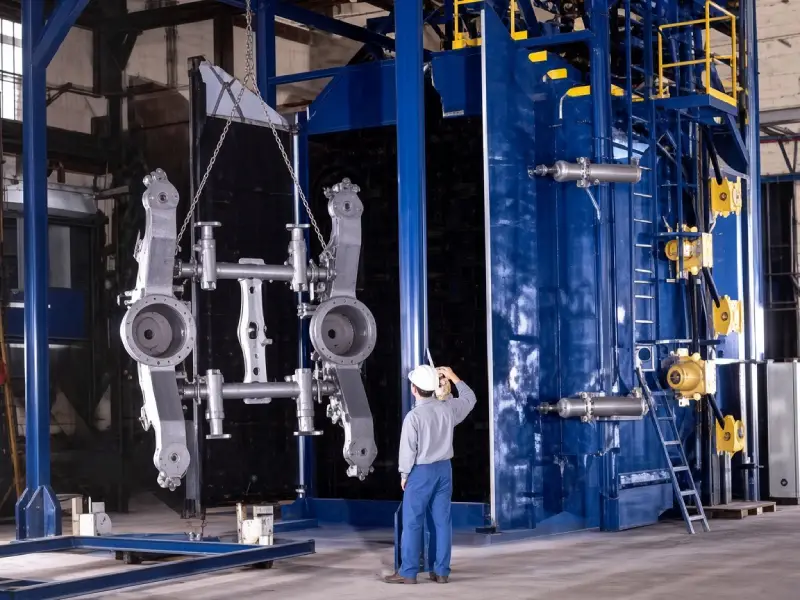
When you need to remove scale and rust, prepare a surface for painting or strengthen a part, the same question always comes up: wheel (turbine) blasting or air (pneumatic) blasting? Both are called “shot blasting” in everyday speech, yet they use two different ways of throwing abrasive, different equipment and different economics. A wrong choice is expensive: you either overpay for throughput you do not need, or end up with a bottleneck in production and an inconsistent surface finish.
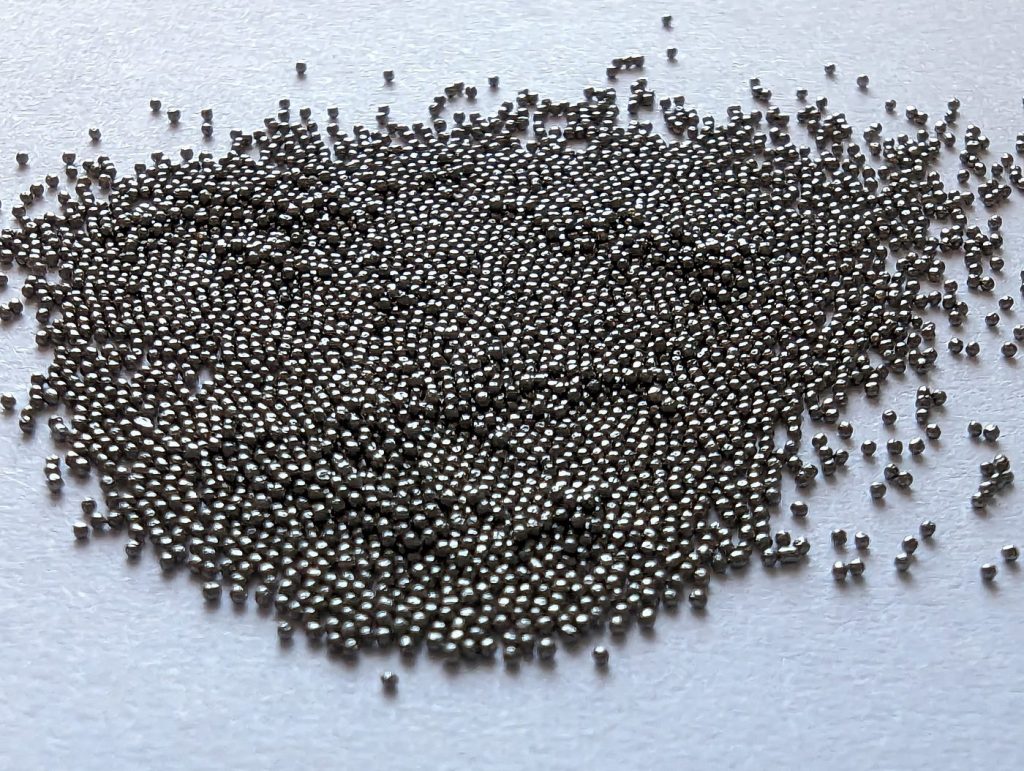
Shot blasting remains the standard for surface preparation in mechanical engineering due to its speed, repeatability, and the cost-effectiveness of abrasives over large volumes. In this new article, we explore the operating principle, types of shot and equipment, and key differences from sandblasting.
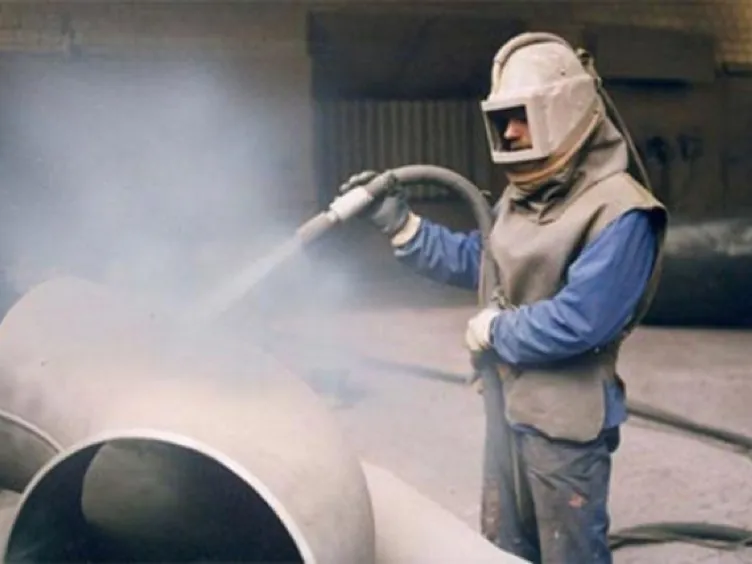
One of the main methods of surface preparation (cleaning and imparting the required roughness) is sandblasting, shot blasting, and wheel blasting treatment. The topic of differences between sandblasting, shot blasting, and wheel blasting technologies is quite relevant. Substitution of these concepts and terms occurs even in professional circles. At the same time, the differences are very significant, and it is simply impossible to ignore them.
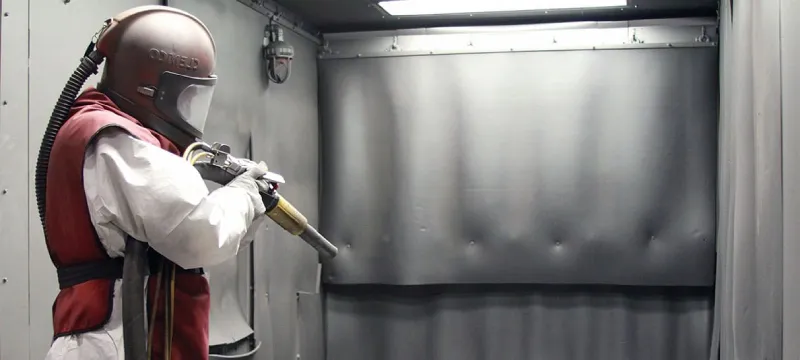
10 practical rules that should be built into the design of shot blasting equipment and into the workshop's operating procedures.
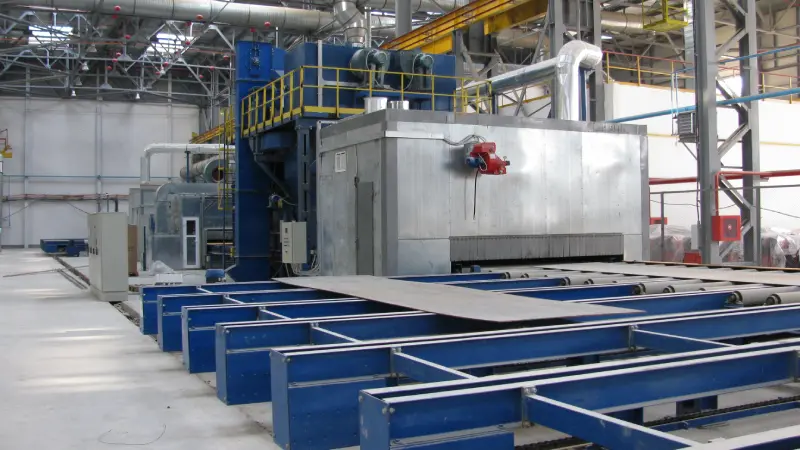
In this article, we will look at the types of transport systems used for shot blasting and painting of rolled metal and welded metal structures.
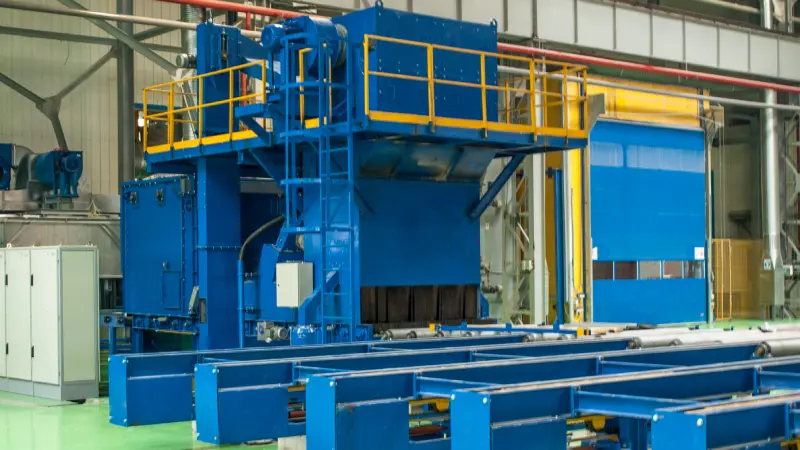
This article discusses the most popular shot blasting machines: a description of their operation and key characteristics.
Learn how to properly clean abrasive residue and dust from metal to ensure reliable surface preparation for painting and extend the service life of steel structures.
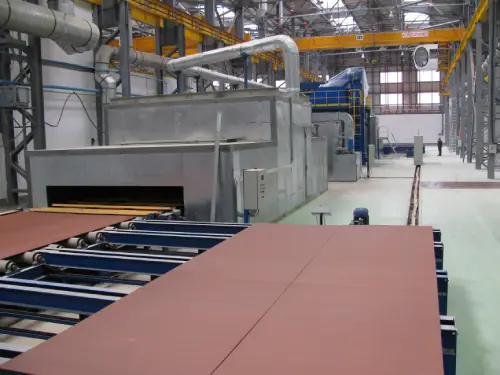
High-quality surface preparation and interoperation protection of rolled metal products are crucial factors in ensuring maximum service life and the highest quality of protective coatings. This preparation can be achieved through shot blasting, followed by the application of a conductive protective primer on the surface of the rolled metal at the stage of its delivery to production.
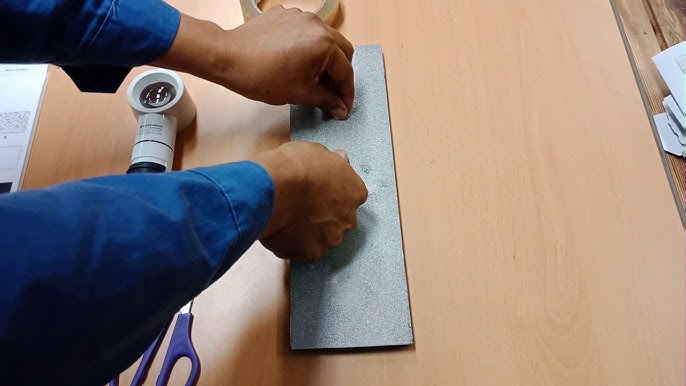
Correct surface preparation is one of the key factors affecting the durability of paint and protective coatings. Measuring the level of dust on steel surfaces before painting helps determine whether additional cleaning and preparation are required.
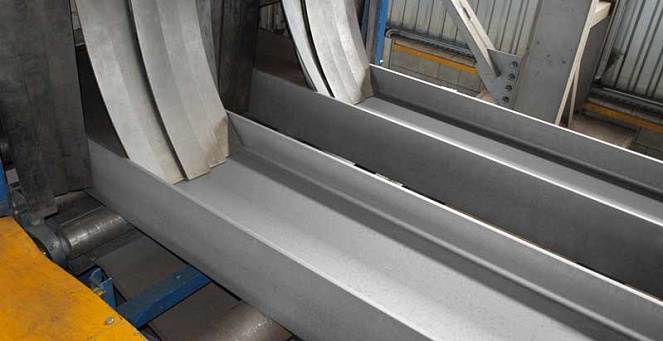
This article provides a brief description of the types and characteristics of shot blasting equipment.