Contents:
- The Problem: Turning Heavy Beams Without a Rotator
- What Is a Chain Beam Rotator and How Is It Built
- How the BeamMaster Series Rotator Works
- 5 Reasons a Rotator Pays for Itself Fast
- Where Beam Rotation Is Used
- Why BeamMaster Series Chain Rotators from Techvagonmash
- FAQ
The Problem: Turning Heavy Beams Without a Rotator
Turning a beam for all-around access is a routine but critical operation in any metal fabrication shop. Before welding on a clip, drilling a hole, coping a connection, or marking out layout lines, the workpiece has to be rotated into a workable position.
For years, shops relied on two methods — both with real drawbacks. A forklift lifts the beam on its forks and turns it manually: the part can easily slip, and with long structural sections this is a direct safety hazard. The alternative is an overhead crane: safer, but highly inefficient, since the crane sits tied up for 20–40 minutes on a single secondary operation while the rest of the shop waits for it to unload material or ship finished parts.
That’s why mid-size and large fabrication shops increasingly install dedicated beam-positioning equipment — chain rotators.
What Is a Chain Beam Rotator and How Is It Built
A chain beam rotator is a pair of independently driven stands, built from heavy-duty plate and tubular steel, that cradle the workpiece in a double-link chain and allow it to be raised, lowered, and rotated a full 360 degrees. The construction includes a frame, a chain drive system, an electrical panel, and a wired remote control unit.
Unlike rope (roller) rotators, which are used where protecting a sensitive surface finish matters most, the chain mechanism is built for higher loads and a simpler, more durable design — making it the natural choice for heavy structural beams and welded assemblies.
How the BeamMaster Series Rotator Works
The operator controls both stands from a wired remote: either stand can be raised or rotated individually, or both can move in sync to position the workpiece precisely. Synchronized or independent drive operation lets the operator adjust not only the rotation angle but also the tilt of the part — particularly useful for setting up a comfortable welding angle.
A long remote cable lets the welder or fitter operate the rotator right from the work area, without stepping away from the piece. A positive-engagement chain drive delivers smooth, predictable movement without jerking — important both for operator safety and for consistent weld quality.
5 Reasons a Rotator Pays for Itself Fast
1. Frees Up the Overhead Crane
The overhead crane is usually the busiest, most expensive resource on the shop floor. Installing a rotator takes the routine job of turning beams for secondary processing off the crane’s plate, leaving it available for the heavy lifting it’s actually needed for: unloading raw material, feeding stock to the line, or shipping finished product.
2. Cuts Downtime and Increases Throughput
Waiting for a crane to turn a single part can take longer than the welding itself. A rotator removes that wait entirely — the welder or fitter adjusts the beam’s position in seconds, without coordinating with a crane operator.
3. Improves Operator Safety
Turning a multi-ton beam by forklift or by hand is a common source of injuries and part damage. A rotator holds the workpiece securely in its cradle throughout the operation, eliminating the risk of slipping or dropping the load.
4. Improves Weld Quality
Being able to rotate the beam into a comfortable welding position — instead of working overhead or in an awkward posture — directly affects weld consistency and quality, reducing rework and scrap.
5. Versatile Across Multiple Operations
Beyond welding, a rotator is just as useful for layout marking, manual cutting, cleaning, and painting long structural parts — covering several secondary operations with a single piece of equipment.
Where Beam Rotation Is Used
Chain beam rotators are used across structural steel fabrication shops, machine-building plants, railcar repair and manufacturing facilities, and in the production of frames and assemblies for special-purpose equipment — anywhere long structural steel parts need all-around access for welding, assembly, or finishing.
Why BeamMaster Series Chain Rotators from Techvagonmash
Techvagonmash manufactures the BeamMaster series of chain beam rotators for heavy machine-building and railcar manufacturing plants, built around the requirements of post-Soviet and Ukrainian production environments: larger profile sizes, adaptation for unheated shop conditions, and local service and spare parts support without the currency and logistics risks that come with imported equipment.
Load capacity, reach, and configuration are selected individually based on the customer’s beam and profile range. Our engineers visit the site to calculate the optimal rotator configuration for each specific production line.
FAQ
What is a chain beam rotator?
It’s equipment that lifts and rotates heavy steel structures — beams, pipes, welded assemblies — a full 360 degrees using a pair of independently driven stands with a chain mechanism, holding the workpiece in a comfortable position for the welder or fitter without tying up an overhead crane.
How is a chain rotator different from a rope or roller rotator?
A chain rotator suspends the workpiece using a pair of driven stands with a chain cradle, offering higher load capacity with a simpler design. Rope rotators are used where surface protection matters, but typically carry lower capacities.
What load capacities do BeamMaster series chain rotators offer?
The BeamMaster series range covers a wide span of capacities — from several tons up to several dozen tons per pair of stands. Exact specifications are matched to the customer’s application — contact our engineers for a quote.
Does a beam rotator pay off for a smaller fabrication shop?
Yes. Even with a moderate volume of secondary beam processing, a rotator pays for itself quickly through reduced overhead crane downtime, higher welder output, and fewer injuries from manual handling.
Need to size a rotator for your shop’s beam range?
Contact Techvagonmash — our engineers will calculate the optimal load capacity and configuration for a BeamMaster series rotator tailored to your production.
Related articles
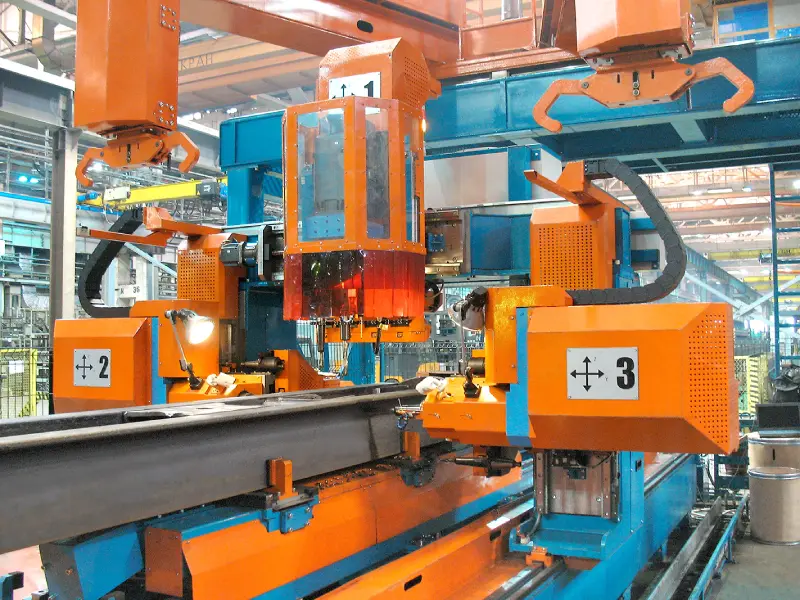
This article covers three automated drilling systems, the engineering approach behind them, and the turnkey solutions Techvagonmash offers to railcar builders and repair shops. The advantages of this equipment class stand out most clearly when compared with the conventional methods still used across much of the transport machinery industry.
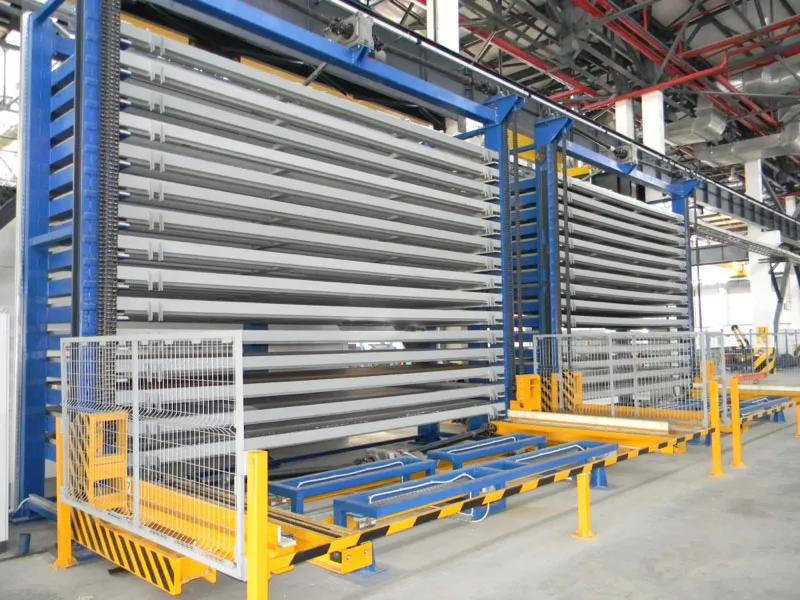
An automated metal warehouse is not only state-of-the-art equipment but also an effective tool for reducing production costs. Learn about the hidden costs of traditional metal storage, how to calculate the economic impact of automation, and why modern businesses are switching to intelligent storage systems.
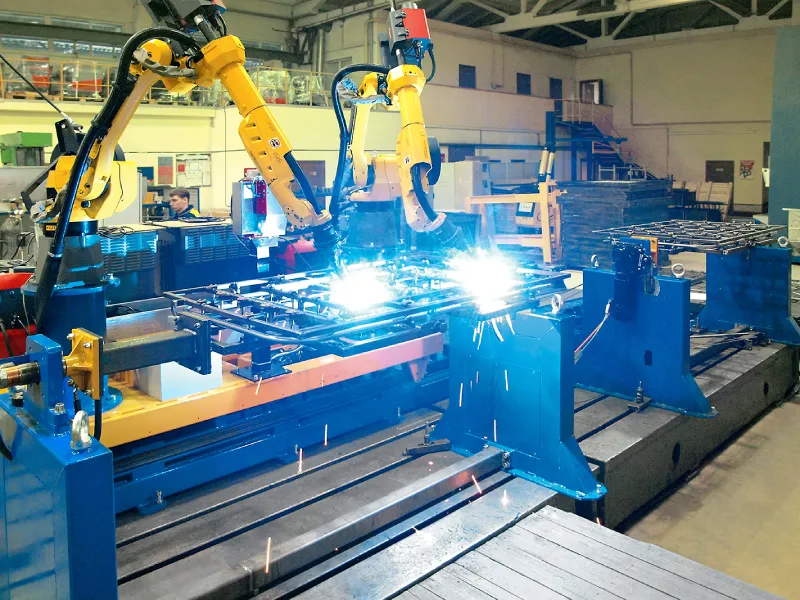
Robotic welding is no longer an experiment reserved for market leaders — it's a working tool that pays for itself through higher output, lower material costs, and reduced dependence on scarce skilled labor. Below are 10 concrete reasons manufacturers are moving welding operations onto robotic welding cells (RWCs), and how each one shows up on the production floor and the balance sheet.
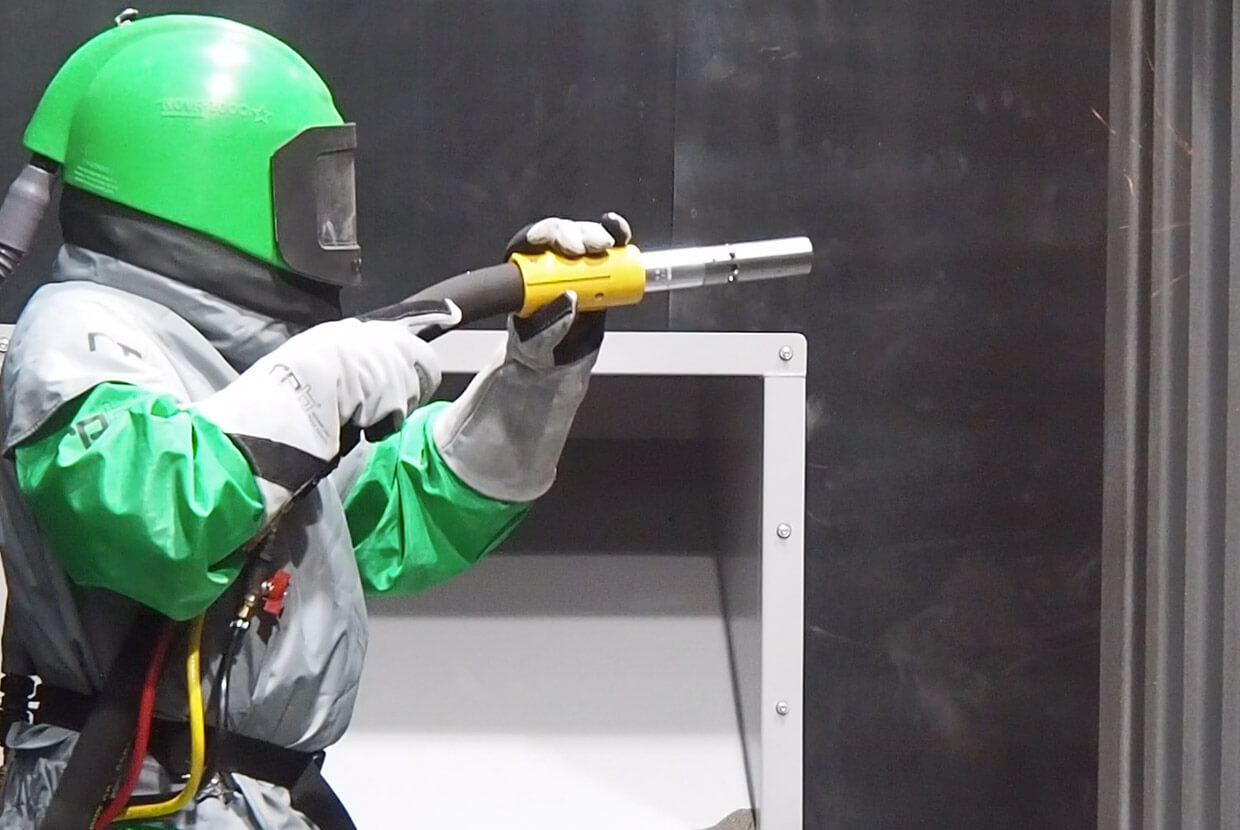
Shot blasting problems are not always caused by poor abrasive quality. In practice, the final cost of the process is shaped by a whole set of factors: working pressure, machine type, separator settings, nozzle wear, and how the abrasive is actually cycled through the system.