Robotic welding is no longer an experiment reserved for market leaders — it’s a working tool that pays for itself through higher output, lower material costs, and reduced dependence on scarce skilled labor. Below are 10 concrete reasons manufacturers are moving welding operations onto robotic welding cells (RWCs), and how each one shows up on the production floor and the balance sheet. In this article:
- Increased production output
- Higher, more consistent product quality
- Better working conditions for staff
- Lower operating costs
- Flexible, fast-changeover production
- Savings on welding consumables
- Solving the skilled-labor shortage
- Eliminating the human-factor variable
- Easier integration into production
- More efficient use of floor space
1. Increased production output
The primary case for justifying a robot purchase is comparing a robotic welding cell’s throughput against your current manual or semi-automatic welding output. In practice, robotic welding runs 2 to 5 times faster than any manual method, thanks to continuous operation, no fatigue-driven pauses, and a consistently steady torch speed. This directly increases the throughput of a welding line without expanding the shop floor.
2. Higher, more consistent product quality
Industrial robots position the welding torch with a precision no human operator can match, and repeat the same speed and path on every single part. The result is a consistently high-quality weld and far fewer defects reaching the next stage of production. A company effectively invests in quality upfront, instead of paying later to rework defects — a cost that’s common with manual or semi-automatic welding.
3. Better working conditions for staff
Welding generates fumes containing toxic compounds, along with visible and invisible radiation that’s harmful to eyesight. Add electromagnetic fields, high temperatures, and the static and dynamic physical strain on a welder, and robotic welding becomes less of an upgrade and more of a necessity for workplace safety. Automating the welding station removes staff from direct exposure to these hazards and eliminates a large share of the heavy, repetitive manual work — a real factor in retaining employees.
4. Lower operating costs
Automating a welding operation reduces both direct and overhead costs across the business. Specifically, robotic welding cells help:
- lower the required ambient temperature in the production area;
- reduce lighting requirements at the workstation;
- cut spending on protective clothing and personal protective equipment.
5. Flexible, fast-changeover production
Modern robotic welding cells allow production to be set up and reconfigured quickly whenever the product mix changes. That gives a manufacturer the ability to respond to market demand and seasonal order swings without shutting the line down for a lengthy changeover.
6. Savings on welding consumables
Manual welding consumes more filler material, since it’s difficult for a human welder to hold the exact bead cross-section and strength margin required. A robot follows a program with a precisely dosed amount of filler material and less spatter — in practice, this cuts welding wire consumption by 10–15%.
7. Solving the skilled-labor shortage
A shortage of qualified welders is one of the biggest operational headaches manufacturers face today. The precision demanded by modern production processes keeps rising, while finding and training highly skilled workers keeps getting harder and more expensive. A robot, once programmed, is ready to work without the ongoing costs tied to recruiting or continuously retraining people — removing that dependency from the production line.
8. Eliminating the human-factor variable
A robot doesn’t get tired, doesn’t call in sick, and can run 24/7 while delivering a stable, predictable result on every shift, from the first part to the last. That removes the swings in quality and output tied to operator fatigue, health, or focus.
9. Easier integration into production
Advances in networking and software have made installing and maintaining welding robots faster and cheaper than in the past. Modern robotic welding cells are built with intuitive interfaces and support teaching by demonstration or voice commands — all of which makes it noticeably easier to deploy and operate a cell on the shop floor.
10. More efficient use of floor space
A robotic welding station is more compact than a traditional manual welding post. Beyond floor mounting, robots can be installed on walls or ceilings and can operate in confined spaces — freeing up production floor space and letting a manufacturer make better use of existing shop capacity.
Conclusion
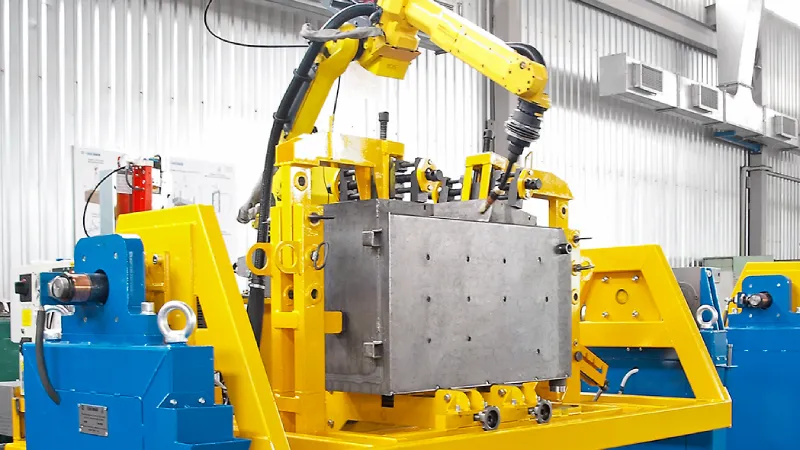
Robotic welding delivers a compound effect: higher throughput, lower material costs, reduced operating expenses, and a fix for the skilled-labor shortage — all at once. How well a robotic welding cell performs also depends heavily on the supporting equipment around it — welding positioners and turning rolls that hold the workpiece in precise, repeatable position relative to the robot throughout the weld cycle.
Frequently asked questions
How quickly does a welding robot pay for itself?
Payback time depends on production volume and the current cost of manual welding at a given plant, but thanks to a 2-5x speed increase and 10-15% savings on welding wire, a robotic welding cell typically pays for itself within 1-2 years under steady line utilization.
What additional equipment does a welding robot need?
A complete robotic welding cell typically requires a welding positioner or turning roll to hold the workpiece in precise position relative to the robot’s torch, along with a guarded work cell and a station for preparing the part before welding.
Is robotic welding suitable for small-batch production?
Yes. Modern robotic welding cells with fast program changeover are designed to support small-batch and made-to-order production, allowing manufacturers to switch product lines quickly without extended line downtime.
Related articles
Robotic welding: 7 factors that decide whether the project pays off A robot doesn't fix bad fixturing, skip training, or replace maintenance. Here's what to plan for before you invest in a robotic welding cell.
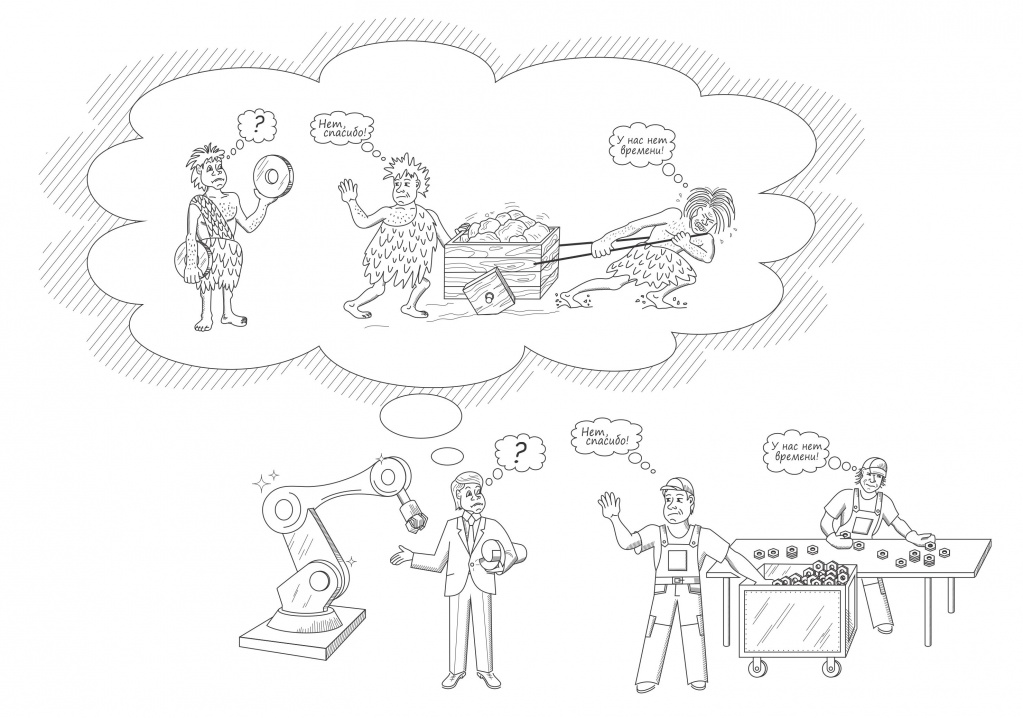
There is a persistent stereotype in the post-Soviet machine-building industry that industrial robots are expensive equipment that requires highly professional personnel and that it is rational to use them in mass or high-volume production. This myth is based on some factors listed below.