For many manufacturers, warehouse costs are measured in square meters. However, the real cost of storing sheet metal and steel materials is much higher.
Every minute spent searching for material, every unnecessary crane movement, and every production delay adds hidden costs that directly affect profitability.
As manufacturing becomes increasingly automated, warehouse efficiency has become a critical factor in overall production performance. Modern laser cutting systems, robotic welding cells, and automated production lines can only operate at their full potential when materials are delivered quickly, accurately, and safely.
This is why manufacturers worldwide are investing in automated storage systems that integrate seamlessly with production processes.
What Makes Metal Storage Expensive?
The total cost of storage includes much more than warehouse space.
Manufacturers should consider:
- warehouse operating costs;
- labor expenses;
- crane and forklift operation;
- energy consumption;
- equipment maintenance;
- inventory management;
- material handling;
- production downtime;
- damaged materials;
- inefficient internal logistics.
When these factors are combined, storage becomes a strategic cost center rather than a simple warehouse function.
Hidden Cost #1: Lost Floor Space
Traditional storage systems require large floor areas for:
- storage racks;
- forklift aisles;
- crane access;
- loading zones;
- temporary material staging;
- manual picking operations.
As production grows, available floor space becomes increasingly valuable.
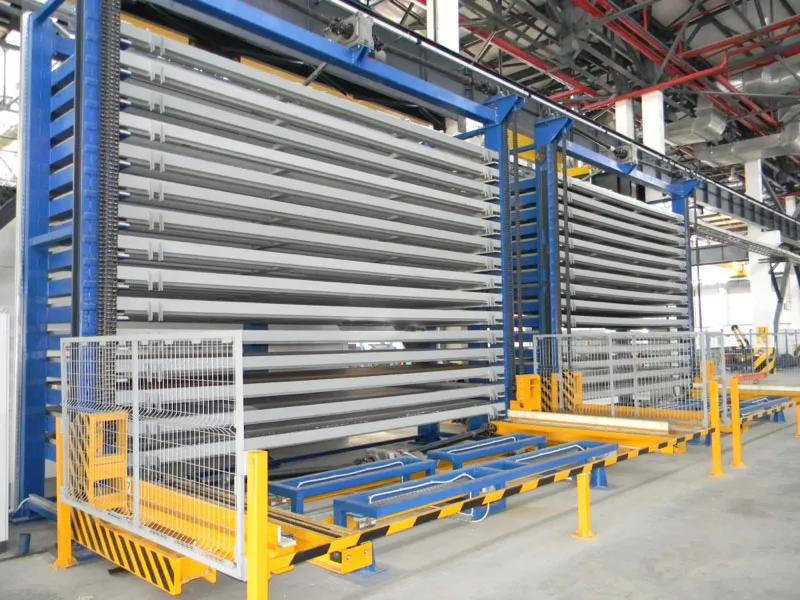
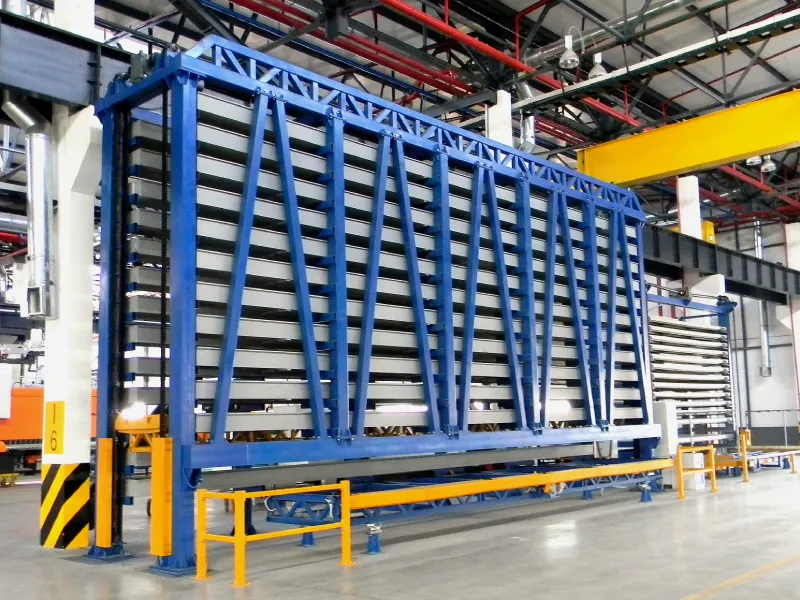
Automated storage towers use vertical space instead of expanding horizontally. By utilizing the full height of a building, manufacturers can reduce storage footprints by up to 70%, freeing valuable production space for additional machinery or assembly lines.
Hidden Cost #2: Manual Material Handling
Every manual operation increases production costs.
In a traditional warehouse, retrieving material typically involves:
- locating the correct sheet;
- preparing lifting equipment;
- moving multiple sheets to access the required material;
- transporting it to the production area;
- returning unused material to storage.
These repetitive tasks consume valuable production time and increase labor costs.
Automated storage systems eliminate unnecessary handling by delivering the requested material directly to the operator in less than a minute.
Hidden Cost #3: Equipment Downtime
Modern laser cutting machines represent significant capital investments.
However, even the most advanced equipment cannot generate value while waiting for material.
Production delays often occur because:
- operators cannot locate materials quickly;
- cranes are occupied with other tasks;
- forklifts are unavailable;
- warehouse personnel require additional time to prepare deliveries.
Even short interruptions accumulate into substantial productivity losses over the course of a year.
Automated storage systems ensure that materials arrive exactly when needed, minimizing downtime and improving machine utilization.
Hidden Cost #4: Material Damage
Large steel sheets are vulnerable to damage during repeated handling.
Typical problems include:
- scratches;
- bent edges;
- surface deformation;
- corrosion caused by improper storage;
- accidental impacts during transportation.
These issues often require additional processing or complete material replacement.
Automated storage systems protect materials by storing them individually on dedicated trays, minimizing unnecessary contact and significantly reducing the risk of damage.
Why Warehouse Automation Matters
Warehouse automation is no longer a luxury.
It has become an essential part of modern manufacturing strategies focused on:
- Lean Manufacturing;
- Smart Factory;
- Industry 4.0;
- Digital Transformation;
- Operational Excellence.
Manufacturers that automate warehouse operations achieve higher productivity, better inventory accuracy, improved safety, and lower operating costs while increasing the overall efficiency of their production facilities.
The Business Impact of Automated Metal Storage
Understanding the Hidden Operating Costs
Many manufacturers evaluate warehouse efficiency based only on direct operating expenses such as rent, utilities, and staffing. In reality, the largest costs are often indirect and remain unnoticed because they are distributed across multiple departments.
Examples include:
- production delays caused by material shortages;
- excessive use of overhead cranes and forklifts;
- repeated handling of the same material;
- unnecessary overtime;
- inventory discrepancies;
- damaged raw materials;
- inefficient use of manufacturing space;
- increased work-in-progress inventory.
When combined, these hidden costs can exceed the visible expenses of warehouse operation.
How Automated Storage Systems Reduce Costs
An automated storage system changes the way materials move through a factory.
Instead of employees searching for steel sheets and transporting them manually, the storage system automatically retrieves the requested tray and delivers it to the loading station.
This “goods-to-operator” principle offers several advantages:
- shorter retrieval times;
- fewer manual operations;
- improved inventory accuracy;
- reduced labor requirements;
- better production planning;
- increased equipment utilization.
As a result, warehouse operations become predictable, repeatable, and easier to manage.
Better Space Utilization
Manufacturing space is one of the most valuable resources within any production facility.
Expanding warehouse capacity often requires costly building extensions or additional rented space.
Vertical automated storage systems maximize the available height of the building, allowing companies to store significantly more material within the same footprint.
The benefits include:
- higher storage density;
- shorter travel distances;
- improved material organization;
- additional space for production equipment;
- simplified warehouse expansion.
For growing manufacturers, reclaiming floor space can postpone or even eliminate the need for facility expansion.
Improving Inventory Accuracy
Inventory errors create unnecessary purchasing costs and production risks.
Manual inventory management often results in:
- duplicate purchases;
- missing materials;
- inaccurate stock levels;
- extended inventory counts;
- delayed production scheduling.
Automated storage systems maintain real-time inventory records by tracking every material movement.
Manufacturers always know:
- what materials are available;
- where each item is stored;
- current stock quantities;
- material usage history;
- available storage capacity.
This transparency supports better planning and more efficient procurement.
Supporting Lean Manufacturing
Lean Manufacturing focuses on eliminating activities that do not add value.
Manual warehouse operations often generate several types of waste:
- unnecessary transportation;
- waiting time;
- excessive motion;
- excess inventory;
- overprocessing;
- avoidable defects.
Warehouse automation directly addresses these inefficiencies by reducing unnecessary movement and delivering materials only when required.
This helps manufacturers shorten lead times and improve overall process flow.
Integration with ERP and MES Systems
Modern automated storage systems are designed to communicate with enterprise software.
Typical integrations include:
- ERP systems for inventory and purchasing;
- MES systems for production scheduling;
- WMS platforms for warehouse management;
- production planning software;
- laser cutting automation;
- robotic manufacturing cells.
This integration creates a connected production environment where material flow is synchronized with manufacturing operations.
Instead of reacting to shortages, companies can proactively plan production based on real-time inventory data.
Automated Storage and Industry 4.0
Industry 4.0 is transforming manufacturing by connecting machines, software, and people through digital technologies.
Automated storage systems play a key role in this transformation by acting as intelligent material management hubs.
They enable manufacturers to:
- automate internal logistics;
- collect operational data;
- monitor inventory in real time;
- improve production traceability;
- reduce manual interventions;
- support data-driven decision making.
As factories continue to digitalize, warehouse automation becomes a critical component of smart manufacturing.
Measuring Warehouse Performance
To evaluate the effectiveness of a warehouse, manufacturers should monitor key performance indicators (KPIs), including:
- average material retrieval time;
- machine waiting time;
- inventory accuracy;
- warehouse capacity utilization;
- labor productivity;
- material damage rate;
- order preparation time;
- on-time material delivery to production.
Automated storage systems typically improve all of these metrics, helping manufacturers increase productivity while reducing operating costs.
Traditional Storage vs. Automated Storage
| Performance Indicator | Traditional Warehouse | Automated Storage System |
|---|---|---|
| Material retrieval | Manual | Automatic |
| Inventory accuracy | Depends on operators | Real-time digital tracking |
| Floor space utilization | Moderate | High |
| Material handling | Multiple manual operations | Minimal handling |
| Material protection | Moderate | Excellent |
| Production downtime | Higher risk | Significantly reduced |
| Labor requirements | Higher | Lower |
| ERP/MES integration | Limited | Full integration |
For manufacturers focused on productivity, quality, and long-term competitiveness, automated storage is not simply a warehouse upgrade—it is a strategic investment in operational excellence.
VerMet Automated Storage Systems: A Smarter Approach to Metal Storage
Efficient material storage is no longer just about organizing warehouse space. In today’s manufacturing environment, storage systems are expected to improve productivity, reduce operating costs, and integrate seamlessly with automated production lines.
VerMet automated storage systems, supplied by Techvagonmash, are designed to meet these requirements by combining intelligent material handling, high storage density, and digital inventory management into one integrated solution.
Whether installed as a standalone warehouse or as part of a fully automated production line, VerMet systems help manufacturers streamline internal logistics and create a more efficient production environment.
Designed for Modern Manufacturing
VerMet automated storage systems are suitable for companies operating in:
- metal fabrication;
- railway manufacturing;
- agricultural machinery production;
- heavy equipment manufacturing;
- construction equipment;
- energy equipment production;
- contract manufacturing;
- laser cutting service centers.
The systems can store various sheet sizes, material grades, and thicknesses while ensuring safe handling and rapid retrieval.
As production volumes increase, automated storage provides the flexibility required to support continuous manufacturing without compromising warehouse efficiency.
Key Advantages of VerMet Automated Storage
Implementing an automated storage system provides measurable operational improvements across the entire production process.
Higher Storage Density
Vertical storage towers maximize building height and significantly reduce the floor area required for material storage. In many cases, manufacturers can reclaim up to 70% of previously occupied warehouse space.
Faster Material Retrieval
Instead of manually searching for steel sheets, operators simply select the required material through the control system.
The requested tray is automatically delivered to the access station, reducing retrieval time from several minutes to less than one minute.
Improved Material Protection
Every tray supports materials individually, minimizing unnecessary handling and reducing the risk of:
- scratches;
- deformation;
- edge damage;
- accidental impacts;
- corrosion caused by improper storage.
This is particularly valuable for stainless steel, aluminum, galvanized steel, and other high-value materials.
Better Inventory Management
Every storage movement is digitally recorded.
Manufacturers always know:
- available stock;
- storage location;
- material specifications;
- consumption history;
- available storage capacity.
This eliminates uncertainty and supports accurate production planning.
Increased Workplace Safety
Manual handling of heavy steel sheets presents significant safety risks.
Automated storage systems reduce employee exposure to lifting operations by minimizing the need for cranes and forklifts inside the warehouse.
This contributes to a safer working environment while supporting compliance with occupational safety standards.
Return on Investment (ROI)
One of the most common questions manufacturers ask is:
How quickly will an automated storage system pay for itself?
The answer depends on several factors, including production volume, labor costs, warehouse organization, and machine utilization.
However, the economic benefits generally come from multiple sources rather than a single area of improvement.
Typical savings include:
- reduced labor costs;
- lower material handling expenses;
- improved machine utilization;
- fewer production delays;
- reduced material damage;
- optimized warehouse space;
- lower inventory carrying costs;
- improved purchasing efficiency.
For medium- and large-scale manufacturers, these combined improvements often result in a payback period of 2 to 5 years.
Companies operating multiple laser cutting systems or high-volume production lines may achieve an even faster return on investment.
Example Business Case
Consider a manufacturer processing approximately 300 tonnes of sheet metal per month.
Before automation:
- operators spent significant time locating materials;
- overhead cranes were continuously occupied with warehouse tasks;
- laser cutting machines experienced frequent waiting periods;
- inventory accuracy depended on manual records;
- damaged materials generated unnecessary waste.
After implementing a VerMet automated storage system:
- material retrieval time was reduced dramatically;
- warehouse operations became fully organized;
- machine utilization increased;
- inventory accuracy improved;
- production scheduling became more predictable;
- material damage decreased significantly.
Although every facility is different, this example demonstrates how warehouse automation can improve overall manufacturing performance rather than simply reducing warehouse costs.
Supporting Smart Factory Development
Manufacturers investing in Industry 4.0 require seamless communication between equipment, software, and material handling systems.
VerMet automated storage systems support this transformation through integration with:
- ERP systems;
- MES platforms;
- warehouse management software;
- laser cutting automation;
- robotic welding cells;
- automated production lines.
This creates a connected manufacturing environment where materials are delivered exactly when required, enabling smoother production flow and better operational control.
Warehouse automation therefore becomes an essential building block of the Smart Factory concept.
Why Choose Techvagonmash?
Techvagonmash provides more than equipment supply.
The company delivers complete warehouse automation solutions, including:
- engineering and project design;
- customized storage system configuration;
- manufacturing and installation;
- commissioning;
- software integration;
- operator training;
- technical support and maintenance.
Every project is developed according to the customer’s production requirements, available space, and long-term business objectives.
This ensures that each automated storage solution delivers measurable improvements in productivity, safety, and operational efficiency.
Frequently Asked Questions
What is an automated metal storage system?
An automated metal storage system is a computer-controlled solution designed to store, organize, and retrieve sheet metal safely and efficiently. It automatically delivers the requested material to the operator, reducing manual handling, improving inventory accuracy, and supporting continuous production.
Which industries benefit the most from automated storage?
Automated storage systems are widely used in industries that process large volumes of sheet metal, including:
- railway manufacturing;
- metal fabrication;
- agricultural machinery;
- construction equipment;
- heavy engineering;
- energy equipment manufacturing;
- contract manufacturing;
- laser cutting service centers.
Any company looking to increase productivity and optimize internal logistics can benefit from warehouse automation.
Can an automated storage system be integrated with laser cutting machines?
Yes.
VerMet storage systems are designed to integrate with laser cutting systems, robotic welding cells, bending machines, and other automated production equipment.
This enables fully automated material flow from storage to production, reducing downtime and improving manufacturing efficiency.
Is it possible to integrate the storage system with ERP or MES software?
Absolutely.
VerMet systems can exchange data with ERP, MES, and warehouse management software, providing real-time inventory visibility and supporting production planning, purchasing, and traceability.
How much warehouse space can be saved?
Although every project is unique, manufacturers often reduce the required storage footprint by up to 70% by using vertical storage towers instead of conventional rack systems.
The released floor space can then be used for additional production equipment or future expansion.
How long does implementation take?
Implementation depends on the size and complexity of the project.
A typical project includes:
- engineering;
- system manufacturing;
- installation;
- commissioning;
- operator training;
- software integration.
The project schedule is developed individually to minimize disruption to ongoing production.
Is warehouse automation suitable for existing factories?
Yes.
Many manufacturers install automated storage systems in existing production facilities without constructing new buildings.
The optimal configuration depends on the available space, production layout, and future growth plans.
Conclusion
Warehouse efficiency has become a strategic factor in modern manufacturing.
The true cost of metal storage extends far beyond warehouse space. Manual handling, production delays, inefficient material flow, inventory inaccuracies, and damaged materials all contribute to higher operating costs.
Automated storage systems address these challenges by improving material availability, increasing warehouse capacity, reducing manual operations, and integrating seamlessly with digital manufacturing environments.
For manufacturers pursuing Lean Manufacturing, Smart Factory initiatives, and Industry 4.0, warehouse automation represents a long-term investment in productivity, operational excellence, and sustainable growth.
Why Choose VerMet Automated Storage Systems?
VerMet solutions supplied by Techvagonmash are designed to help manufacturers:
- maximize warehouse capacity;
- reduce operating costs;
- improve inventory accuracy;
- accelerate material handling;
- protect valuable materials;
- increase workplace safety;
- integrate warehouse operations with modern production technologies.
Whether you are expanding an existing facility or designing a new production plant, an automated storage system can become the foundation of a more efficient manufacturing process.
Contact Techvagonmash
If you are planning to modernize your warehouse or automate material handling, our specialists will help you select the most suitable VerMet storage solution for your production requirements.
We provide:
- engineering consultation;
- customized system design;
- turnkey implementation;
- software integration;
- commissioning and training;
- long-term technical support.
Contact Techvagonmash to discuss your project and discover how warehouse automation can improve your manufacturing performance.
Related articles
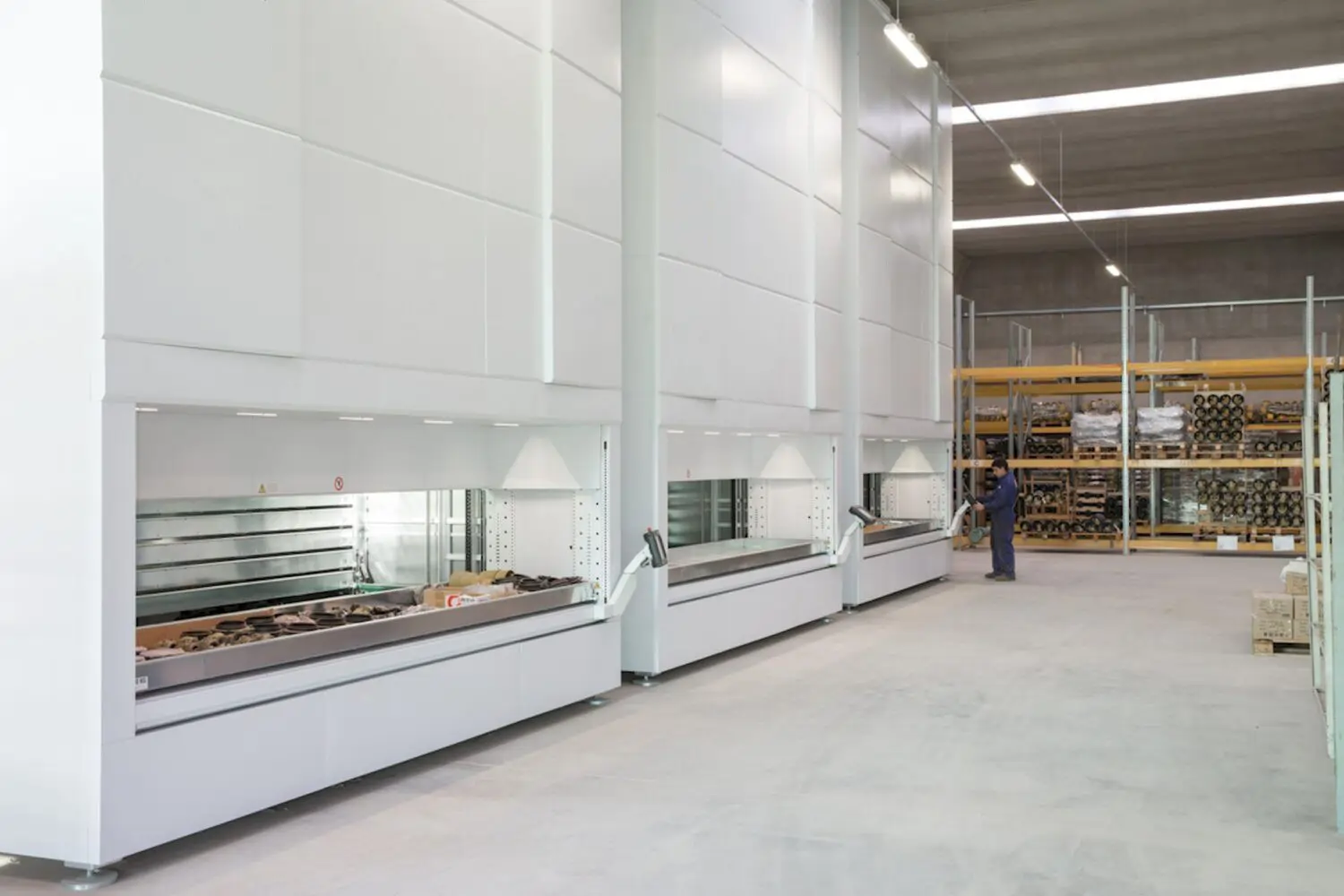
Our new article looks at how TL-1900 to TL-4100 vertical lift warehouses reclaim space once taken up by static shelving, deliver accurate picking, and provide real-time, reliable inventory data.
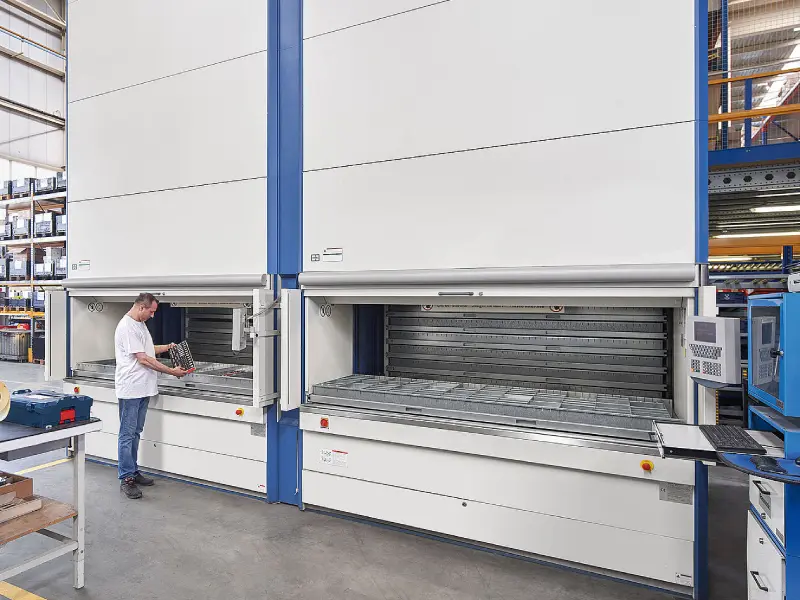
How a VLM works, what it costs, payback period. Save up to 85% of warehouse space. Turnkey manufacturing and installation.
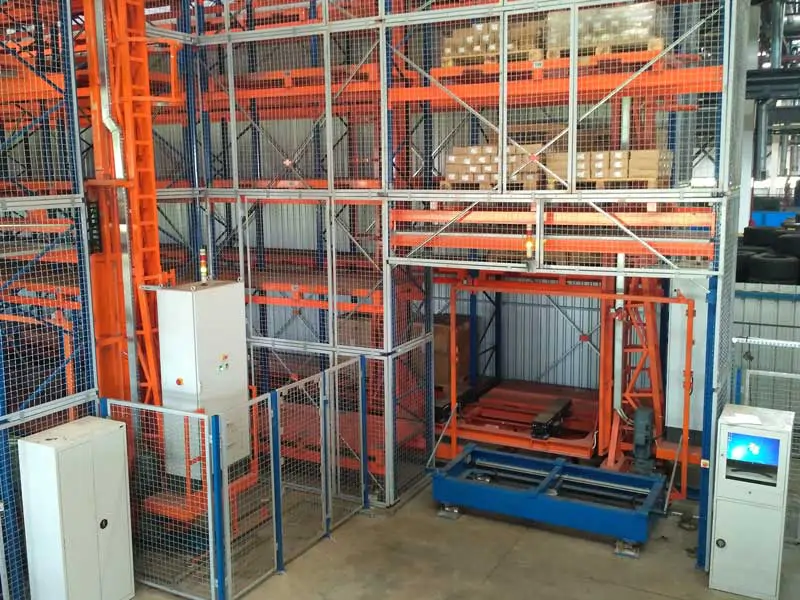
How an automated rack-type warehouse saves up to 90% of space and replaces manual material inventory with automatic inventory—details include the design, technical parameters, and application scenarios.