Order picking speed is not determined only by how many people and how much equipment you have. It is shaped far more by the basic logic of the warehouse: does the person go to the goods, or do the goods come to the person? That single choice drives throughput, error rates, the floor space storage occupies and, ultimately, the cost of every order line picked.
In this article we look at both principles, break down where picking time goes, compare the approaches on key metrics and explain how to choose the right scheme for your warehouse, from spare parts and tooling stores to sheet metal storage on a production site.
Table of contents
- What person-to-goods and goods-to-person mean
- Where picking time goes
- How person-to-goods works and where it loses time
- How goods-to-person works and where the gain comes from
- Comparison on key metrics
- When to choose which principle
- The hybrid scheme: the best of both
- A special case: sheet metal and long products
- How to estimate the effect and payback
- Frequently asked questions
- Conclusion
What person-to-goods and goods-to-person mean
Person-to-goods is the classic scheme. The picker receives a task, walks or drives to the storage locations, finds the slot, takes the required quantity and returns to the assembly or packing area. The warehouse is a set of racks and aisles, and it is the person who moves.
Goods-to-person (GTP) reverses the logic. The operator works at a fixed station, and an automated system delivers the required tote, tray, pallet or sheet to them. Typical examples are vertical lift modules, shuttle systems, carousels and robotic cells. The operator only takes the required quantity and confirms the operation.
The key difference is simple: in the first case the person moves, in the second the load moves, under the control of a system that knows what is stored where.
Where picking time goes
To see where the two principles diverge, break the picking cycle of one order line into its components:
- Travel. The path from the station to the storage location and back.
- Search. Finding the right slot, checking the part number, sometimes locating the right batch.
- The pick itself. Taking, counting, placing.
- Confirmation and record-keeping. Scanning, data entry, posting in the inventory system.
- Waiting and idle time. Waiting for an aisle to clear, for equipment or for a queue at the rack.
Industry estimates suggest that in manual picking walking and searching can take up to half of working time, sometimes more. These are exactly the operations that add no value: a part does not get any closer to the customer because the picker walked another hundred metres. Goods-to-person targets precisely this part of the cycle.
How person-to-goods works and where it loses time
The scheme is easy to implement and needs no large investment: racks, carts, stackers and a location-based storage system. It is flexible and works well for mixed assortments and bulky or non-standard loads.
As volumes grow, however, typical limitations appear:
- Productivity grows only with headcount. To pick more, you have to hire more people and buy more equipment.
- Longer routes. The larger the warehouse and the wider the range, the longer the trip for each line.
- The human factor. Mis-picks, miscounts and picking from the wrong batch. They rise with fatigue and shift changes.
- Aisle congestion. At high work density pickers and equipment get in each other’s way.
- Inefficient use of space. Aisles are needed for people and equipment, so a large share of the building volume is not used for storage.
- Working conditions and safety. Work at height, with heavy loads, next to handling equipment, increases injury risk.
How goods-to-person works and where the gain comes from
In a GTP system the cycle is built around a fixed station. The control system (WMS or embedded software) receives an order, identifies the locations holding the required items and sends the container to the issue station. While the operator handles one item, the next is already on its way.
The speed gain comes from several effects:
- Walking disappears. The heaviest component of the cycle drops almost to zero.
- Searching disappears. The system knows the address and delivers the right slot; the operator does not need to check racks.
- Parallel work. The next load is delivered while the operator is busy with the current one, so the station is rarely idle.
- Guidance and control. Slot lighting, on-screen quantities and scanning reduce the chance of error.
- A steady pace. Output does not sag toward the end of a shift, because it does not depend on fatigue from walking.
An additional benefit is compactness. Vertical systems use building height and eliminate aisles between racks, so storing the same volume takes much less floor space.
Comparison on key metrics
| Metric | Person-to-goods | Goods-to-person |
|---|---|---|
| Speed per order line | Limited by travel and search time | Significantly higher, as walking is eliminated |
| Picking accuracy | Depends on the picker’s attention | Higher thanks to lighting, scanning and system control |
| Space utilization | Aisles required, lower storage density | High density, use of building height |
| Scaling for peak loads | By adding staff and equipment | By adding stations and modules |
| Initial investment | Low | High |
| Flexibility across the range | Very high, suits non-standard loads | Depends on the size and weight the system is designed for |
| Working conditions and safety | Work with equipment, at height, in aisles | Ergonomic station, fewer hazardous operations |
| Dependence on staff | High | Lower |
When to choose which principle
Person-to-goods remains a sensible choice if:
- order volumes are low, and the load is uneven and seldom reaches peaks;
- the range is small, the warehouse compact and the routes short;
- loads are very large, heavy or non-standard and do not fit the dimensions of an automated system;
- the budget is limited and picking errors are not critical.
Goods-to-person pays off if:
- the number of order lines per day is large and growing steadily;
- the range is wide, with many small and medium-sized items;
- the cost of an error is high: expensive components, strict batch traceability;
- the warehouse is short of space, and expansion is costly or impossible;
- it is hard to find and retain staff, and turnover undermines process stability.
The hybrid scheme: the best of both
In practice the choice is rarely either/or. A typical rational scheme is this: fast-moving and small items (the so-called A items in an ABC analysis) go into an automated goods-to-person system, while bulky, rarely picked and non-standard items stay on conventional racking with traditional picking.
This gives you the maximum effect where the number of slot accesses is highest, and you do not overpay for automation where it brings no return. The essential condition is a single inventory system (a WMS or integration with ERP/MES) so that both zones work as one warehouse.
A special case: sheet metal and long products
In metalworking and machine building, person-to-goods often means a crane, a forklift and a hunt for the right sheet among stacks. The losses here are noticeably higher than in a small-parts warehouse: the sheet has to be found, dug out from under others, moved, and the remainder returned afterwards.
For these tasks, specialized automated sheet metal storage systems apply the goods-to-person principle: the system retrieves the required sheet or bundle itself and delivers it to the issue station, then returns the remainder to its slot and records it in inventory. This reduces idle time of cutting equipment, lowers the risk of material damage and removes work under suspended loads.
Read more about this solution on the page for VerMet automated sheet metal storage systems.
How to estimate the effect and payback
To compare the principles with numbers rather than impressions, collect the baseline metrics of your warehouse:
- Order lines per day and their peak values by season.
- Average time per line under the current scheme, from receiving the task to confirmation.
- The share of time spent on travel and search (time studies over several shifts give an honest picture).
- The picking error rate and the cost of one error: returns, production downtime, claims.
- The cost of floor space and the possibility of expanding the warehouse.
- Picker payroll and equipment costs.
Next, calculate savings in labour, reduced losses from errors, freed-up floor space and the increase in throughput, then set them against the investment in the system. It is important to factor in not only today’s volume but also the growth forecast: automation delivers its greatest effect precisely under growth, because it scales by adding stations rather than people.
Frequently asked questions
What is the goods-to-person principle?
It is a picking principle in which the operator stays at one station while an automated system brings the required container or material to them. In international practice it is known as goods-to-person (GTP).
What is the person-to-goods principle?
It is the classic scheme in which the picker moves through the warehouse to the storage locations and collects the items of an order.
Which picking principle is faster?
With a steady flow of order lines, goods-to-person is usually faster because it eliminates walking and searching. With low order volumes or very bulky items, person-to-goods can be the more rational choice.
Can both principles be combined in one warehouse?
Yes. Fast-moving and small items are placed in an automated system, while bulky and rarely picked items remain in conventional racking with traditional picking.
Does goods-to-person work for sheet metal?
Yes, dedicated solutions exist: the sheet or bundle is delivered to an issue station, and the operator does not use a crane or walk between stacks.
Conclusion
Person-to-goods is a simple, flexible scheme with a low entry threshold, but its productivity is capped by walking, searching and the human factor. Goods-to-person removes those losses, improves accuracy and saves floor space, though it requires investment and pays back at sufficient load.
The decision should be based on data: time studies, order line counts, the cost of errors and the growth forecast. Often the best result comes from a hybrid, where automation covers the hottest part of the range.
Want to find out which picking principle suits your warehouse? Contact the Techvagonmash engineers: we will help you calculate the load and choose a solution for your range.
Related articles
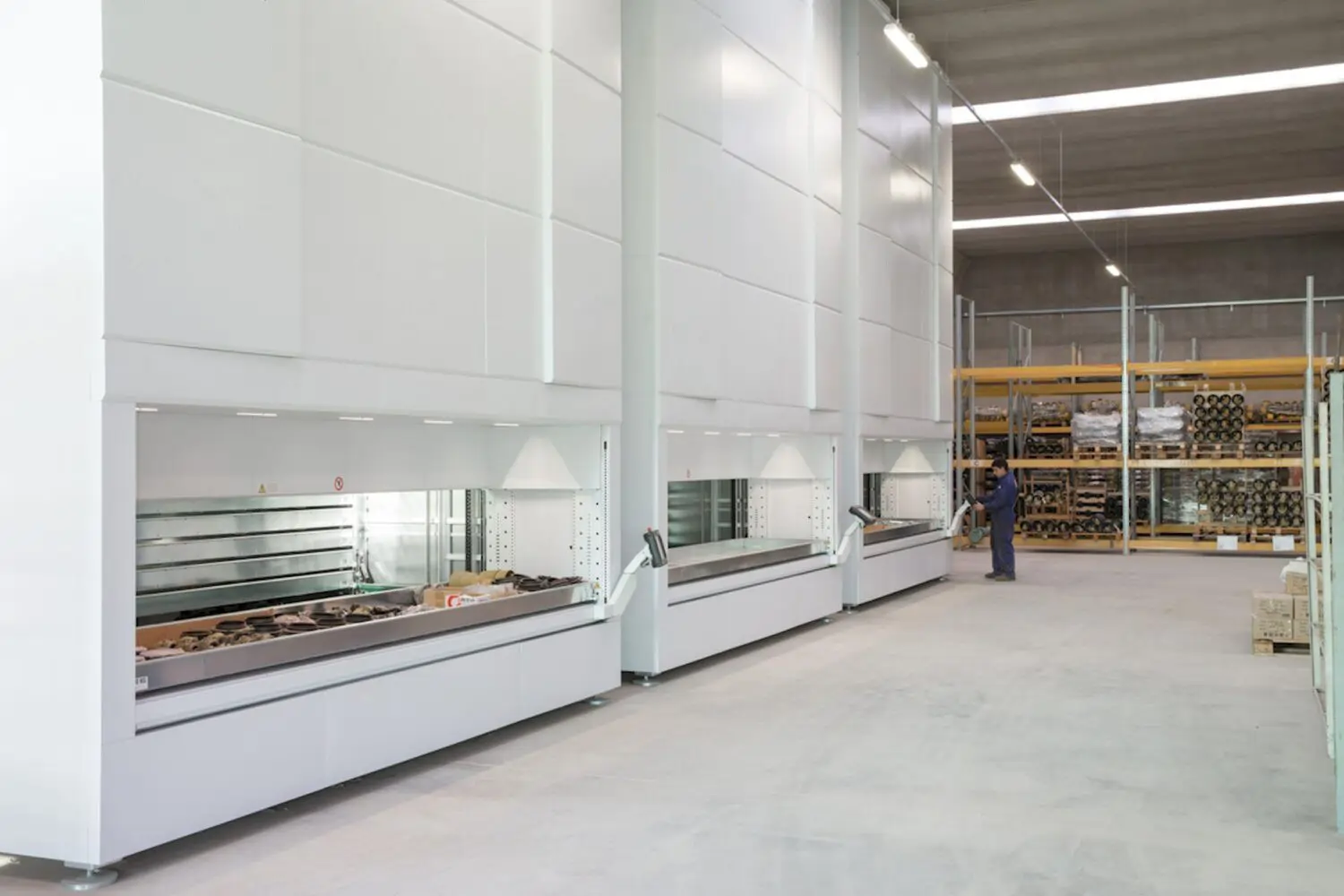
Our new article looks at how TL-1900 to TL-4100 vertical lift warehouses reclaim space once taken up by static shelving, deliver accurate picking, and provide real-time, reliable inventory data.
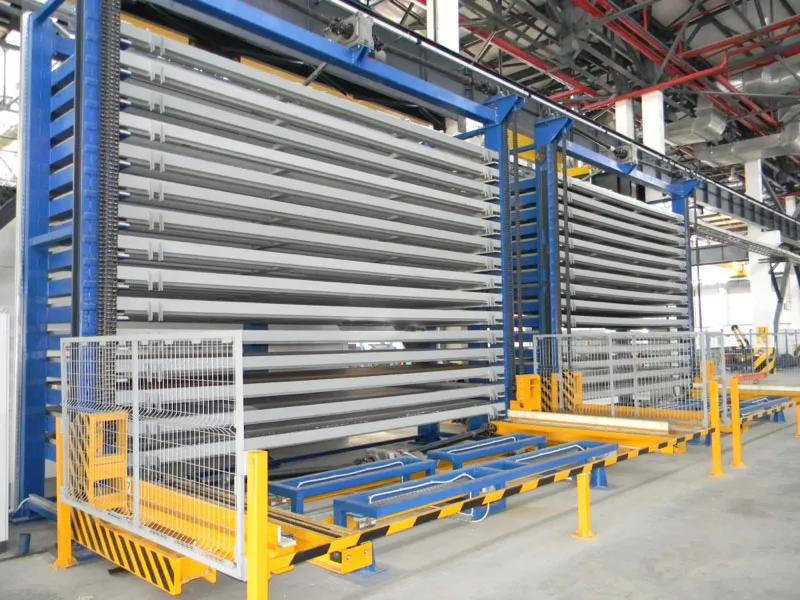
An automated metal warehouse is not only state-of-the-art equipment but also an effective tool for reducing production costs. Learn about the hidden costs of traditional metal storage, how to calculate the economic impact of automation, and why modern businesses are switching to intelligent storage systems.
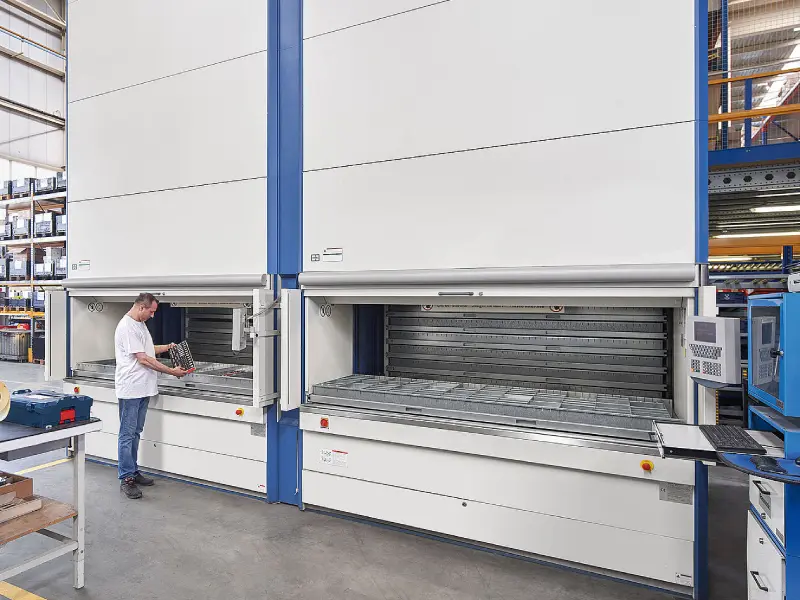
How a VLM works, what it costs, payback period. Save up to 85% of warehouse space. Turnkey manufacturing and installation.
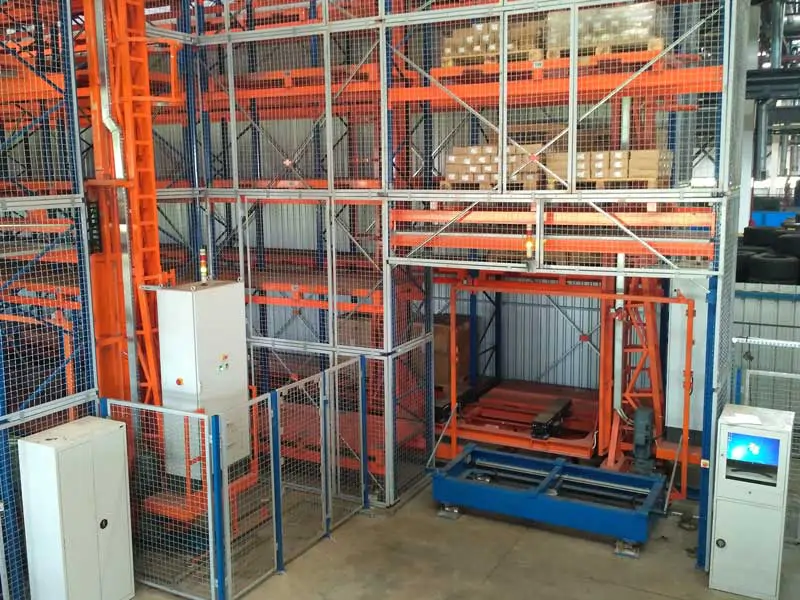
How an automated rack-type warehouse saves up to 90% of space and replaces manual material inventory with automatic inventory—details include the design, technical parameters, and application scenarios.