Warehouse automation is becoming an increasingly important part of industrial modernization. Growing product ranges, limited warehouse space, the need to speed up material retrieval and improve inventory accuracy are encouraging manufacturers to look for more efficient storage solutions.
One of these solutions is the automated vertical storage system with trays, also known as a Vertical Lift Module (VLM).
The operating principle is straightforward: the system automatically moves trays inside a vertical structure and delivers the required tray to the operator at an ergonomic access point. Products are stored at multiple levels, making use of the building’s vertical space while eliminating the need for employees to walk through aisles looking for individual items.
Despite these advantages, many misconceptions about automated vertical storage systems still exist. Some companies consider them too expensive, others see them as difficult to operate, while some believe that VLM systems are suitable only for small components or large distribution centers.
Let’s take a closer look at 12 of the most common myths.
Myth 1. Installing an automated vertical storage system requires a complete warehouse reconstruction
At first glance, implementing automated equipment may seem like a major construction project. The system needs to be installed, connected to the power supply, integrated with warehouse processes and potentially linked to the company’s IT infrastructure.
However, automated vertical storage systems are specifically designed to make maximum use of the available building space.
A VLM uses the height of the building rather than requiring additional floor space. In many cases, this means there is no need to construct a new building or completely rebuild the existing warehouse.
This is particularly valuable when:
- warehouse floor space is limited;
- expanding the building would be expensive;
- sufficient ceiling height is available;
- the company needs to increase storage capacity without increasing its footprint.
The project must, of course, take into account the actual characteristics of the facility, including building height, floor load capacity, utilities, fire safety requirements and material-flow requirements.
Conclusion: warehouse automation does not necessarily mean a complete reconstruction. With proper planning, a vertical storage system can be integrated into an existing facility.
Myth 2. Automated vertical storage is suitable only for products of the same size
This is another common misconception.
Traditional warehouses often rely on fixed-size storage locations. If the product is significantly smaller than the available storage space, part of that volume remains unused.
Automated vertical storage systems can make much better use of the available vertical space. Depending on the equipment design, trays can be configured with dividers and dedicated storage areas for different products.
This makes it possible to store products with different dimensions in the same system.
Typical applications include:
- bearings;
- spare parts;
- fasteners;
- electrical components;
- tools;
- production tooling;
- assembly-line components;
- small metal products.
The storage configuration can also be adjusted as the company’s product range changes.
However, flexibility does not mean there are no limitations. The maximum dimensions, weight and characteristics of the goods must be considered when selecting the equipment.
Conclusion: VLM systems can handle a wide range of products, but the equipment must be properly configured for the specific application.
Myth 3. If the automated warehouse breaks down, the company will completely lose access to its materials
This is one of the most serious concerns about warehouse automation.
Any industrial machine can theoretically experience a malfunction. The important question is therefore not whether a failure is possible, but how the system is designed to prevent, detect and recover from failures.
Modern automated storage systems incorporate sensors, diagnostic functions, safety systems and automated controls.
Preventive maintenance is also essential:
- regular diagnostics;
- drive-system inspection;
- mechanical component checks;
- timely replacement of wear parts;
- software and control-system maintenance.
When selecting a supplier, companies should also consider technical support, spare-parts availability and service response times.
Conclusion: the reliability of a VLM depends not only on its mechanical design but also on engineering quality, automation, diagnostics and service support.
Myth 4. An automated vertical storage system cannot be integrated with ERP or WMS
Some companies assume that an automated warehouse is an isolated piece of equipment that operates independently from their existing IT infrastructure.
Modern warehouse automation works differently.
A VLM can be integrated with the company’s digital infrastructure, including:
- WMS;
- ERP;
- MES;
- production management systems;
- databases;
- barcode and identification systems.
Instead of manually searching for every storage location, the operator can request a specific item through the system.
The control system identifies the location of the required tray and automatically delivers it to the operator.
As a result, automation is not limited to the physical movement of products. It also improves inventory and storage-location management.
Conclusion: a properly integrated VLM becomes part of the company’s overall material-flow and inventory-management system.
Myth 5. Automated vertical storage is too expensive
Equipment cost is naturally one of the first questions companies ask when considering warehouse automation.
However, comparing the price of a VLM only with the price of conventional shelving does not provide a complete picture.
The total cost of warehouse operations should also include:
- warehouse floor space;
- facility maintenance;
- labor costs;
- time spent searching for products;
- picking errors;
- internal material movement;
- product losses and damage;
- future warehouse expansion.
When additional storage capacity is required, a company can either expand its warehouse or make more efficient use of the existing volume.
The second option can be particularly attractive where industrial real estate is expensive or additional floor space is unavailable.
Automation can also be introduced in stages rather than implemented across the entire warehouse at once.
Conclusion: the economic value of a VLM should be assessed based on the total cost of ownership and expected operational benefits, rather than equipment price alone.
Myth 6. Automated vertical storage requires highly qualified operators
The technical complexity of the equipment does not mean that every operator must be an industrial automation specialist.
During normal operation, employees interact with the system through a user interface. They select the required item or execute a storage or retrieval task, while the machine automatically delivers the appropriate tray.
This fundamentally changes the nature of warehouse work.
In a conventional warehouse, an employee may have to:
- identify the product location;
- find the correct rack;
- walk to the storage location;
- locate the required item;
- remove it;
- transport it to the required area.
With automated vertical storage, much of this work is performed by the equipment.
Employees still require appropriate training, particularly in equipment safety, operating procedures and system control.
Conclusion: automation does not eliminate the need for trained personnel, but it significantly reduces manual handling and unnecessary warehouse travel.
Myth 7. Vertical automated storage systems are suitable only for small parts
Small components are certainly one of the most common applications for VLM technology.
However, the range of applications is much broader.
Automated vertical storage systems can be used for:
- tools;
- production tooling;
- spare parts;
- components;
- electrical equipment;
- packaging materials;
- consumables.
For industrial companies, one particularly useful application is MRO storage — the storage of spare parts, maintenance materials and equipment required to keep production assets operating.
At the same time, large, long or highly irregular products may require a different type of storage equipment.
Conclusion: VLM technology has a broad range of applications, but the system must be designed around the dimensions and weight of the products being stored.
Myth 8. Automated vertical storage is suitable only for large distribution centers
Another common misconception is that VLM systems are intended only for large logistics operations.
In reality, automated vertical storage can be installed directly within a manufacturing facility.
For example, a VLM can be located close to:
- assembly areas;
- welding production;
- maintenance departments;
- tool rooms;
- technical service areas;
- production kitting lines.
In this configuration, the automated storage system becomes part of the production logistics process.
This can be particularly effective when employees frequently retrieve components from storage and deliver them to production workstations.
Conclusion: automated vertical storage is not limited to large distribution centers. It can also serve as a compact local warehouse located directly within the manufacturing process.
Myth 9. Automation completely replaces warehouse workers
One of the most common misconceptions is that warehouse automation is primarily about reducing the number of employees.
The main purpose of VLM technology is different: it transfers repetitive physical operations from people to machines.
Employees continue to perform important functions such as:
- supervising operations;
- receiving and storing products;
- picking;
- quantity verification;
- quality control;
- inventory management;
- handling exceptional situations.
At the same time, automation eliminates much of the unnecessary walking, product searching and difficult manual access associated with conventional storage.
Conclusion: it is more accurate to describe VLM as a transition from person-to-goods handling to a goods-to-person workflow rather than simply a replacement of workers.
Myth 10. Once installed, an automated warehouse cannot adapt to changes in the product range
Manufacturing product ranges rarely remain unchanged.
New products are introduced, suppliers change, inventory levels fluctuate, some components become more important while others are phased out.
An automated storage system therefore needs to accommodate changing requirements.
Trays can be equipped with different dividers and storage zones. The software can update product locations and inventory information.
The system can also take product turnover into account.
For example, frequently requested products can be positioned to reduce retrieval times.
However, flexibility has to be considered during the design stage. Tray dimensions, load capacity and the expected future product range should all be taken into account when specifying the system.
Conclusion: a VLM can adapt to changing inventory requirements, provided that the necessary flexibility is incorporated into the initial design.
Myth 11. Automated vertical storage is slower than conventional shelving
At first glance, this may seem logical.
A person can simply walk to a rack and pick up a component. Why use a machine?
However, the correct comparison is the total time required to complete the task, not just the time needed to reach a single storage location.
In a conventional warehouse, an employee spends time:
- locating the storage address;
- walking through the warehouse;
- finding the product;
- removing it;
- returning to the work area.
A VLM uses the opposite principle — goods-to-person.
The operator remains at the workstation while the system delivers the required tray.
This can significantly reduce non-value-adding travel, especially when the number of retrieval operations is high.
VLM performance should therefore be evaluated using indicators such as:
- cycle time;
- retrievals per hour;
- search time;
- operator travel distance;
- number of simultaneous tasks.
Conclusion: an automated vertical storage system can significantly improve productivity by eliminating unnecessary employee movement.
Myth 12. Automating a warehouse means replacing the entire existing storage system
A company does not necessarily need to automate its entire warehouse at once.
The first stage can focus on the area where automation can deliver the greatest benefit:
- high-value components;
- tool storage;
- spare-parts storage;
- fast-moving items;
- products with high storage costs.
Once the operational and economic benefits have been demonstrated, automation can be expanded.
A phased approach allows companies to:
- reduce initial investment;
- test the technology;
- train employees;
- adapt operating procedures;
- gradually integrate the equipment with existing IT systems.
An automated vertical storage system can also operate alongside conventional shelving, conveyors, lifting equipment and other material-handling technologies.
Conclusion: warehouse automation does not have to be an all-or-nothing project. In many cases, it is more effective to identify the most suitable area and start there.
What Does an Automated Vertical Storage System Actually Provide?
An automated vertical storage system is much more than a mechanized rack.
It is an integrated solution combining:
mechanics → automation → control software → inventory data → product identification → operator interaction → production integration.
The main benefits include:
Space saving
Using the vertical dimension of a facility can significantly increase storage capacity without a proportional increase in floor space.
Faster retrieval
The system knows where each item is stored and automatically delivers the required tray.
Higher productivity
Employees spend more time at the workstation and less time walking through the warehouse.
Improved inventory accuracy
Storage and inventory information can be managed digitally and integrated with ERP or WMS systems.
Improved safety
The need for ladders, manual handling and constant movement between storage aisles is reduced.
Production integration
The automated storage system can be connected to enterprise management and production processes.
When Does Automated Vertical Storage Make Sense?
Automation is particularly attractive when a company faces several of the following challenges:
- the warehouse occupies too much floor space;
- warehouse expansion is difficult or expensive;
- significant ceiling height is available;
- employees spend too much time searching for materials;
- a large number of SKUs must be stored;
- picking errors occur frequently;
- inventory accuracy needs to be improved;
- materials regularly move between the warehouse and production;
- workplace safety needs to be improved;
- there is a shortage of warehouse personnel;
- ERP or WMS integration is required;
- the company wants to gradually automate its storage infrastructure.
The more of these factors are present, the greater the potential benefit of automation.
How to Select the Right Automated Vertical Storage System
There is no single VLM configuration that is equally suitable for every company.
Before designing the system, it is important to analyze:
1. Product range
What materials will be stored? What are their dimensions, weight and characteristics?
2. Operational intensity
How many storage and retrieval operations are performed per hour, shift or day?
3. Building height
What installation height is available?
4. Load requirements
What maximum load must each tray support?
5. Performance requirements
How many retrieval operations must the system perform within a given period?
6. IT infrastructure
Which systems — ERP, WMS or MES — need to be integrated with the equipment?
7. Future requirements
Will the product range or storage volume increase in the future?
A comprehensive analysis of these parameters makes it possible to determine the most appropriate system configuration.
Automation Starts with the Requirement, Not the Equipment
An automated vertical storage system is not simply a mechanized rack.
It is a solution combining mechanical equipment, automation, software, inventory management and production logistics.
Before purchasing equipment, companies should therefore ask not only:
“Which storage system should we buy?”
but rather:
“What warehouse and material-handling problem do we need to solve?”
If a company needs to increase storage capacity without expanding the warehouse, reduce component retrieval times, improve inventory accuracy and minimize manual operations, an automated vertical storage system can become an effective tool for warehouse modernization.
For industrial manufacturers, VLM technology is particularly valuable when it can be installed close to production areas and used for storing components, tools, production tooling or spare parts.
A properly designed automated storage system can transform a warehouse from a passive storage area into an integrated and manageable part of the production logistics process.
Related articles
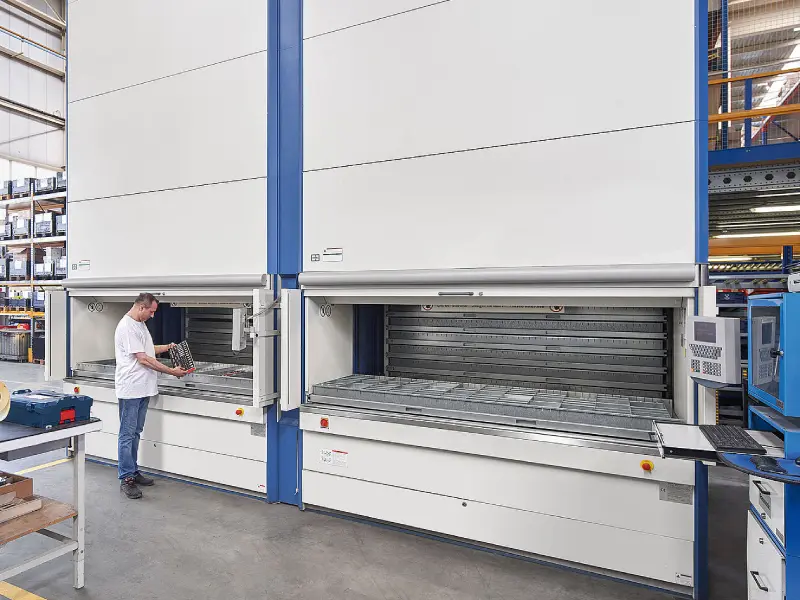
Order picking speed is not determined only by how many people and how much equipment you have. It is shaped far more by the basic logic of the warehouse: does the person go to the goods, or do the goods come to the person? That single choice drives throughput, error rates, the floor space storage occupies and, ultimately, the cost of every order line picked. In this article we look at both principles, break down where picking time goes, compare the approaches on key metrics and explain how to choose the right scheme for your warehouse, from spare parts and tooling stores to sheet metal storage on a production site.
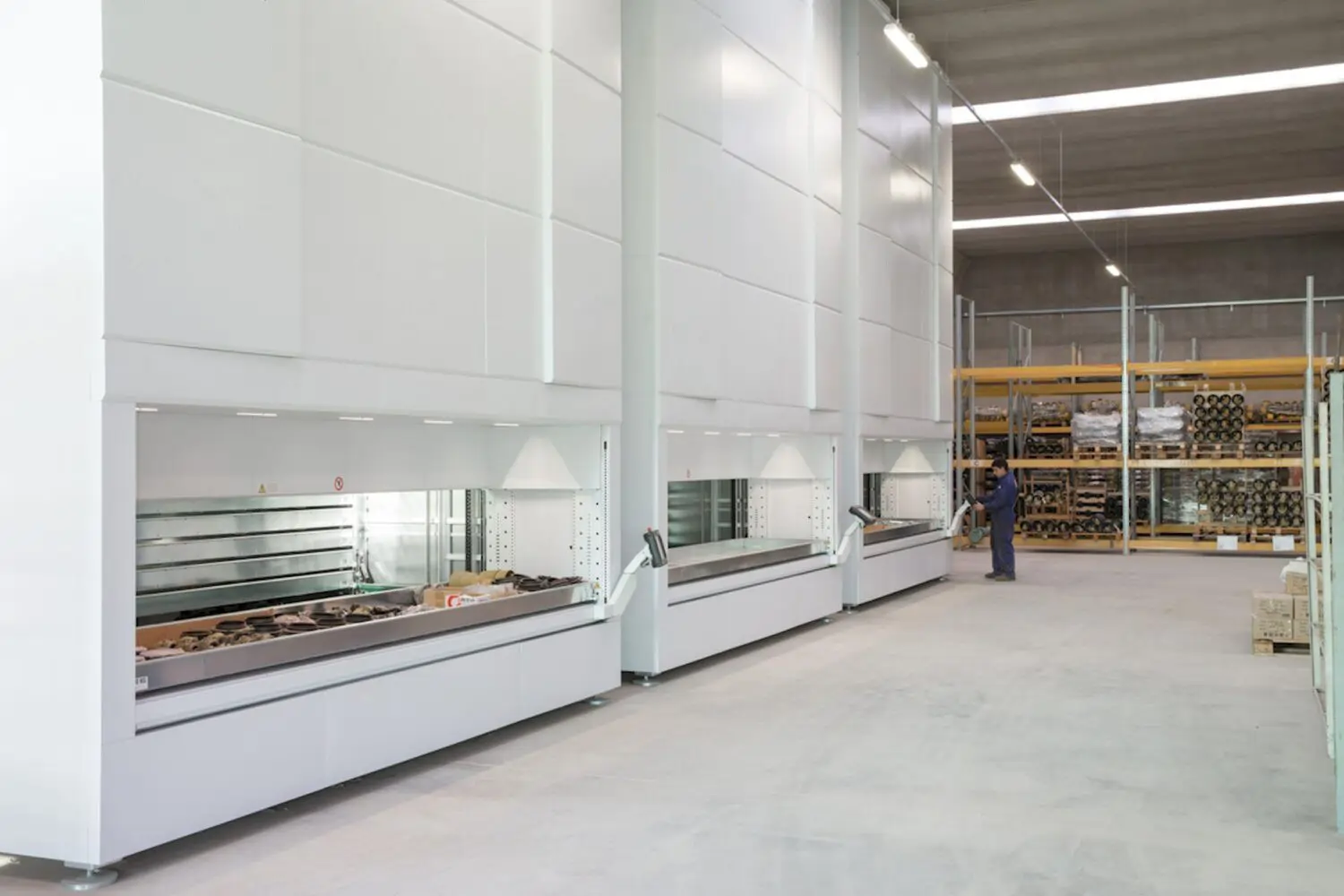
Our new article looks at how TL-1900 to TL-4100 vertical lift warehouses reclaim space once taken up by static shelving, deliver accurate picking, and provide real-time, reliable inventory data.
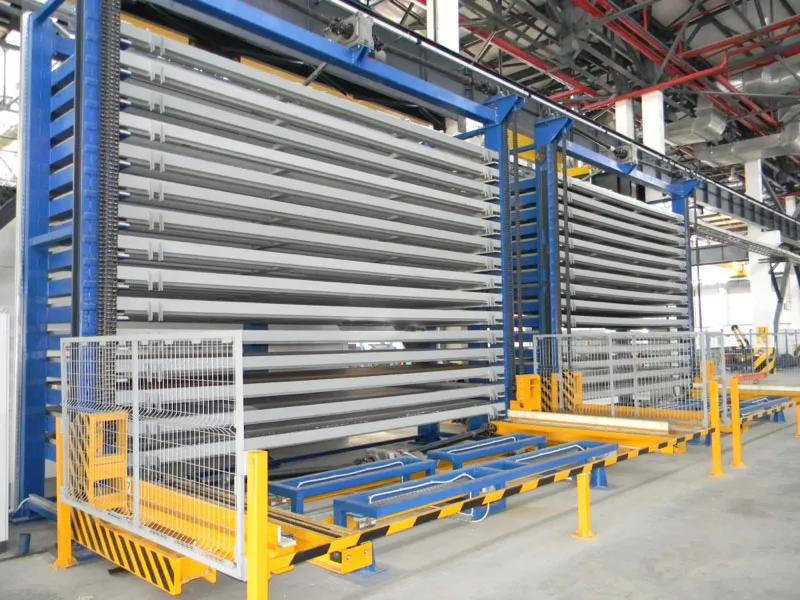
An automated metal warehouse is not only state-of-the-art equipment but also an effective tool for reducing production costs. Learn about the hidden costs of traditional metal storage, how to calculate the economic impact of automation, and why modern businesses are switching to intelligent storage systems.
How a VLM works, what it costs, payback period. Save up to 85% of warehouse space. Turnkey manufacturing and installation.
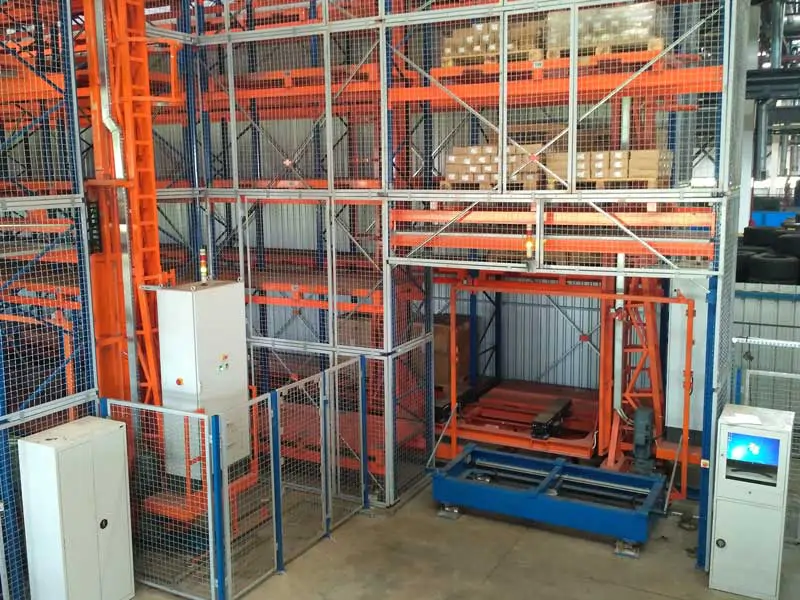
How an automated rack-type warehouse saves up to 90% of space and replaces manual material inventory with automatic inventory—details include the design, technical parameters, and application scenarios.