Table of Contents
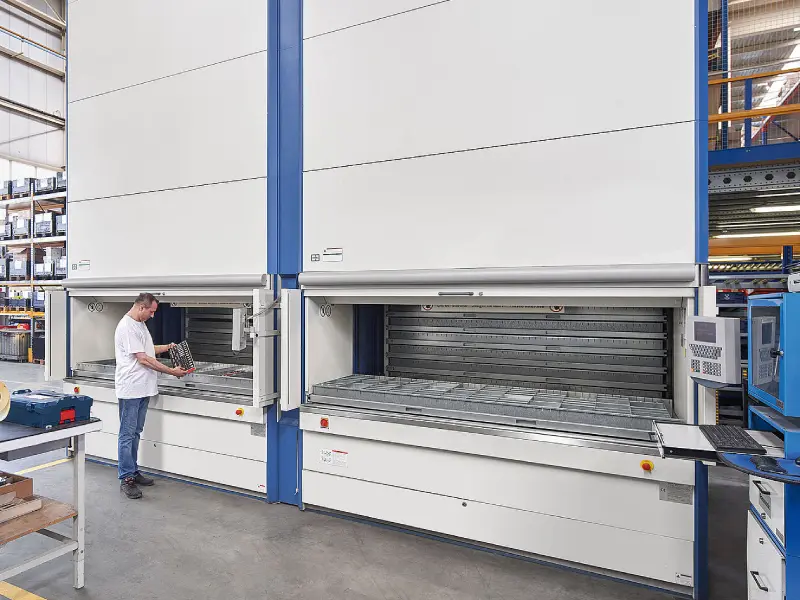
What Is an Automated Vertical Lift Storage System?
A facility storing tooling, components, or spare parts on conventional shelving loses both floor space and time: an operator walks to the rack, searches for the bin, and walks back. A vertical lift module (VLM) removes that walk entirely — the item comes to the operator instead.
It’s a vertical, computer-controlled storage and retrieval system built on the goods-to-person principle. A lift module moves trays up and down between two columns of storage cells and delivers the requested tray to a single access window. As a manufacturer of vertical lift modules, we engineer these systems around each customer’s product range and load requirements.
How a VLM Works
The system consists of four core components:
- Lift module — a vertical elevator moving between trays on two sides.
- Access window — where the operator retrieves the item.
- Control software — routes requests and optimizes storage locations.
- Trays/carriers — storage modules, sized and configured per project.
Picking cycle:
- The operator or WMS sends a request for an item.
- The controller identifies the optimal cell and directs the lift to the corresponding tray.
- The tray is delivered to the access window.
- The operator retrieves the item — inventory is updated automatically.
Key Benefits of Automated Vertical Lift Storage Systems
1. Save Up to 85% of Floor Space
Vertical storage (up to 15–20 meters) removes the floor-space constraint: where shelving fills an entire shop floor, a VLM fits in a corner.
2. Higher Picking Throughput
Items arrive at the access window in seconds — operators stop walking the aisles, directly increasing picks per shift.
3. Fewer Picking Errors
WMS integration and pick-to-light guidance cut human error and improve picking accuracy.
4. Better Safety and Ergonomics
All work happens at a comfortable height — no ladders, no heavy lifting. That reduces injury risk and staff turnover in warehouse roles.
5. Full Inventory Control
Every movement is logged in real time — critical for high-turnover warehouses handling high-value components.
6. Scalability
Modules can be added as the business grows, without redesigning the whole system.
Comparison: VLM vs. Rack-Type Automated Storage vs. Traditional Shelving
| Parameter | Vertical Lift Module | Rack-Type Automated Storage | Traditional Shelving |
|---|---|---|---|
| Space savings | up to 85% | up to 90% | baseline |
| Picking principle | goods to person | person/stacker to goods (partially automated) | person to goods |
| Picking speed | high | medium–high | low |
| Inventory accuracy | automatic, real time | automatic | manual / barcode |
| Best for | small–medium parts, high SKU density | for large volumes of goods | low turnover, small warehouses |
If your main inventory is sheet metal rather than small components, it’s worth calculating the automation business case separately — see “The True Cost of Metal Storage: Hidden Expenses and How Automation Improves Productivity”. For a closer look at storing oversized goods rather than small-parts inventory, see “Automated Rack-Type Warehouses”. If you’re specifically evaluating our TL-series vertical lift line, our detailed product walkthrough is here: “Vertical Lift Warehouses: A Path to Operational Excellence”.
Applications Across Industries
Manufacturing
Storing tools, components, and fixtures; fast access to parts for assembly lines; tracking high-value inventory.
Automotive
Storage for spare parts, tires, filters, and service/maintenance components.
Electronics & High-Tech
Compact storage for small, valuable items such as chips and PCBs, with batch and serial number tracking.
Medical & Pharmaceutical
Secure storage of medicines and equipment with climate control and access management.
Logistics & E-Commerce
High-speed order picking and ERP/WMS integration for managing large SKU counts.
Features of Our Vertical Lift Storage Systems
We design and manufacture vertical lift systems in compliance with Ukrainian and international quality standards, tailoring every solution to the customer’s facility and business needs.
Modular Construction
Configurable height, load capacity, and layout — easily installed in facilities with irregular footprints.
Proprietary Software
An intuitive interface with ready integration for 1C, SAP, Oracle, and other ERP/WMS platforms.
High-Precision Positioning
Lift speeds up to 2.5 m/s and positioning accuracy within 1 mm, with dynamic storage-location optimization.
Warranty and Support
Full lifecycle service — design, manufacturing, installation, training, and technical support. Warranty up to 5 years.
How to Choose a Vertical Lift Storage System — and What It Costs
Before purchasing, evaluate:
- Facility dimensions — ceiling height, floor load capacity.
- Item characteristics — weight, size, sensitivity.
- Required throughput — operations per shift.
- IT integration needs with existing systems.
- Safety and certification requirements.
Final pricing is calculated individually from these parameters — there’s no single “off the shelf” price for industrial VLM systems. We run a free facility audit and follow up with an accurate quote for your specific requirements.
ERP and WMS Integration
Our vertical lift systems integrate with existing management software:
- Data exchange via REST API, XML, or CSV.
- Ready integration with 1C:Enterprise, SAP, WMS Logistic Vision Suite, Microsoft Dynamics NAV.
- Support for barcode scanners, handheld terminals, and RFID.
The result is a fully connected digital warehouse ecosystem — from order to dispatch.
FAQ
How much does an automated vertical lift storage system cost?
Cost depends on module height, tray load capacity, software configuration, and the scope of WMS/ERP integration. An accurate quote is only possible after a free warehouse audit and a detailed technical brief.
What is the payback period for a vertical lift storage system?
Payback comes from space savings, higher picking throughput, and fewer picking errors. For facilities with high inventory turnover, payback typically ranges from 2 to 4 years.
How does a vertical lift module differ from a rack-type automated warehouse?
A rack-type automated warehouse automates storage, but an operator or stacker crane still moves along the racks. A vertical lift module works on the goods-to-person principle: the tray is delivered directly to the access window, giving higher storage density and faster picking.
What is the maximum height and tray load capacity?
The modular design supports systems up to 15–20 meters tall. Tray load capacity is engineered to the customer’s requirements during the design phase.
Can a vertical lift system integrate with an existing WMS or ERP?
Yes. The system supports REST API, XML, and CSV data exchange, along with ready integrations for 1C:Enterprise, SAP, Microsoft Dynamics NAV, and WMS Logistic Vision Suite.
Conclusion
An automated vertical lift storage system is a way to reclaim shop-floor space and cut picking time without building a new facility. As a manufacturer, we handle the full cycle — from audit and design through installation and ongoing service.
Ready to Implement an Automated Storage System?
Submit a request on our website and our engineers will schedule a free warehouse audit and calculate the cost for your project.
Related articles
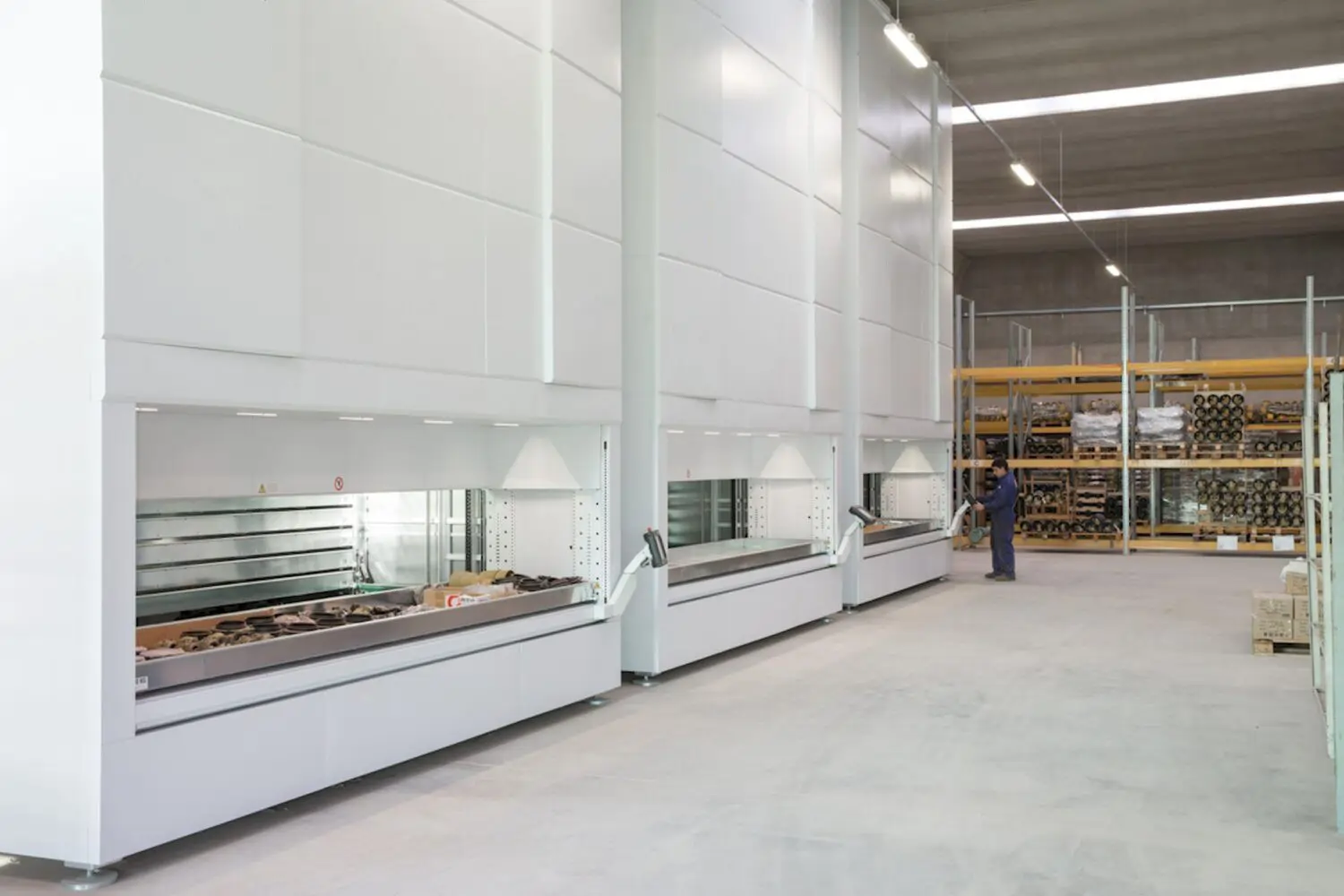
Our new article looks at how TL-1900 to TL-4100 vertical lift warehouses reclaim space once taken up by static shelving, deliver accurate picking, and provide real-time, reliable inventory data.
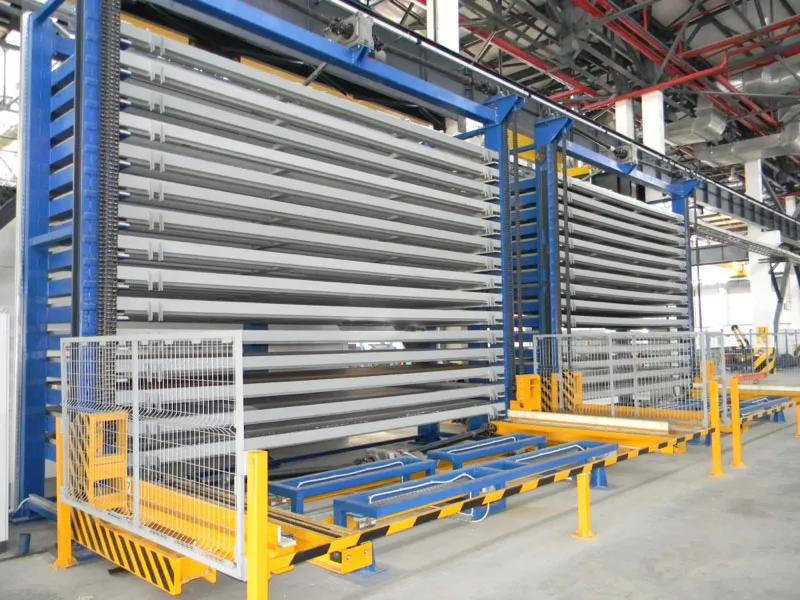
An automated metal warehouse is not only state-of-the-art equipment but also an effective tool for reducing production costs. Learn about the hidden costs of traditional metal storage, how to calculate the economic impact of automation, and why modern businesses are switching to intelligent storage systems.
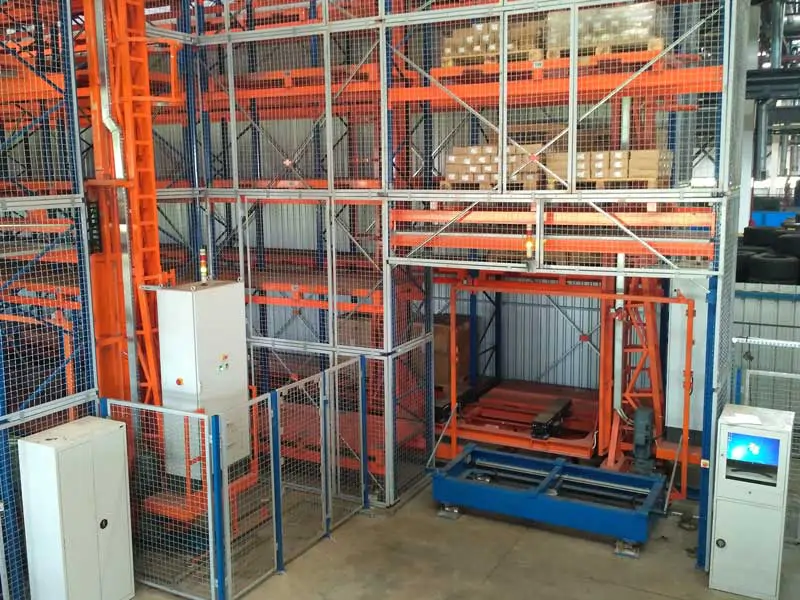
How an automated rack-type warehouse saves up to 90% of space and replaces manual material inventory with automatic inventory—details include the design, technical parameters, and application scenarios.