A spray booth is a significant investment, and it is easy to judge it by the price tag alone. What the price does not show is what the booth delivers over its service life: consistent finish quality, lower material consumption, shorter cycle times, safer working conditions and compliance with environmental rules. This article explains when a spray booth is worth buying for your production.
- Why spray booths are in demand
- The risks of painting without a booth
- Finish quality: common defects and their causes
- Savings on materials and consumables
- Shorter cycle times
- Painter health and safety
- Environmental protection
- FAQ
- Conclusion
Why spray booths are in demand
A spray booth is one of the most effective tools in modern manufacturing. Booths can be configured for almost any product, from small plastic parts and furniture to large vehicles and components on assembly lines.
A booth does more than speed up production. It contains hazardous substances, prevents spills and contamination, and reduces the risk of work-related illness. Requirements for finishing have changed considerably in recent decades:
| Then | Now | |
|---|---|---|
| Energy cost | Energy was cheap, so running costs were rarely a concern | Rising energy prices push companies toward more efficient solutions |
| Environment | Little public concern about pollution | Strict regulation and a real need to cut carbon footprint |
| Materials | Solvent-based paints were used for every operation | Most sectors are moving to water-based, environmentally friendly paints |
The risks of painting without a booth
Painting is heavily regulated because sprays, adhesives and coatings are toxic and flammable. If vapors build up near an open flame or a spark, an explosion can occur. Proper installation and ventilation are essential to protect workers and avoid accidents.
Finish quality: common defects and their causes
Outside a controlled environment, coatings often come out flawed. These are the most common defects.
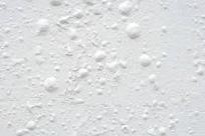
Water blisters. Small blisters visible once the paint dries. Causes: humid air, moisture in the substrate, condensation from sudden temperature changes, insufficiently dried substrate.
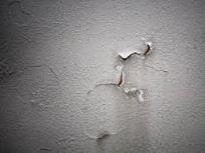
Poor adhesion. The paint layer lifts off like fish scales. Causes: grease, dust, dirt or moisture on the surface, incorrect sanding, unsuitable primer.
Orange peel. A rough, granular surface caused by poor flow-out. Causes: fast solvents, low humidity or high temperature, high-viscosity paint, a part that is too hot.

Cracking. Small cracks that can spread across the whole piece. Causes: paint applied over a damp or not fully dried layer, poor surface preparation.
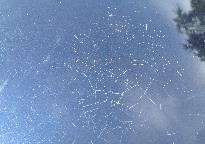
Fisheyes (silicone craters). Small circular holes. Causes: silicones or aerosols in the work area, traces of oil in the compressed air.
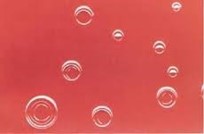
Solvent popping. Small circular blisters that appear during drying. Causes: contamination of the work area, excessive temperature, too short a flash-off time before drying.

Dirt and dust inclusions. Particles settle on wet paint and stick. Causes: insufficient cleaning of the surface, contaminated air.
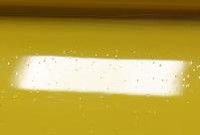
Wrinkling. Wrinkled areas during application or drying. Causes: uneven drying (excess film thickness, too little flash-off time, wrong hardener), paint incompatible with the base coat.
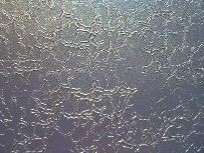
Blushing. Dull areas with a whitish haze. Causes: high relative humidity, poor air exchange during ambient drying, coats applied too thick.
How a spray booth prevents most of these problems
- A clean environment. The part is shielded from dust and particles generated in the workshop.
- Uniform, turbulence-free airflow. Even if particles get in, mostly carried by workers, a dense layer of moving air keeps them off the surface.
- Multi-stage filtration. Incoming air passes through a set of filters that remove outside contaminants.
- Temperature and humidity control. Burners and humidifiers hold the conditions best suited to the specific paint.
- Bright LED lighting. Defects show up immediately, and color matching becomes more accurate.
Savings on materials and consumables
Stable conditions inside the booth reduce costs through:
- thinner paint films (optimal temperature and humidity);
- more uniform coats (constant temperature and airflow);
- better transfer efficiency (no turbulence);
- fewer rejects and repaints (a clean, dust-free environment).
Shorter cycle times
The biggest time savings come at the drying stage. Options include infrared and UV drying for smaller parts. Application also gets faster, because the surface is at the right temperature and holds the paint well.
Painter health and safety
Protecting workers is one of the main reasons spray booths exist. In many countries, companies handling hazardous volatile organic compounds (VOCs) are required by law to use booths that meet strict specifications for airflow, lighting and filtration.
When a painter sprays, a cloud of hazardous compounds is released, and a simple mask is often not enough to avoid inhaling it. Prolonged skin contact can also cause serious health problems. The booth’s constant airflow does two things:
- it creates an air layer that keeps dust particles away from the treated surface;
- it captures the VOC cloud and draws it down through the floor pit, so the worker is not exposed directly and continuously.
As a rule, a higher airflow rate (measured in m³/h) means a safer working environment, because VOCs are removed more effectively.
The same risk applies when mixing paint, not only when spraying, and hazardous chemical reactions are fairly common. It is best to mix inside the booth, or better still in a dedicated paint mixing room.
Fire safety. Most paints and solvents are highly flammable, so the areas where they are used are normally classified as fire hazard zones. A booth does not remove this hazard completely, but with correct maintenance it is a safe place to work. Replace filters when they are saturated and keep the interior clean.
Environmental protection
Spray painting can release the following emissions to the atmosphere:
- evaporated solvents (VOCs) from drying coatings, thinners and cleaners;
- odors from solvents and VOCs;
- toxic compounds, to the extent that solvents, thinners and cleaners are toxic;
- overspray, or coating carryover;
- sanding and blasting dust from surface preparation, for example in smash repair or timber painting.
Efficient capture in the booth at the point of evaporation prevents solvents, odors and other toxic compounds from escaping. The filtration system, and optional activated carbon layers, can reduce emissions to acceptable levels.
FAQ
When is a spray booth really necessary?
A booth is worth considering if you work with materials that release VOCs, have high requirements for finish quality, paint parts regularly, and want to reduce rejects, paint consumption and drying time. For occasional low-volume work the economics may be different.
Which paint defects does a spray booth eliminate?
Mainly those caused by dust, humidity, temperature and contaminated air: dirt inclusions, blushing, water blisters, fisheyes and orange peel. Defects caused by poor surface preparation or incompatible materials are not fixed by the booth itself.
How does a spray booth reduce paint consumption?
Stable temperature and humidity, uniform airflow and the absence of turbulence allow thinner, more even coats, improve transfer efficiency and reduce repainting.
How does a spray booth protect the painter?
Continuous airflow carries the VOC cloud away from the breathing zone through the floor pit, and the filtration system cleans the air. Higher ventilation capacity means more effective protection.
What keeps a spray booth safe to use?
Replace saturated filters on time, keep the interior clean, and mix paints inside the booth or in a separate mixing room.
Conclusion
A spray booth pays off not only through shorter cycles and better finish quality, but also through better protection for your people and the environment. It is all-in-one equipment that helps a business grow and stay competitive. If you are choosing a spray booth or a paint and drying booth, contact us and we will help you select a solution for your products and volumes.
Related articles
How to calculate paint booth ventilation: air exchange rate, airflow volume, working zone velocity, equipment selection. Formulas, tables, and a worked example.
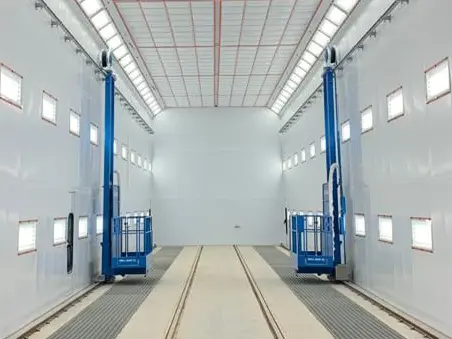
A breakdown of paint and drying chamber design: ventilation, filtration, heating, lighting. Chamber types, working principle, and how to choose equipment for industrial coating.
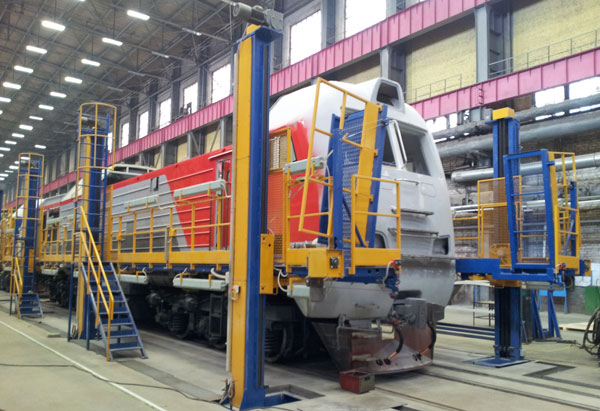
Traditionally, fixed platforms have been used at railcar manufacturing plants for exterior finishing and final body processing. However, conventional solutions have significant drawbacks: limited lifting range, difficulty in positioning workers at the required height, non-compliance with modern industrial safety standards, and inconvenient operation.
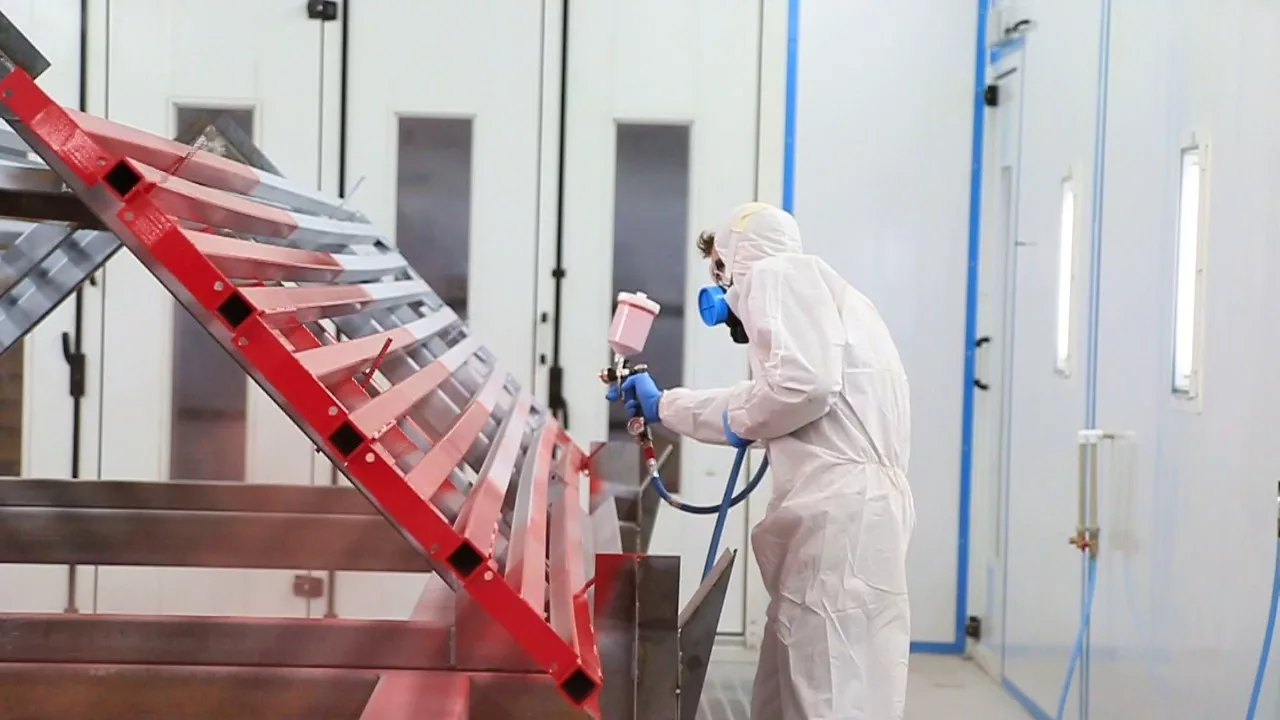
Imagine a paint shop — spacious, bright, and ergonomically designed. At first glance, it seems simple: draw up a layout, buy the equipment, install it, and start making money. But what’s the most important thing to start with? Of course — the spray booth!
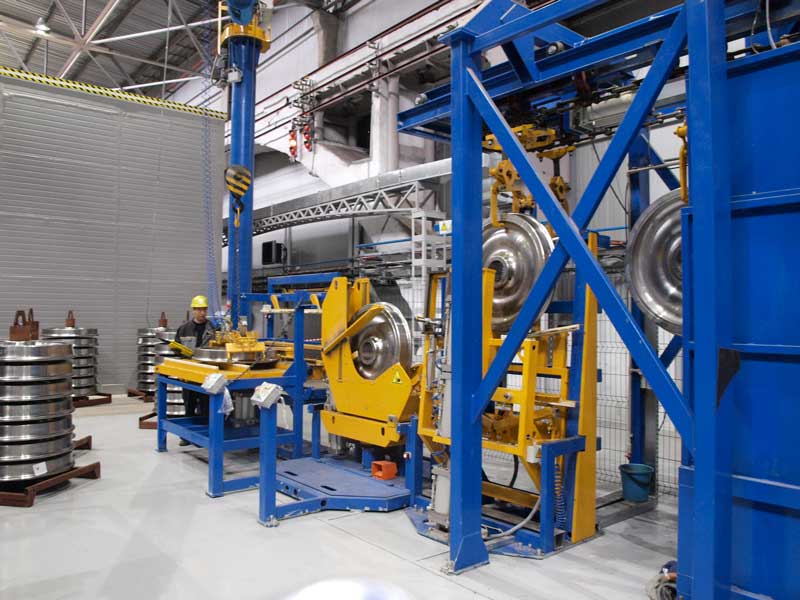
Since 2016, Interpipe has been producing railway wheels and wheelsets for high-speed trains with higher added value. This type of product is in demand in the transportation infrastructure of European and American countries, which was the reason for the company to make large investments in launching several new production sites, including the creation of sites that ensure the application of operational and anticorrosion coatings on the manufactured railway wheels.
The pharmaceutical drying chambers that are produced by NAF "Tehvagonmash" are currently equipped with advanced technology for advanced preparation and final preparation, which is widely used in