A paint booth is process equipment whose efficiency and safety depend directly on a correctly designed ventilation system. Errors in airflow calculation lead to coating defects, exceeded exposure limits for hazardous substances, fire-hazardous solvent vapor concentrations, and regulatory non-compliance. This article explains how to properly calculate ventilation for a paint booth — from choosing the air exchange rate to selecting ventilation equipment.
Why Accurate Ventilation Calculation Matters for Paint Booths
The ventilation system in a paint booth solves several tasks simultaneously:
- Worker safety — removing solvent vapors, paint aerosol, and dust to concentrations below occupational exposure limits (OEL/PEL).
- Explosion safety — most paints and coatings form explosive vapor-air mixtures; ventilation must keep vapor concentration below the Lower Explosive Limit (LEL), typically with a safety margin reducing concentration at least fourfold.
- Coating quality — a stable, directional airflow prevents dust from settling on freshly painted surfaces and ensures even distribution of the spray pattern.
- Regulatory compliance — the calculation must be verifiable during environmental review, fire safety inspection, and occupational health audits.
Key Reference Standards
Ventilation calculations for paint booths are typically based on:
- HVAC design codes and standards (e.g., national building/HVAC codes, EN 13355 for spray booths in the EU, NFPA 33 in the US)
- Occupational exposure limit tables for hazardous substances in the work zone
- Industrial coating safety requirements (analogous to GOST 12.3.005 in CIS countries)
- Equipment manufacturer specifications and paint material safety data sheets (MSDS)
Step-by-Step Ventilation Calculation Algorithm
Step 1. Determine the Booth Volume
The base parameter is the internal working volume of the booth:
V = Length × Width × Height (m³)For example, for a booth with dimensions 6 × 4 × 3 m: V = 72 m³.
Step 2. Select the Air Exchange Rate
The air exchange rate (K) shows how many times per hour the air in the booth is fully replaced. For paint booths, this depends on the coating process and materials used:
| Process Type | Recommended Air Exchange Rate, h⁻¹ |
| Water-based painting | 10–20 |
| Solvent-based painting (standard coatings) | 20–40 |
| Nitrocellulose and fast-drying coatings | 40–60 |
| Powder coating | 15–25 |
| High-pressure pneumatic spray booths | 30–50 |
Step 3. Calculate the Required Airflow Volume
L = V × K (m³/h)For our example at K = 30 h⁻¹:
L = 72 × 30 = 2,160 m³/hStep 4. Verify Air Velocity Through the Working Cross-Section
Beyond the exchange rate, it’s important to verify the air velocity through the booth’s working cross-section (the area through which air passes):
v = L / (3,600 × S)where S is the cross-sectional area of the booth, in m².
For most booths with bottom or side extraction, a recommended air velocity in the working zone is 0.3–0.5 m/s — sufficient to prevent vapor and aerosol settling on the workpiece, while avoiding turbulence that would distort the spray pattern.
Step 5. Calculate Capacity Based on Maximum Solvent Concentration
A more precise (occupational hygiene) calculation method uses the mass of solvent vapor released:
L = (1,000 × G) / (OEL × K_safety)where:
- G — mass of evaporating solvent, g/h (derived from coating consumption rate and volatile content per MSDS);
- OEL — occupational exposure limit for the substance, mg/m³;
- K_safety — safety factor (typically 4–10 for explosive mixtures).
This method is considered more reliable for booths using coatings with a high volatile organic compound (VOC) content, since it directly ties ventilation capacity to the actual toxic and explosion-hazard load rather than booth geometry alone.
Step 6. Account for System Pressure Losses
After determining the required airflow, calculate the aerodynamic resistance of the duct network — work filters, ceiling filters, ductwork, silencers, and the paint overspray curtain (water-wash or dry filter type). Total pressure losses typically range from 800 to 2,500 Pa depending on booth configuration and filtration type. This parameter determines fan selection based on the combined flow-pressure curve.
Selecting Ventilation Equipment
After calculating the required airflow (L) and pressure loss (ΔP), select:
- Supply air unit — with a heater (electric or gas-fired) for tempering incoming air in cold weather, plus fine filtration.
- Exhaust fan — explosion-proof rated if solvents with a low flash point are used, with corrosion resistance to paint vapors.
- Filtration system — ceiling filters (pre-filtration), floor/grid filters (final filtration before discharge), and where required, activated carbon filters or catalytic oxidation to meet VOC emission limits.
Supply/Exhaust Balance
A critical point: in a paint booth, supply airflow should equal or be slightly less than exhaust airflow (a 5–10% imbalance favoring exhaust), maintaining slight negative pressure inside the booth. This prevents paint vapors from escaping into the surrounding production area through gaps in the booth structure.
Common Mistakes in Paint Booth Ventilation Calculation
- Relying only on air exchange rate without accounting for the toxicity of the specific coating — for highly toxic or flammable materials, exchange rate alone is insufficient.
- Ignoring seasonal variation — winter heating demand for supply air is frequently underestimated at the design stage.
- Incorrect working-zone air velocity — too high “blows away” the spray pattern and degrades coating quality; too low fails to remove vapors effectively.
- No capacity margin for the fan — filters clog over time, increasing real system resistance; without a 15–20% pressure margin, airflow drops quickly in operation.
Example Calculation (Summary Table)
| Parameter | Value |
| Booth volume | 72 m³ |
| Air exchange rate | 30 h⁻¹ |
| Required airflow | 2,160 m³/h |
| Working cross-section area | 12 m² |
| Working zone air velocity | 0.3–0.5 m/s (verification calc) |
| Total pressure loss | 1,200–1,800 Pa |
| Recommended fan rating | Explosion-proof (Ex) when working with solvents |
Conclusion
Paint booth ventilation calculation is not a single figure but a complex engineering task combining booth geometry, the physical and chemical properties of the coatings used, sanitary regulations, and ductwork aerodynamics. The correct approach involves cross-checking the result using at least two methods — air exchange rate and maximum hazardous substance concentration — followed by equipment selection with an adequate capacity margin.
When designing or upgrading a paint booth, it is advisable to consult equipment manufacturers who can provide engineering calculations tailored to your specific production parameters and coating materials.
Related articles
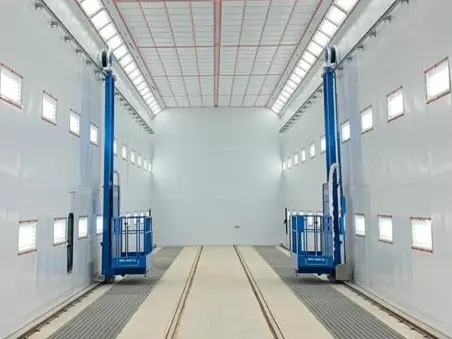
A breakdown of paint and drying chamber design: ventilation, filtration, heating, lighting. Chamber types, working principle, and how to choose equipment for industrial coating.
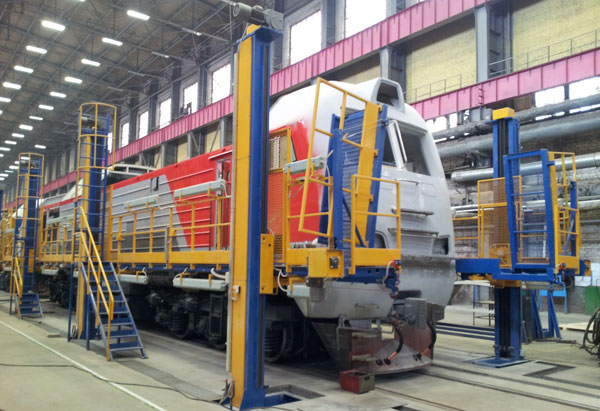
Traditionally, fixed platforms have been used at railcar manufacturing plants for exterior finishing and final body processing. However, conventional solutions have significant drawbacks: limited lifting range, difficulty in positioning workers at the required height, non-compliance with modern industrial safety standards, and inconvenient operation.
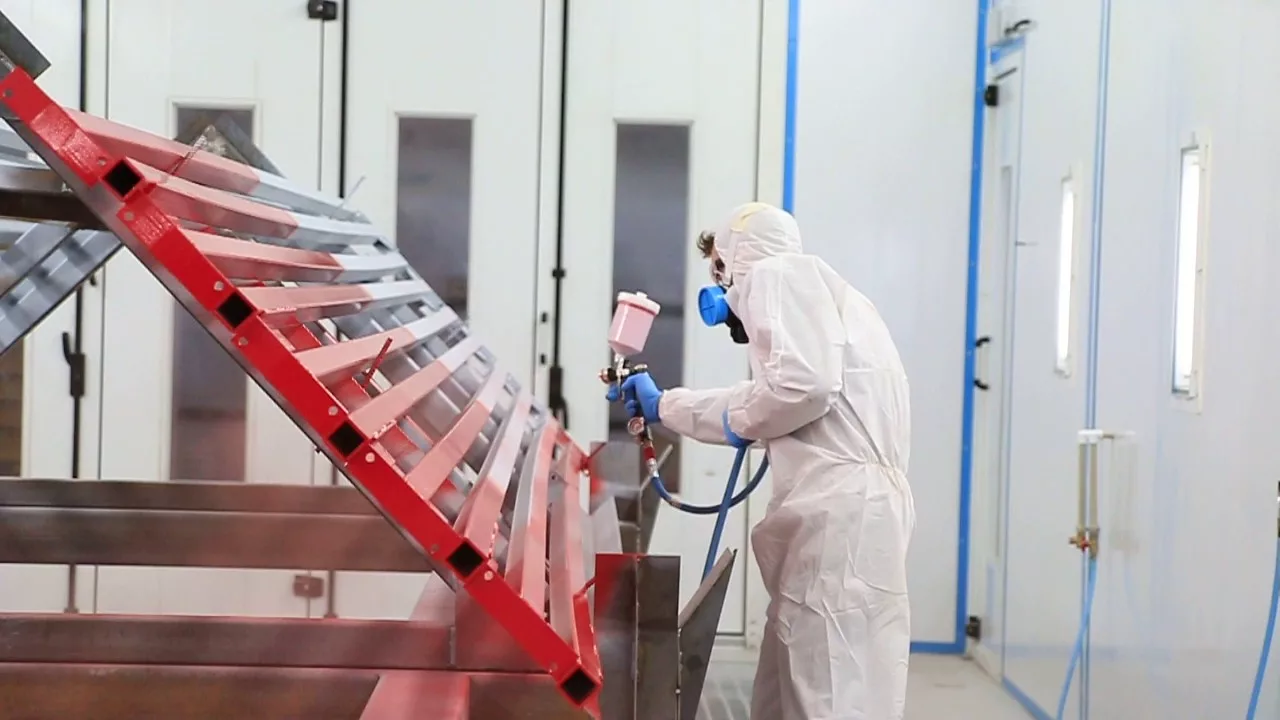
Imagine a paint shop — spacious, bright, and ergonomically designed. At first glance, it seems simple: draw up a layout, buy the equipment, install it, and start making money. But what’s the most important thing to start with? Of course — the spray booth!
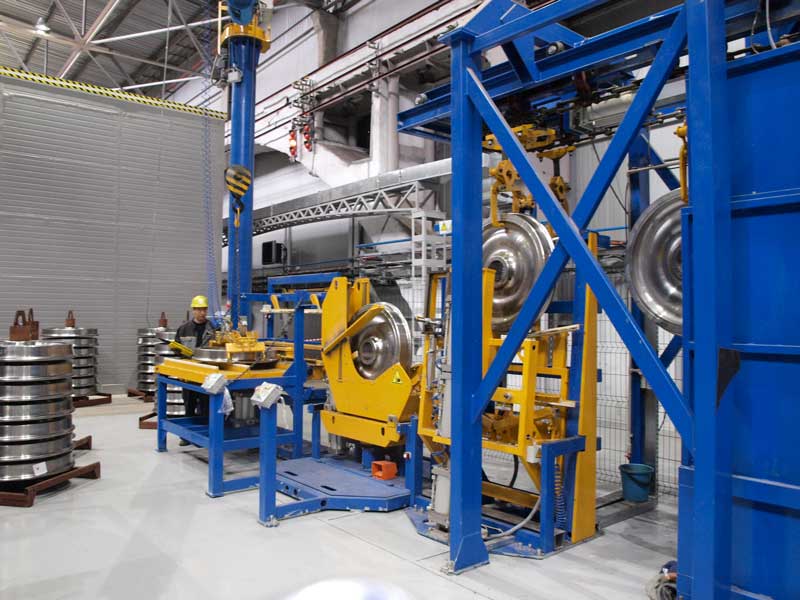
Since 2016, Interpipe has been producing railway wheels and wheelsets for high-speed trains with higher added value. This type of product is in demand in the transportation infrastructure of European and American countries, which was the reason for the company to make large investments in launching several new production sites, including the creation of sites that ensure the application of operational and anticorrosion coatings on the manufactured railway wheels.
The pharmaceutical drying chambers that are produced by NAF "Tehvagonmash" are currently equipped with advanced technology for advanced preparation and final preparation, which is widely used in