Introduction
The quality of paint applied to large metal structures, railcars, heavy-equipment bodies, and industrial machinery depends less on the spray gun and more on the conditions under which the coating is applied. A paint and drying chamber (paint booth) is an engineered enclosure that creates a controlled environment — clean air, stable temperature, and a safe atmosphere — for applying and curing paint and coating materials. This article explains what a chamber is made of, how it operates, and what to consider when choosing equipment.
What Is a Paint and Drying Chamber
A paint and drying chamber is a sealed or semi-sealed enclosure (usually a modular structure) equipped with ventilation, filtration, heating, and lighting systems, in which two processes happen sequentially: spray application of the coating material and its thermal drying/curing. Combining both functions in a single space saves floor space and shortens the overall processing cycle for a part.
These chambers are used in machine-building plants, railcar repair facilities, auto body shops, agricultural-equipment manufacturers, and any industry that needs a high-quality protective and decorative coating on large metal parts.
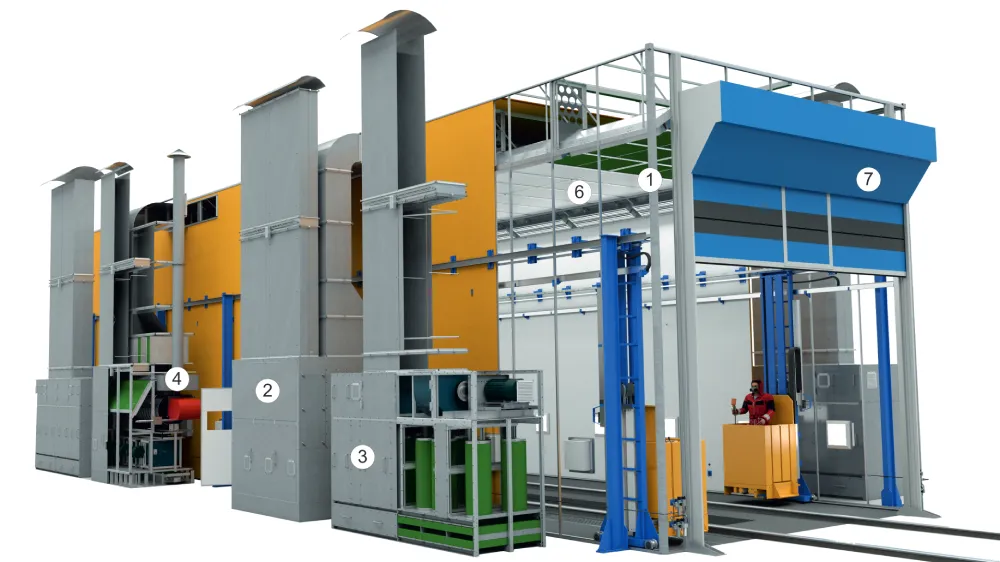
1.Shell and Frame
2. Supply (Intake) Ventilation
3. Exhaust Ventilation and Filtration
4. Heating System (Air Heating)
5. Control and Automation
6. Lighting
7. Doors and Loading Systems
Main Components of a Paint and Drying Chamber
1. Shell and Frame
The load-bearing structure is a steel frame clad with sandwich panels filled with mineral wool or foamed polymer. The panels serve three functions at once: thermal insulation, sound insulation, and an airtight envelope. Panel thickness and core material are selected based on curing temperature and chamber size.
2. Supply (Intake) Ventilation
Fresh air is drawn in through a supply unit, passes through coarse filters, and enters the work zone from above — typically through a filtered ceiling or ductwork. A uniform downward airflow keeps dust from settling on a freshly coated surface and removes excess overspray from the operator’s breathing zone.
3. Exhaust Ventilation and Filtration
Spent air containing solvent vapors and paint particles is removed through floor-level or side grilles, passes through a filter cascade (cardboard pre-filters, paper cassette filters, activated carbon filters), and is discharged through an exhaust stack. This is the key system from an environmental and occupational-safety standpoint: filtration determines how well the chamber meets sanitary and environmental regulations.
4. Heating System (Air Heating)
For curing, most modern chambers use gas-fired, diesel-fired, or electric heaters that raise the work-zone temperature to 60–80 °C, which is sufficient to cure most industrial enamels. Air circulates in a closed loop with a fresh-air makeup component, which saves energy compared to a once-through ventilation design.
5. Control and Automation
The chamber’s controller manages “paint” and “bake/dry” modes, switches fan speed, sets the temperature/time curing profile, monitors filter pressure-drop sensors, and shuts down the burner if any parameter deviates — critical for fire safety.
6. Lighting
Explosion-proof, shadow-free luminaires are installed inside the chamber to provide even illumination, allowing the operator to inspect coating quality and spot defects (runs, missed spots, uneven coverage) anywhere on the part.
7. Doors and Loading Systems
Depending on part size, chambers use hinged, sectional, or vertical-lift sliding doors. For oversized items — railcar frames, heavy-equipment bodies, structural steel — rail tracks or roller conveyors are built in so parts can move in and out without breaking the chamber’s seal.
How a Paint and Drying Chamber Works
A typical working cycle has three stages:
- Setup and spraying. The part enters the chamber and the paint mode is switched on: supply ventilation creates a laminar downward airflow, the operator applies the coating with a spray gun, and excess paint and solvent vapor are removed by the exhaust system through the filters.
- Flash-off. After spraying, a holding period allows solvents to evaporate at ambient temperature, reducing the risk of blistering or surface irregularities during the subsequent heating stage.
- Curing (drying). The chamber switches to hot-air recirculation mode: the heater raises the temperature to the set point, fans distribute the heat evenly, and the coating cures according to the process schedule.
After the cycle ends, the chamber cools automatically and switches to a ventilation mode so the doors can be opened safely.
Types of Paint and Drying Chambers
- Drive-through (pass-through) chambers — the part enters on one side and exits on the other; used in flow-line production.
- Dead-end (box-type) chambers — entry and exit on the same side; a compact solution for limited floor space.
- Chambers for oversized parts — increased door height and width (for railcars, heavy-equipment bodies, frames, etc.);
- Chambers with bottom or top air extraction — differ in supply/exhaust configuration, affecting coating deposition uniformity;
- Heat-recovery paint and drying chambers — reduce energy costs by reusing heat from the exhaust air.
What to Consider When Choosing a Chamber
When selecting a paint and drying chamber for production, key factors include:
- Part dimensions — door opening width, height, and length, and the maximum size of the largest part to be processed (e.g., for railcar structures, the ability to fit full frames and oversized sections is critical);
- Type and consumption rate of coating materials — affects the explosion-protection rating of electrical equipment and required exhaust-ventilation capacity;
- Heating energy source — gas, diesel, or electric — chosen based on energy availability on site and required heat-up speed;
- Filtration class — needed to meet environmental regulations on atmospheric emissions;
- Integration into the production line — compatibility with conveyors, rail tracks, positioners, and other process equipment.
Conclusion
A paint and drying chamber is far more than “a separate room for painting” — it’s a complex technical system in which ventilation, filtration, heating, and automation work together to deliver consistent coating quality. Choosing the right chamber design for your part dimensions and process requirements directly affects the throughput of your paint shop and the service life of the finished parts.
If you need a paint and drying chamber for large metal structures, railcar components, or heavy-equipment parts, Teсhvagonmash specialists can help select the optimal equipment configuration for your production parameters.
Related articles
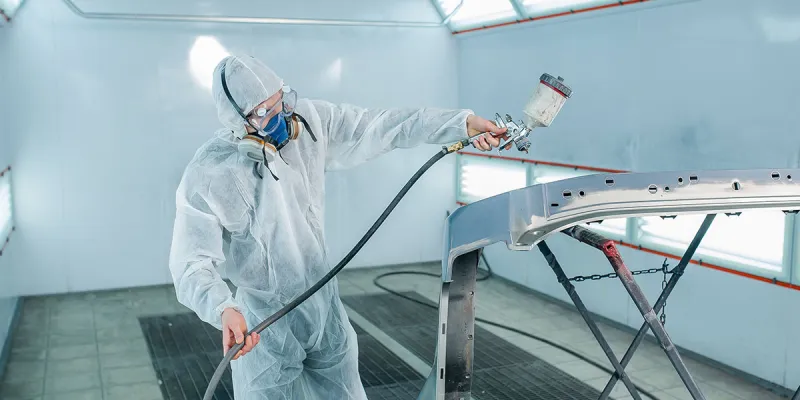
How to calculate paint booth ventilation: air exchange rate, airflow volume, working zone velocity, equipment selection. Formulas, tables, and a worked example.
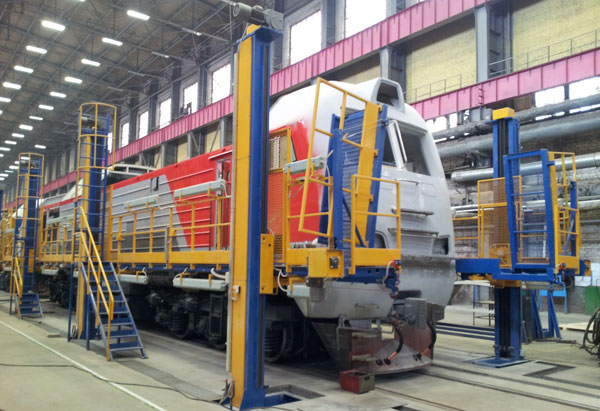
Traditionally, fixed platforms have been used at railcar manufacturing plants for exterior finishing and final body processing. However, conventional solutions have significant drawbacks: limited lifting range, difficulty in positioning workers at the required height, non-compliance with modern industrial safety standards, and inconvenient operation.
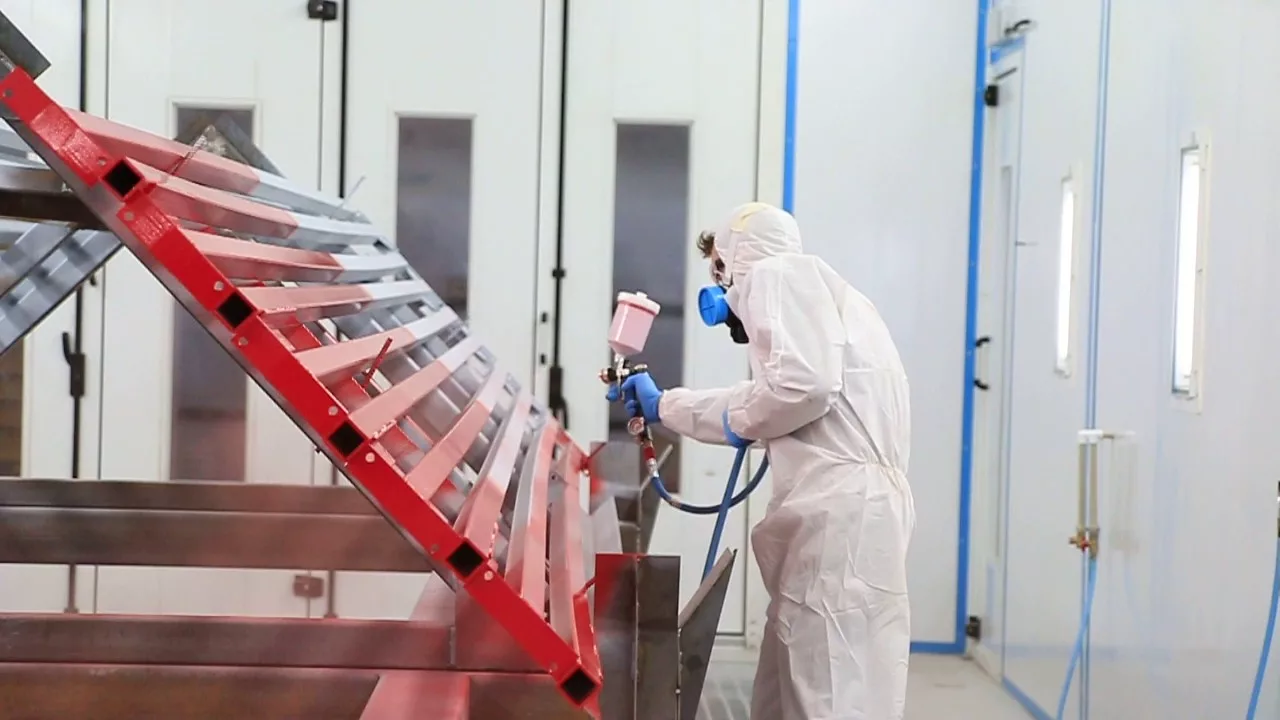
Imagine a paint shop — spacious, bright, and ergonomically designed. At first glance, it seems simple: draw up a layout, buy the equipment, install it, and start making money. But what’s the most important thing to start with? Of course — the spray booth!
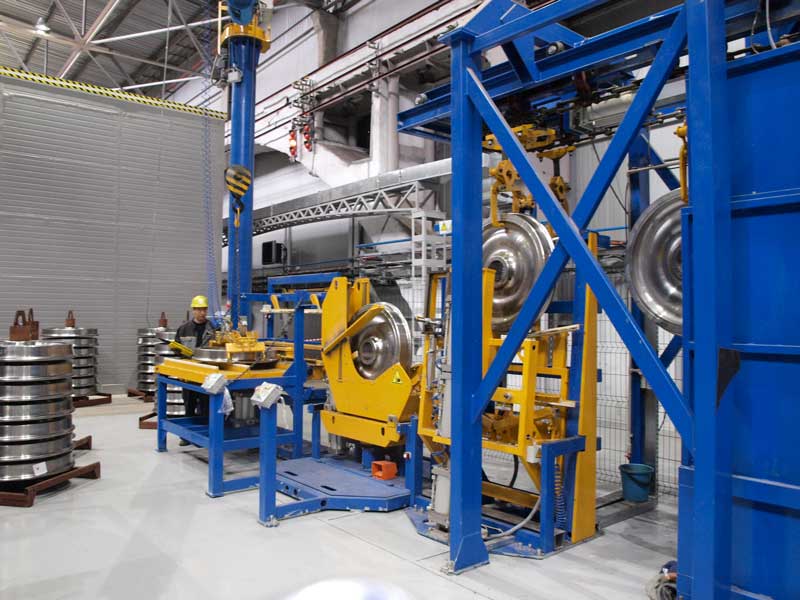
Since 2016, Interpipe has been producing railway wheels and wheelsets for high-speed trains with higher added value. This type of product is in demand in the transportation infrastructure of European and American countries, which was the reason for the company to make large investments in launching several new production sites, including the creation of sites that ensure the application of operational and anticorrosion coatings on the manufactured railway wheels.
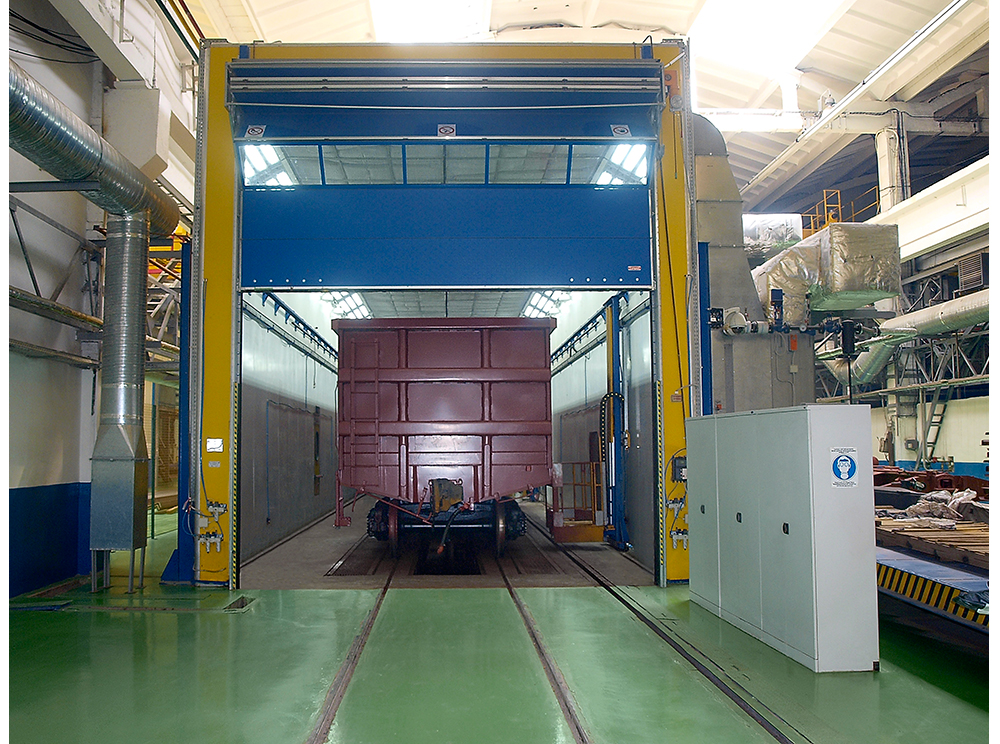
The pharmaceutical drying chambers that are produced by NAF "Tehvagonmash" are currently equipped with advanced technology for advanced preparation and final preparation, which is widely used in