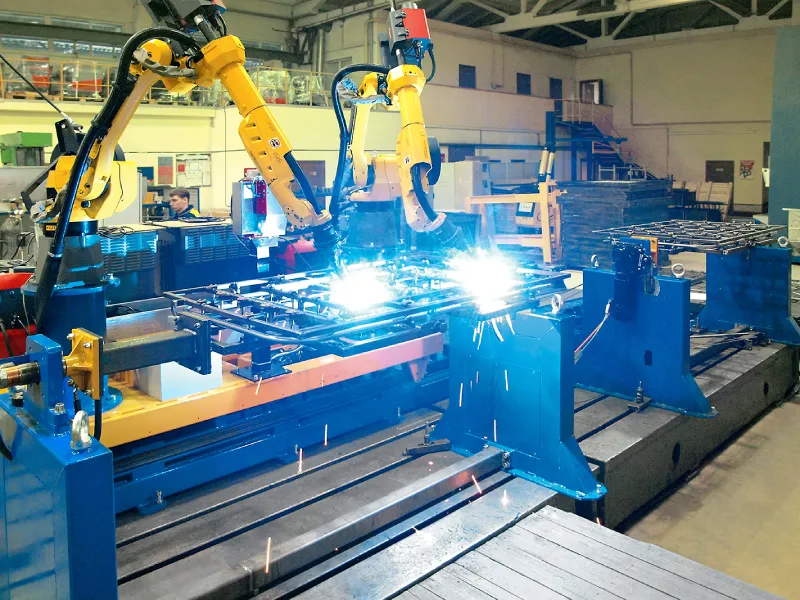
Buying a robotic welding system isn’t just about swapping a welder for a manipulator. It changes the entire production process — from part preparation to operator training to your maintenance schedule. Companies that treat implementation as a full project, not a one-off equipment purchase, see real gains in throughput and defect reduction. Companies that skip the planning stage tend to run into downtime and disappointment — usually not because the robot itself is at fault, but because it was never properly set up to succeed.
Here are seven things worth thinking through before signing a contract for a robotic welding cell.
- Part Repeatability Is the Foundation of Automation
- Operator Training Cannot Be Skipped
- Ventilation and Guarding Need a Second Look
- Weld Monitoring and Peripherals Boost ROI
- Preventive Maintenance Protects the Investment
- Compatibility Matters When Retrofitting
- A Robot Can Do More Than Just Weld
1. Part Repeatability Is the Foundation of Automation
The quality of a robot-welded part depends directly on the quality and consistency of the blank entering the weld cell. If part geometry varies from batch to batch, the robot will keep welding along its programmed path regardless of where the actual edge sits — and the result is scrap. That’s why it’s worth reviewing drawings or a 3D model before implementation and assessing how consistently the part can actually be positioned.
Fixturing matters just as much. Even a well-made part can end up with a bad weld if it isn’t held in an exact position. For shops running a wide mix of parts, vision systems are worth considering — they detect the real part position and adjust the weld path in real time. That adds cost to the cell, but it removes the dependency on perfect fixturing for every single part number.
2. Operator Training Cannot Be Skipped
A robotic welding cell needs more than a bystander watching it run — it needs a specialist who understands programming, can diagnose deviations, and can carry out preventive checks. A good candidate is usually an experienced welder trained on robotic systems, or an engineer with a background in automated line maintenance.
Training should cover path programming, basic troubleshooting, and scheduled maintenance. A one-time briefing usually isn’t enough — plan for periodic refresher training, especially as the range of parts being welded expands.
3. Ventilation and Guarding Need a Second Look
The productivity gain from switching to robotic welding also means more welding fume. A fume extraction system sized for manual welding may not keep up with the new volume. Shops running several welding cells usually benefit from a centralized system with ductwork and extraction hoods over each cell; smaller shops with one or two cells often do fine with a mobile extraction unit with an adjustable arm.
Guarding is a separate requirement. The welding cell needs to be enclosed with protective screens and barriers that keep personnel away from the arc and the manipulator’s moving parts while it’s running.
4. Weld Monitoring and Peripherals Boost ROI
Weld monitoring systems — tracking current, voltage, wire feed speed — make it possible to quickly trace the cause of a defect and tune the process for consistent quality. That requires investment in software and network infrastructure, plus someone capable of reading the data and acting on it.
Peripheral equipment pays off too — a nozzle cleaning station in particular. Regular spatter removal extends consumable life, cuts changeover downtime, and prevents the loss of shielding gas coverage that spatter buildup causes — a common hidden cause of porosity or lack of fusion.
5. Preventive Maintenance Protects the Investment
The robot, the welding gun, cable assemblies, and consumables all need a maintenance schedule — skip it and you’re looking at unplanned downtime, defective parts, and expensive repairs down the line. Some tasks happen between shifts, like cleaning the manipulator or swapping consumables. Others, like greasing robot joints, happen less often and need a longer scheduled stop.
TCP (tool center point) checks deserve particular attention — drift from wear or a collision gradually pulls the weld path off spec even when the robot appears to be running normally. Larger facilities often find it worthwhile to have a dedicated maintenance crew for the welding cells.
6. Compatibility Matters When Retrofitting
Retrofitting an existing robot with a new power source and gun is common, especially for companies trying automation for the first time or running just one or two cells — a used manipulator costs noticeably less than a new one. But compatibility is critical here: new power source software may not talk to an older robot controller, or the specific gun the robot needs may be discontinued or hard to source.
That’s why retrofit projects are best planned with an integrator who can select compatible components and set up the interface between them — it saves time and avoids the downtime that comes from piecing together an upgrade component by component.
7. A Robot Can Do More Than Just Weld
A robot’s job isn’t limited to welding the same seam over and over. Operators can program the manipulator to handle several part types across a shift, and with a gripper attachment, the same robot can move parts so it isn’t idle between welding tasks. Some cells are equipped with a tool-change dock, letting the robot switch between a welding gun and other tooling on the fly.
On lines running multiple robots, a vision system on one unit can also be used to check the weld quality produced by neighboring cells. That flexibility directly supports the real goal of any robotic welding investment — maximizing uptime.
What This Looks Like in Practice
Techvagonmash designs its robotic welding complexes around every factor above: positioners and rotators are selected to keep the part in a repeatable position, compatibility with power sources is built in from the start, and customers get a complete welding cell with fixturing matched to their actual part mix — not just a manipulator.
If you’re evaluating a move to robotic welding, our engineers can review your part range, help configure the right cell, and estimate the expected payback period.
FAQ
Where should I start with robotic welding implementation?
Start by reviewing your part range and how repeatable those parts really are — that determines the fixturing and the level of vision-system support you’ll need for consistent weld quality.
Do I need to upgrade ventilation when switching to a robotic welder?
In most cases, yes. Higher throughput means more welding fume, and a system sized for manual welding often can’t keep up with the new volume.
Can I retrofit an existing robot instead of buying a new one?
Yes, but it’s important to verify upfront that the new power source and gun are compatible with the existing robot controller — that’s best handled by an integrator with retrofit experience.
Does robotic welding pay off for a small shop?
Yes, with the right configuration. Even one or two well-fixtured, properly maintained welding cells deliver a meaningful productivity gain and lower defect rate compared to manual welding.
Related articles
Robotic welding is no longer an experiment reserved for market leaders — it's a working tool that pays for itself through higher output, lower material costs, and reduced dependence on scarce skilled labor. Below are 10 concrete reasons manufacturers are moving welding operations onto robotic welding cells (RWCs), and how each one shows up on the production floor and the balance sheet.
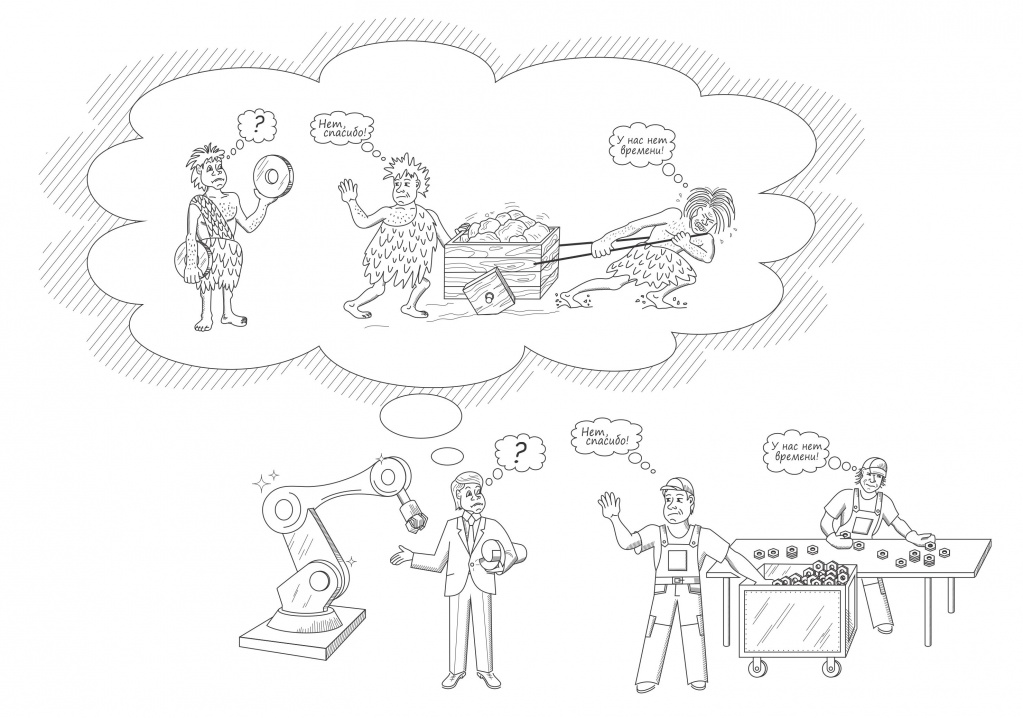
There is a persistent stereotype in the post-Soviet machine-building industry that industrial robots are expensive equipment that requires highly professional personnel and that it is rational to use them in mass or high-volume production. This myth is based on some factors listed below.